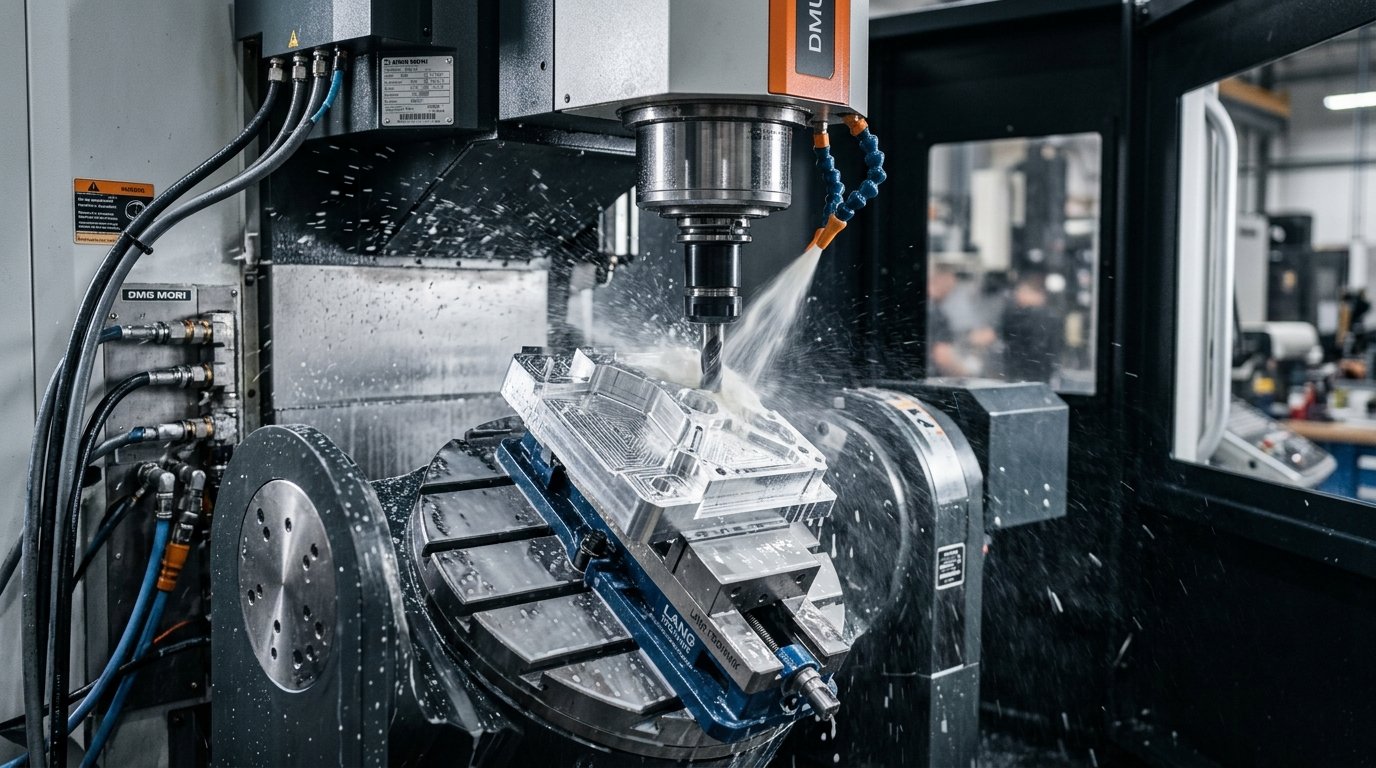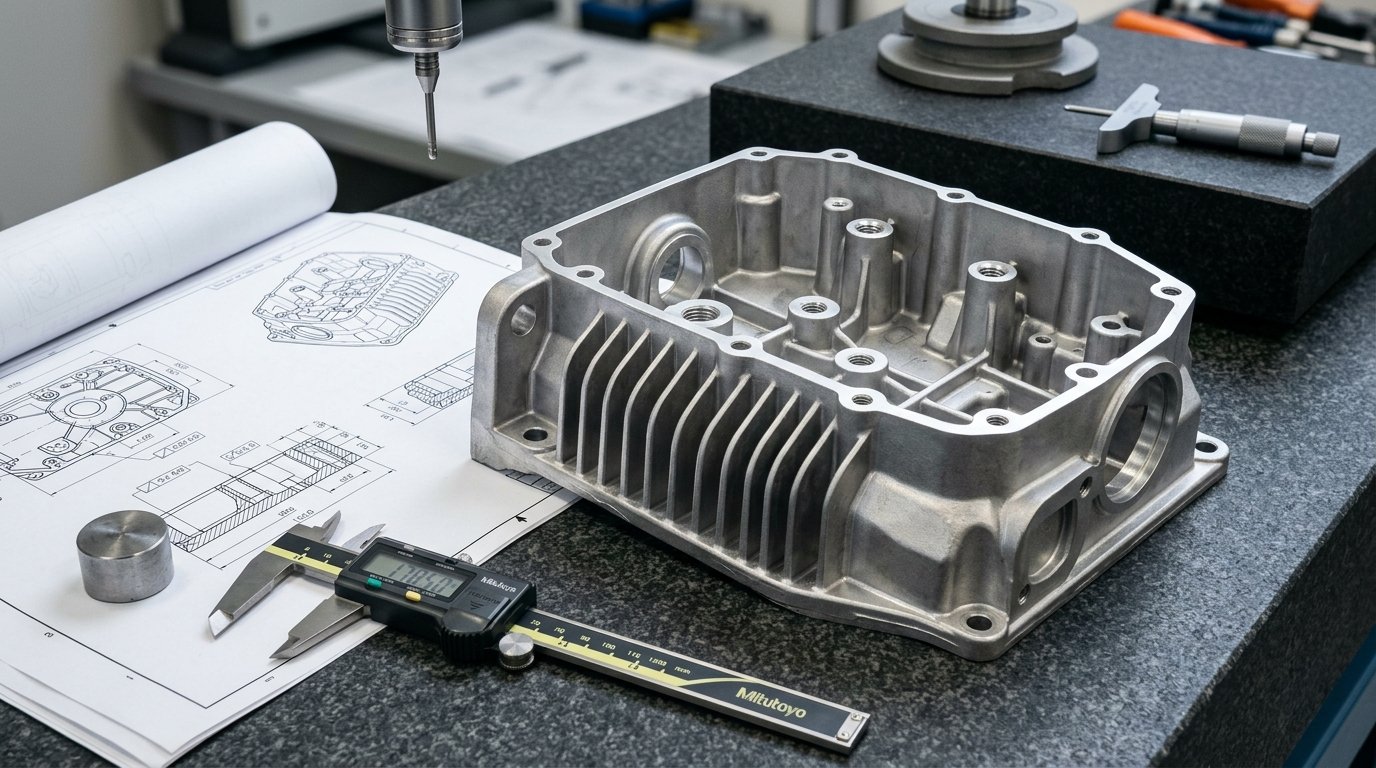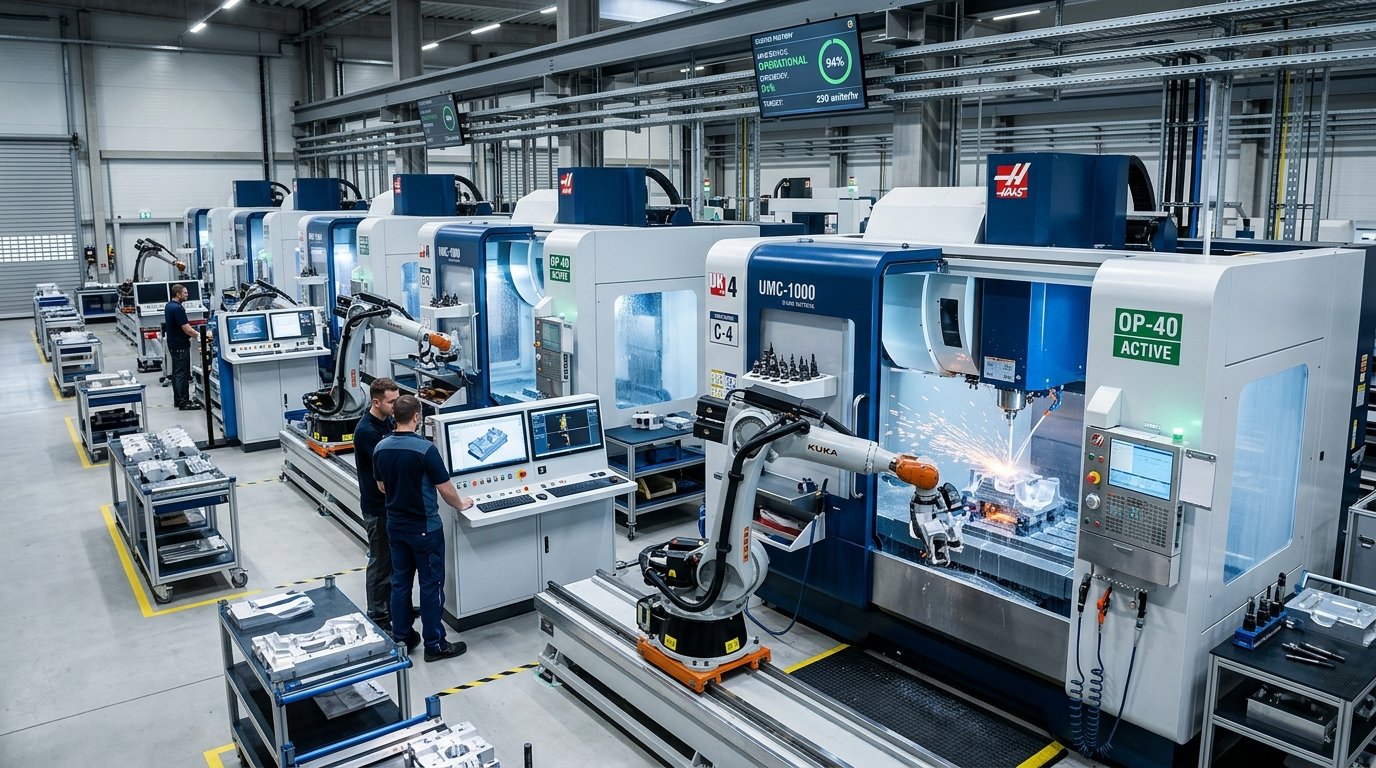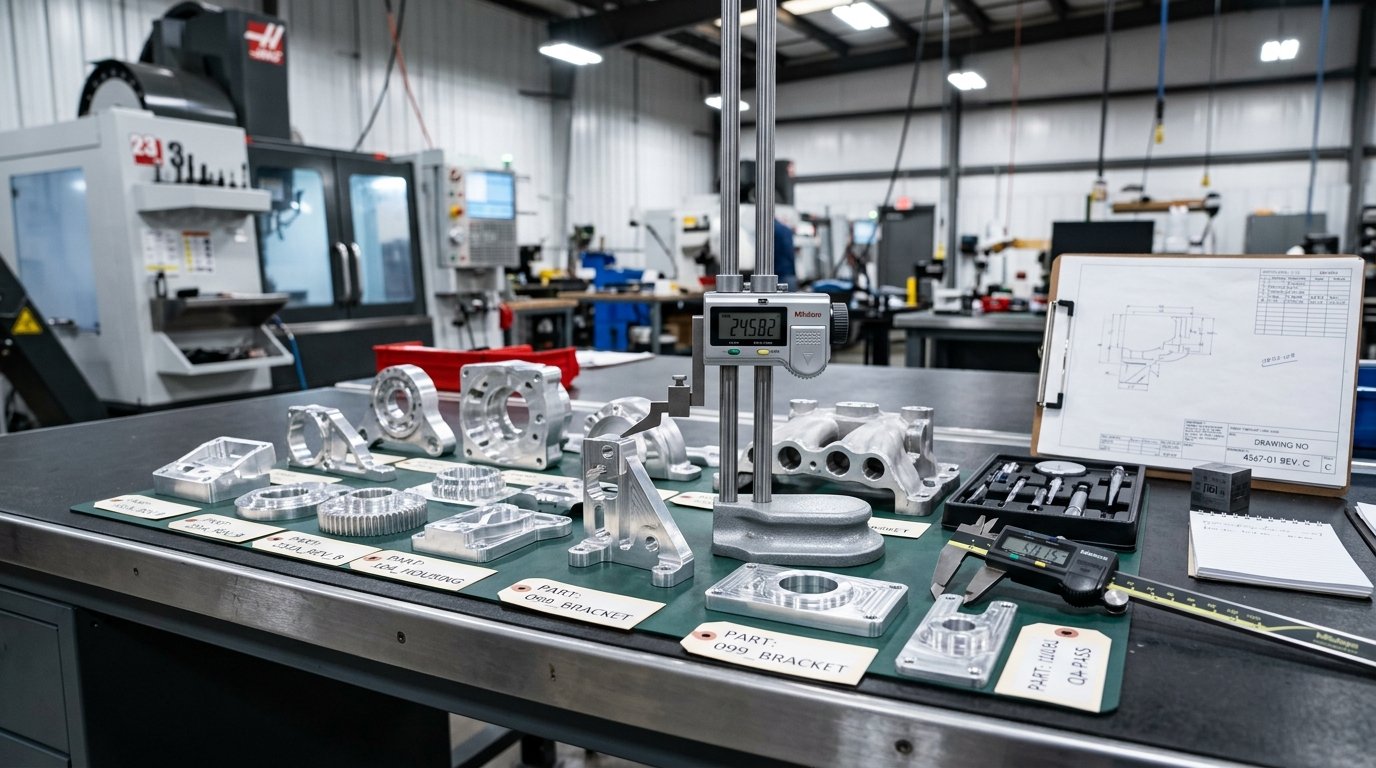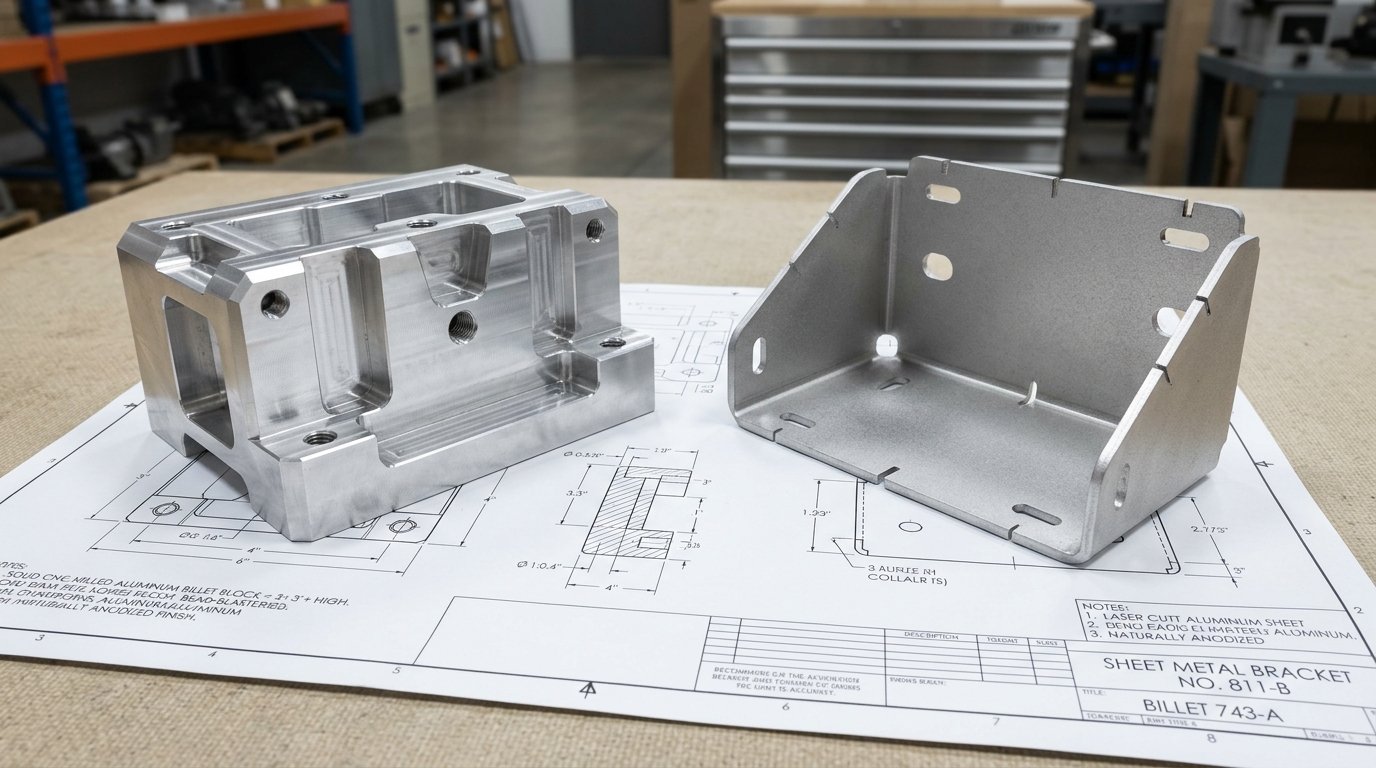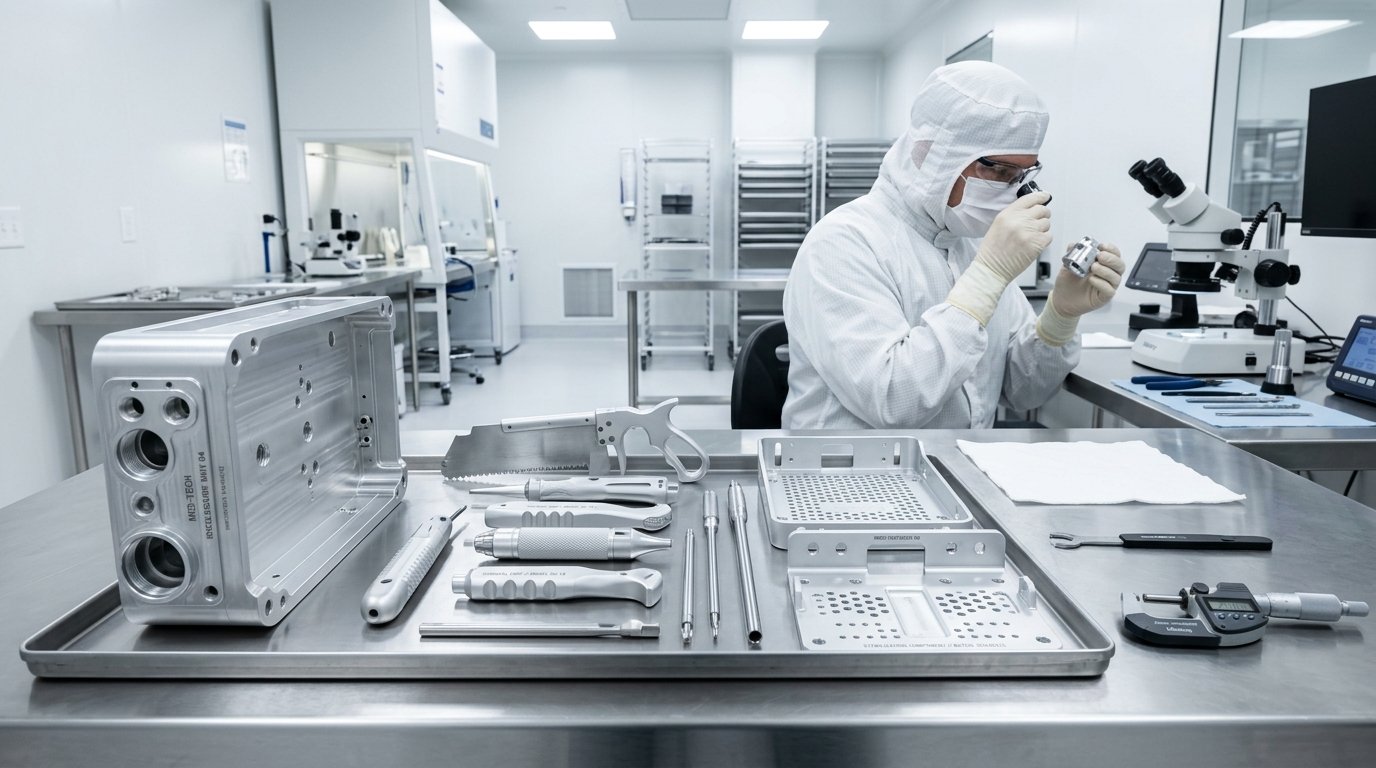
Aluminum CNC machining for medical devices is used for housings, frames, brackets, instrument handles, sterilization trays and equipment structures, not for implants. The usual alloys are 6061-T6 for most parts and 7075-T6 where strength matters. What sets medical work apart isn’t the machining. It’s controlled finishing and cleaning, documented processes, and lot traceability that lets the device maker trace every part back to its material and production run.
Key point: if your device maker operates under ISO 13485 and the FDA’s Quality Management System Regulation, your machining supplier will be controlled through their purchasing and supplier-management processes. Expect requirements for documentation, change notification and traceability, even for a simple bracket.
This guide is general information for engineers and buyers. It isn’t regulatory advice. Confirm requirements for your specific device with your regulatory and quality team.
Why Use Aluminum CNC Machining for Medical Devices?
Medical device makers have plenty of material choices. Aluminum earns its place for specific reasons, and it has limits worth stating plainly.
Where aluminum wins:
- Weight. Hand-held instruments, portable equipment and moving arms benefit directly. A lighter surgical tool handle reduces fatigue over a long procedure. A lighter arm needs smaller motors.
- Thermal management. Electronics in diagnostic and monitoring equipment generate heat. Aluminum housings spread it.
- Machining speed and cost. Complex housings and frames machine faster in aluminum than in stainless steel or titanium, which keeps prototype and low-volume costs down.
- Color and identification. Dyed anodizing gives durable colors for instrument sets and trays.
Where other materials are the better choice:
- Implants and long-term patient contact: titanium alloys, cobalt-chrome, implant-grade stainless steel or PEEK.
- Parts exposed to aggressive alkaline cleaning: stainless steel often lasts longer.
- High-wear cutting or gripping surfaces: hardened stainless steel.
- Radiolucent parts for imaging: engineering plastics or composites, because metals show up on X-ray.
Our position: aluminum is the right default for equipment structure and housings, and the wrong default for anything that goes into the body. Between those two, it depends on cleaning, wear and contact, and the device maker’s risk assessment decides. For a broader comparison of options, see our guide to مواد التصنيع باستخدام الحاسب الآلي (CNC).
Where Aluminum Is Used in Medical Devices
Aluminum’s light weight, machinability and good thermal conductivity make it common in medical equipment, particularly in parts that don’t stay in contact with patients.
| التطبيق | Typical alloy | Why aluminum |
| Diagnostic and imaging equipment frames | 6061-T6 | Light, stiff, easy to machine in large sizes |
| Device housings and enclosures | 6061-T6 | Heat dissipation for electronics, durable anodized finish |
| Surgical robot and positioning arm structures | 6061-T6, 7075-T6 | Stiffness-to-weight, precision bores |
| Instrument handles and non-invasive tool bodies | 6061-T6 | Light weight reduces user fatigue; colors for identification |
| Sterilization trays and cases | 6061 or 5052 | Light, rigid, colored anodize for sorting |
| Laboratory automation and analyzer parts | 6061-T6, MIC-6 | Flat plates, repeatable locating features |
| Mobility and rehabilitation equipment | 6061-T6, 7075-T6 | Low weight for patients and carers |
Where aluminum is generally not used: long-term implants. Implantable parts use materials such as titanium alloys, cobalt-chrome, implant-grade stainless steel and PEEK, selected and tested for biocompatibility. If your part has direct or prolonged patient contact, the device maker’s biocompatibility evaluation decides whether aluminum is acceptable, and with which finish.
Which Aluminum Alloys Suit Medical Parts?
6061-T6 is the default. It machines well, anodizes evenly in clear and dyed colors, resists corrosion and is widely available with material certificates. Most housings, brackets, frames, handles and trays use it.
7075-T6 offers much higher strength. It suits slim structural parts in surgical robots, positioning systems and mobility equipment. It anodizes to a slightly different shade than 6061, which matters for products where parts sit side by side.
5052-H32 is common in sheet form for trays, covers and enclosures that are bent rather than machined.
MIC-6 cast plate is used for flat, stable base plates in analyzers and lab automation.
Whichever alloy you choose, specify both alloy and temper on the drawing, and require a mill certificate. On medical parts, the material certificate is part of the traceability chain, not just a quality nice-to-have.
Finishes for Medical Aluminum Parts
Finishing does three jobs on medical aluminum: corrosion resistance, durability under cleaning, and identification. The common options:
| الانتهاء | Use on medical devices | الملاحظات |
| Type II sulfuric anodize, clear | Housings, frames, structural parts | Corrosion protection, clean appearance |
| Type II anodize, dyed colors | Handles, trays, color-coded parts | Color can vary between batches and alloys |
| الأنودة الصلبة من النوع الثالث | Wear surfaces, sliding parts, high-handling parts | Thicker coating changes dimensions |
| Bead blast + anodize | Non-glare matte surfaces for operating environments | Slightly rougher surface to clean |
| Chemical conversion coating | Electrical bonding and grounding points | Lower wear resistance |
| Powder coating or paint | Large equipment covers | Check chemical resistance to cleaning agents |
Cleaning and reprocessing compatibility
This is where aluminum parts often fail in the field. Anodized aluminum can be damaged by highly alkaline cleaning agents, which are common in hospital reprocessing. Repeated exposure can dull, discolor or strip the anodic layer.
If a part will be cleaned, disinfected or sterilized repeatedly, the device maker should confirm which cleaning agents and cycles it will see, and test finished parts against them. Sealing quality of the anodize also matters. Ask your supplier how anodize sealing is done and checked.
Laser marking for identification
Many medical parts need permanent part numbers, lot numbers or unique device identification (UDI) markings. Laser marking on anodized aluminum produces durable, legible marks without inks. Agree the marking content, location, size and verification method on the drawing.
Tolerances and Surface Finish on Medical Aluminum Parts
Medical parts aren’t automatically held to tighter tolerances than other industries. The drawing decides. But a few features commonly get close attention:
- Bearing bores and shaft fits in surgical robots and positioning systems
- Sealing faces on fluid-handling and enclosure parts
- Locating features in lab automation, where parts must index repeatably
- Edges and corners that users and staff handle. Sharp edges and burrs are a common reason for rejection, and the drawing should state edge-break requirements.
Surface roughness matters too. Smoother surfaces are easier to clean and less likely to trap contamination. Where a part will be cleaned regularly, specify a roughness value on the faces that matter, and remember that bead blasting increases roughness.
General tolerances are best stated with a standard class, for example from ISO 2768-1, so every supplier reads the drawing the same way.
ISO 13485 and the FDA QMSR: What Machining Suppliers Should Expect
ISO 13485 is the international quality management standard for medical devices. The ISO 13485:2016 standard covers design, production, supplier control, traceability and corrective action.
In the US, the FDA’s Quality Management System Regulation (QMSR) took effect on February 2, 2026. It incorporates ISO 13485:2016 by reference, aligning US requirements for device makers more closely with the international standard.
What this usually means for a machining supplier:
- Supplier evaluation. Device makers evaluate and approve suppliers based on risk. Many prefer or require ISO 13485-certified suppliers for device parts. Others accept ISO 9001 with added controls for lower-risk components.
- Purchasing controls. The purchase order and drawing define requirements: material, finish, inspection, documentation and packaging.
- Change notification. Suppliers are typically required to notify the device maker before changing material sources, processes, equipment, sub-suppliers or manufacturing location.
- Records. Inspection results, material certificates and process records must be kept and retrievable.
Whether your specific part needs an ISO 13485-certified supplier depends on the device, its risk classification and the device maker’s own procedures. Ask early. Changing supplier after design validation can mean repeating verification work.
Lot Traceability: What It Looks Like in Practice
Traceability means the device maker can answer, for any part: what material was it made from, when and how was it made, and which other parts share that history? If a problem appears in the field, this is what limits a recall to the affected lots.
A practical traceability chain for machined aluminum parts:
- Material receipt. Bar or plate arrives with a mill certificate showing heat or lot number. The supplier records it and identifies the stock.
- Cutting and machining. The work order records which material lot was used, which machine and program ran the job, and when.
- Inspection. First-article and in-process inspection results are linked to the work order.
- Finishing. Anodizing or coating lots are recorded, with certificates from the finisher.
- Marking. Parts or packaging carry a lot number or serial number.
- Shipment. The certificate of conformance lists lot numbers, material lot and drawing revision.
The most common traceability gap we see is at finishing. Parts leave the machine shop with lot numbers, go to an outside anodizer, and come back mixed or unmarked. Agree how lot identity is preserved through every outside process before the first order.
Documentation Package for Medical Machined Parts
A typical documentation package for a medical aluminum part includes:
- Material certificate with alloy, temper and heat or lot number
- Certificate of conformance referencing drawing number and revision
- First article inspection report for new parts or changes
- Dimensional inspection results for critical characteristics on each lot
- Finish certificate for anodizing or coating
- Lot or serial number records
- Cleaning and packaging confirmation where specified
Ask for a sample package before placing the first order. It shows quickly whether a supplier works this way routinely or would be learning on your parts.
From Prototype to Validated Production
Medical programs follow a different rhythm from consumer or industrial projects. Understanding it helps you choose and manage a machining supplier.
Early prototypes prove the concept. Speed matters, documentation can be lighter, and design changes are expected. Machined aluminum is popular here because parts can be made quickly without tooling.
Design verification builds test that the design meets its requirements. Parts should now be made from the specified material and finish, with inspection reports, because test results depend on them.
Validation and pilot builds use parts made by the production process. The supplier, material source, finishing process and inspection method should be the ones you intend to use long term.
Production follows the validated process. Changes to material source, machining process, finisher or location usually need assessment by the device maker, and sometimes re-verification.
The lesson: pick your production machining supplier before design verification, not after. Moving a validated part to a new supplier to save money later can cost more in re-verification than it saves in part price. Our guide to aluminum CNC machining cost explains how price changes with quantity so you can plan for it upfront.
Questions to Ask a Medical Machining Supplier
Before sending a medical RFQ, ask:
- Which quality certificate do you hold, and does it cover the site that will machine my parts?
- How do you record material lot through machining, inspection and finishing?
- Who does the anodizing, and how is lot identity kept at the finisher?
- Will you notify us before changing material source, process, equipment or sub-supplier?
- What inspection equipment do you use for critical dimensions, and is it calibrated?
- Can you provide a sample documentation package from a comparable part?
- How are parts cleaned, handled and packed after final inspection?
- How long are production records kept, and how quickly can you retrieve them?
Clear, confident answers to these eight questions say more about a supplier’s readiness for medical work than any brochure.
Cleaning, Handling and Packaging
Machined parts carry cutting fluid, chips and handling residues. For general industrial parts, a wash and a visual check are enough. For medical parts, the device maker may specify:
- A defined cleaning process, with agreed detergents and rinse steps
- Cleanliness checks such as visual inspection under magnification or residue tests
- Clean handling with gloves after final cleaning
- Protective packaging, often individually bagged parts, to prevent scratches and contamination
- Labeling with part number, revision, lot and quantity
If the device maker performs final cleaning and sterilization, the supplier’s job is usually to deliver parts free of chips, burrs and gross contamination, in packaging that keeps them that way. Spell out which party does what.
DFM Tips for Medical Aluminum Parts
- Avoid blind holes and deep crevices on parts that will be cleaned, where possible. They trap fluids and soil.
- Specify edge breaks clearly. Sharp edges on handled parts are both a safety and a quality issue.
- Use generous internal radii. They’re easier to machine and to clean.
- Plan anodize masking for threads, bores and electrical contact points.
- Mark parts in the design. Leave a flat area for laser marking.
- Minimize mixed alloys on visible assemblies if color matching matters.
- Think about fasteners. Aluminum threads wear with repeated servicing. Use threaded inserts where parts are opened often.
What Commonly Goes Wrong on Medical Aluminum Orders
- Drawing silent on finish details, such as anodize type, sealing and masking
- No traceability requirement on the purchase order, discovered only at audit
- Outside processors changed without notice, breaking validated processes
- Cleaning agents incompatible with the finish, found during field use
- Color mismatch between parts from different alloys or anodize batches
- Edge breaks unspecified, leading to sharp edges or inconsistent deburring
Every one of these can be prevented at the quote stage, with a complete drawing and a clear purchase order.
الأسئلة الشائعة
Is aluminum used in medical devices?
Yes. Aluminum is widely used in medical equipment such as device housings, imaging and diagnostic frames, surgical robot structures, instrument handles, sterilization trays and mobility equipment. It’s generally not used for long-term implants, which rely on materials like titanium alloys, cobalt-chrome, implant-grade stainless steel and PEEK.
Do medical machining suppliers need ISO 13485?
It depends on the device, its risk and the device maker’s supplier controls. Many device makers prefer or require ISO 13485-certified suppliers for device parts, while some accept ISO 9001 with added controls for lower-risk components. Confirm the requirement with the device maker before quoting or changing suppliers.
Can anodized aluminum be sterilized?
Anodized aluminum is commonly used for parts that are cleaned and sterilized, such as trays and instrument handles. Highly alkaline cleaning agents can damage the anodic layer over repeated cycles. The device maker should confirm compatible cleaning and sterilization methods and test finished parts against them.
What does lot traceability mean for machined parts?
Lot traceability means each part can be traced to its material heat or lot, its production run, inspection results and finishing batch. Records link the mill certificate, work order, inspection data and finish certificate, and parts or packaging carry a lot number, so issues can be limited to affected lots.
What changed with the FDA QMSR in 2026?
The FDA’s Quality Management System Regulation took effect on February 2, 2026. It replaced the former Quality System Regulation and incorporates ISO 13485:2016 by reference, aligning US quality requirements for device makers with the international standard. Device makers’ supplier controls follow from those requirements.
Choosing a Supplier for Aluminum CNC Machining for Medical Devices
The right medical machining supplier machines accurately, but that’s only the starting point. It also controls finishing and cleaning, keeps lot identity through every step, notifies you before changing anything, and delivers a documentation package your quality team can file without chasing.
إيليت مولد تك machines aluminum housings, frames, brackets and precision parts through our خدمة التصنيع الآلي باستخدام الحاسب الآلي الرقمي, with in-house finishing and التجميع. Send us your drawing and quality requirements, and we’ll confirm exactly which documentation and traceability we can provide for your program.