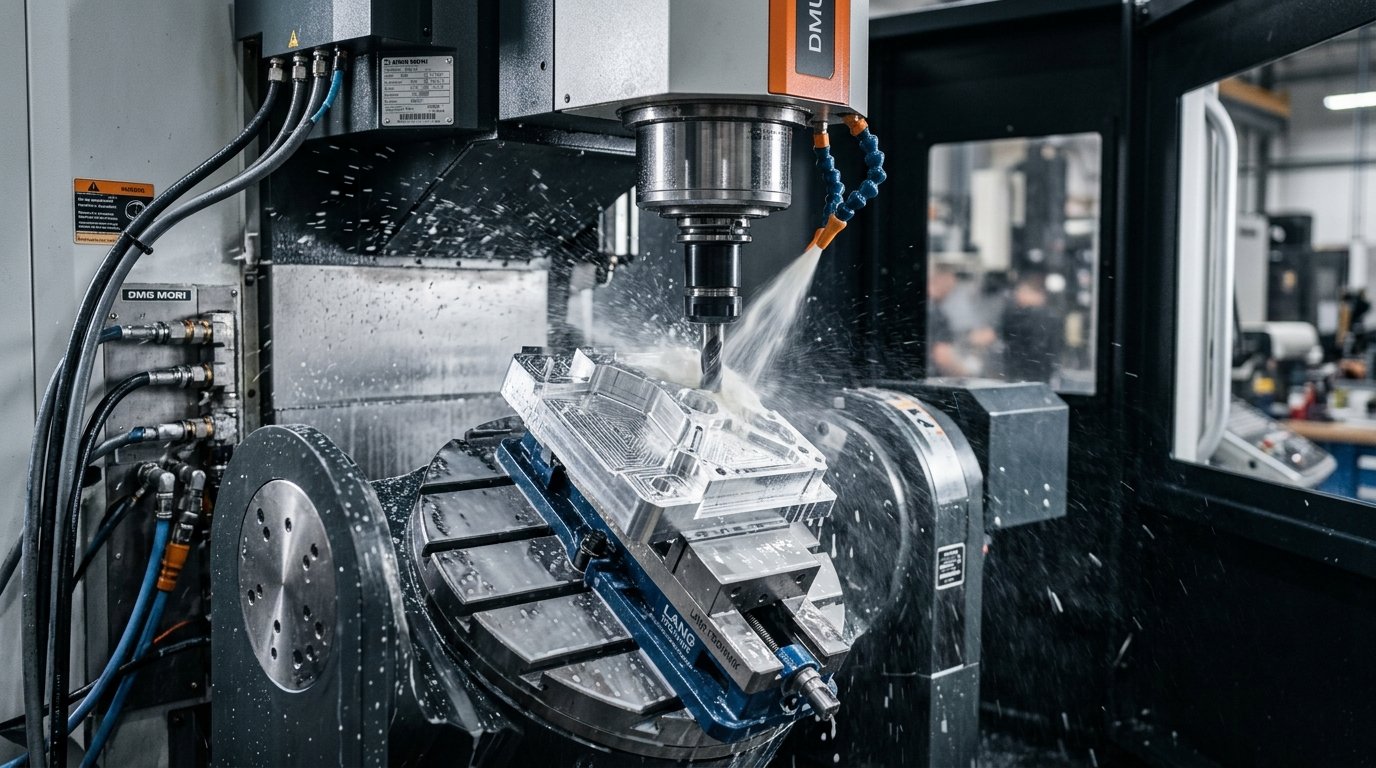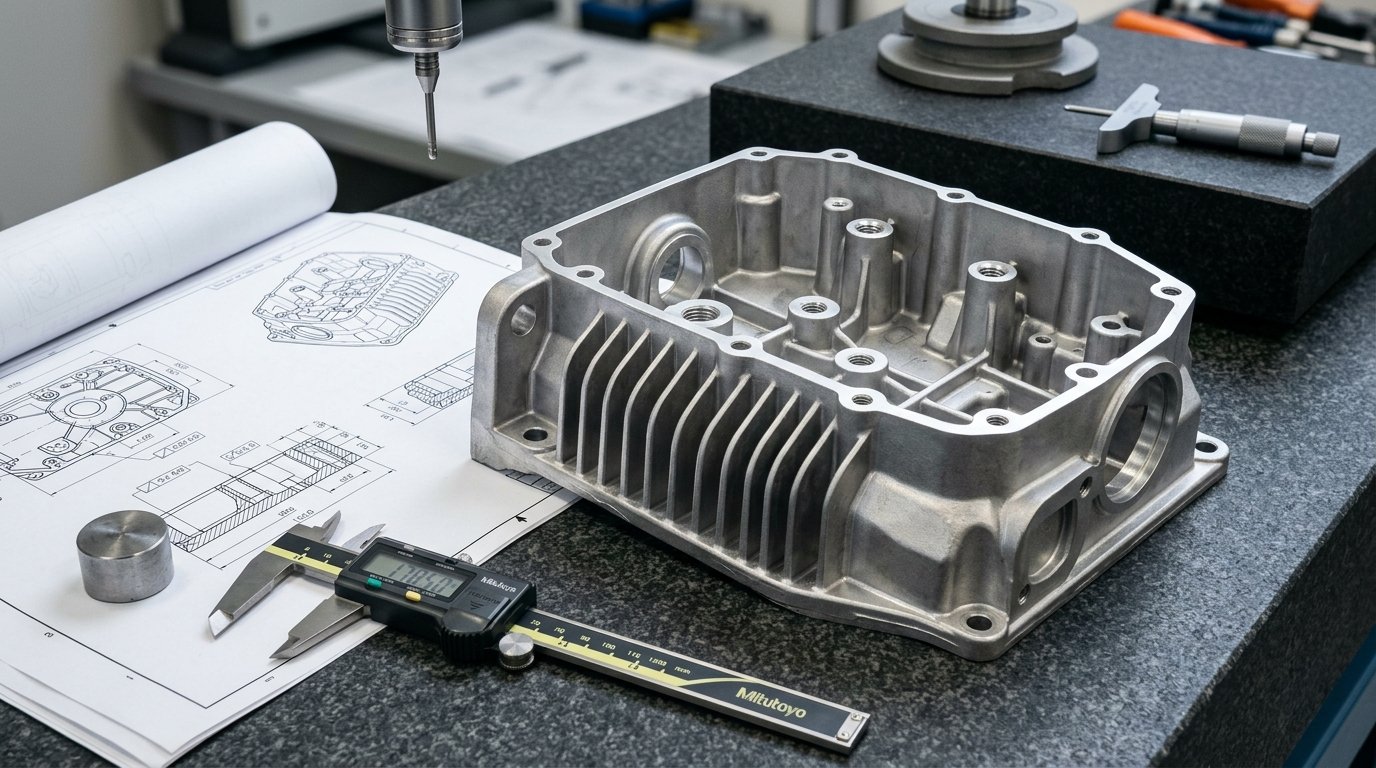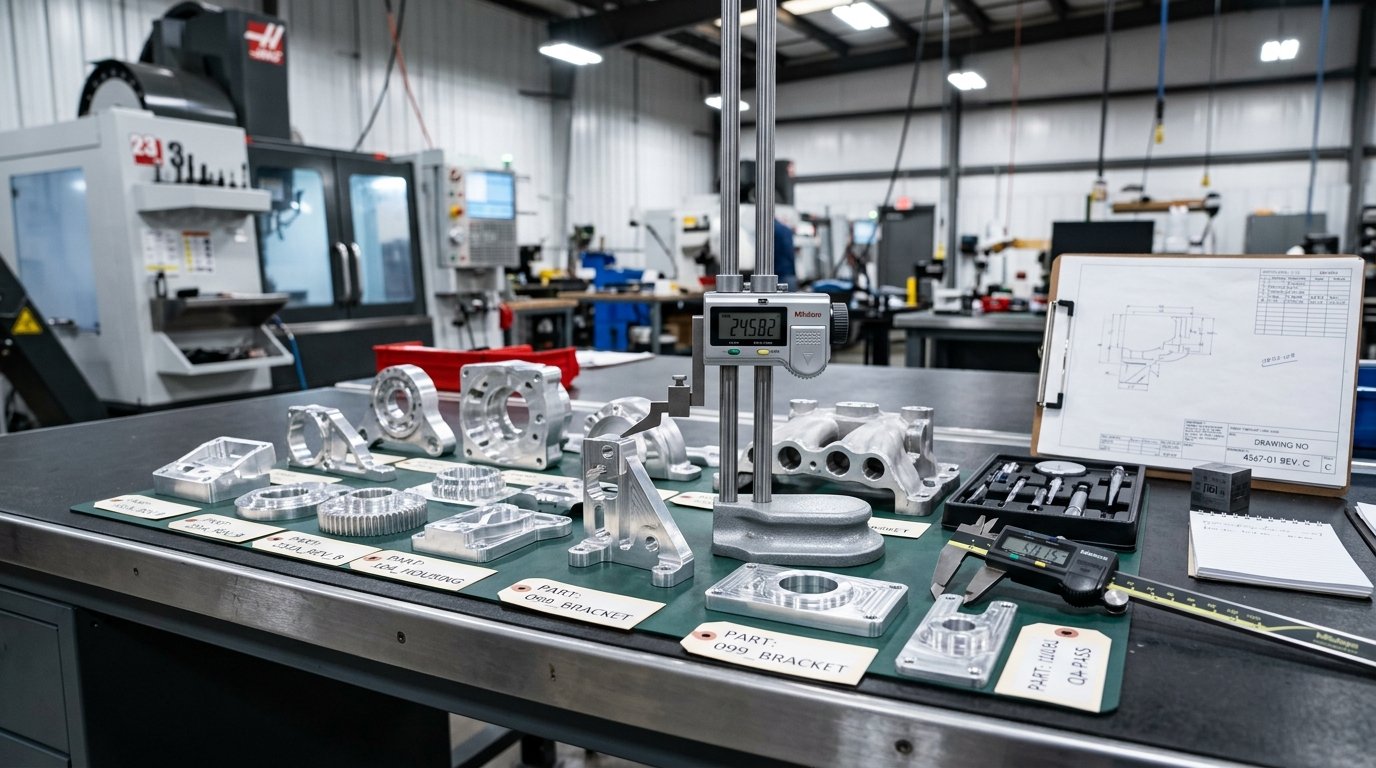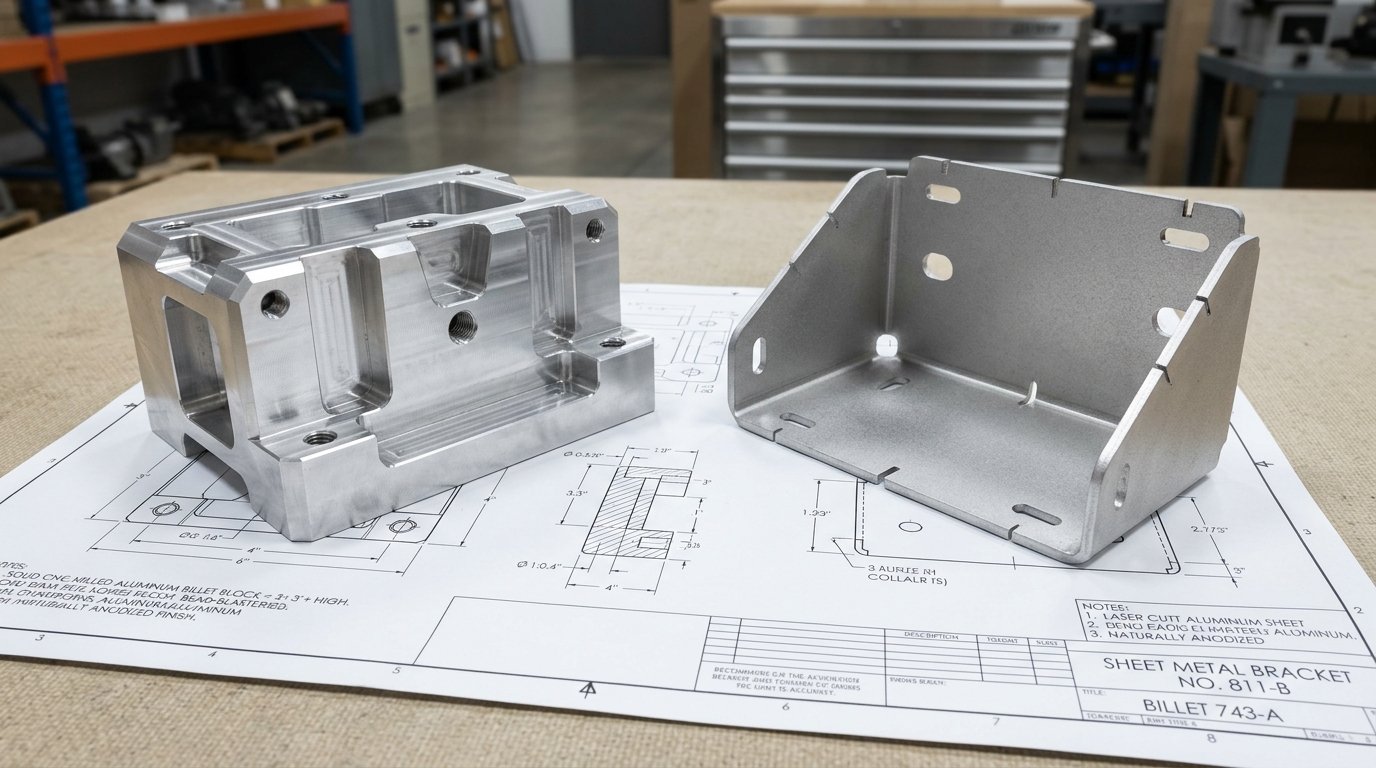
A complete CNC machining RFQ checklist for aluminum parts covers 15 details: a 3D STEP file, a 2D drawing, revision level, alloy and temper, quantity tiers, tolerances, critical features, threads, surface roughness, finish and color, masking, inspection, documentation, packaging, and delivery terms. Send all 15 together and most suppliers can quote accurately in one round, without a chain of clarification emails.
Why it matters: two suppliers quoting the same file will make different assumptions about anything you leave out. That’s the main reason quotes for identical parts can differ so widely, and why the cheapest number isn’t always the lowest real price.
Why Incomplete RFQs Cost You Time and Money
When an RFQ is missing information, a supplier has three options. They can ask you, which adds days. They can assume the most conservative option and price it in, which makes the quote higher. Or they can assume the cheapest option, which makes the quote look good until the parts arrive and don’t match what you needed.
None of those outcomes help you. A complete RFQ removes the guessing and makes quotes comparable, line for line.
It also signals something to the supplier. A clear, complete package tells a shop you know what you want, and serious suppliers tend to prioritize those requests.
The 15-Point CNC Machining RFQ Checklist at a Glance
| # | Detail | Why the supplier needs it |
| 1 | 3D CAD file (STEP) | Programming, machining time estimate |
| 2 | 2D drawing (PDF) | Tolerances, notes, threads, finish |
| 3 | Revision level | Makes sure everyone quotes the same design |
| 4 | Alloy, temper and material spec | Stock cost, machinability, finish behavior |
| 5 | Quantity tiers | Spreads setup cost; shows the price curve |
| 6 | General tolerance | Default accuracy for unmarked dimensions |
| 7 | Critical features | Where to focus machining and inspection |
| 8 | Threads and inserts | Tooling, depth, gauge checks |
| 9 | خشونة السطح | Finishing passes and tooling |
| 10 | Finish type and color | Outside process cost and lead time |
| 11 | Masking requirements | Labor for protecting bores, threads, contacts |
| 12 | متطلبات التفتيش | Inspection time and equipment |
| 13 | Documentation | Certificates and reports to prepare |
| 14 | Packaging and marking | Protection and identification costs |
| 15 | Delivery terms and target date | Lead time, shipping method, landed cost |
The sections below explain each item, what to write, and what tends to go wrong.
Files and Drawing Details (Items 1–3)
1. 3D CAD model in STEP format
Send a STEP (.stp or .step) file. It opens in almost every CAM system without conversion problems. Native files such as SolidWorks or Creo can work, but only if the supplier has the same software and version. IGES and Parasolid are acceptable backups.
Avoid STL files for machining quotes. STL describes a shape as triangles, which loses true circles and flat faces. It’s fine for 3D printing, but poor for machining.
Common mistake: sending an assembly file when you want one part quoted. Send each part as its own file, named with the part number.
2. 2D drawing in PDF format
A 3D model shows the shape. A drawing tells the supplier how accurate it must be and what else has to happen to it. Tolerances, thread callouts, surface finish, edge breaks, finish notes and inspection requirements live on the drawing.
Can you get a quote without one? Often yes, for simple prototypes. The supplier will apply a default tolerance. But if any feature matters for fit or function, a drawing is the only reliable way to say so.
Use a recognized dimensioning standard. In the US, that’s usually ASME Y14.5 for dimensioning and tolerancing. Elsewhere, ISO GPS standards are common.
3. Revision level
Put the revision letter or number on the drawing, in the file names and in your email. Suppliers often receive several versions of the same part during a project. If the revision isn’t clear, you can end up comparing quotes for different designs, or worse, ordering parts to an old revision.
Tip: if the 3D model and drawing disagree, say which one governs. Most buyers make the drawing the controlling document.
Material and Quantity (Items 4–5)
4. Alloy, temper and material specification
“Aluminum” isn’t enough. State the alloy and temper, for example 6061-T6 or 7075-T651. The temper changes strength, machinability and how the part behaves after machining. T651 plate is stress-relieved, which helps large plates stay flat.
If your industry requires a material specification, such as an AMS or ASTM standard, write it on the drawing. If you need a mill certificate, say so in the RFQ.
Not sure which alloy to use? Say what the part does and ask for a recommendation. That’s better than picking 7075 “to be safe” and paying for strength you don’t need. Our guide to مواد التصنيع باستخدام الحاسب الآلي (CNC) covers the common choices.
5. Quantity tiers
Ask for several quantities in one request, for example 1, 10, 50 and 200 pieces. Setup and programming are fixed costs, so the price per part falls as quantity rises. A tiered quote shows you exactly where the savings start.
Also tell the supplier about expected annual volume, if you know it. A part needed in batches of 50 four times a year may be quoted differently from a true one-off.
Tolerances and Features (Items 6–9)
6. General tolerance
State a general tolerance for dimensions without their own tolerance. The simplest way is a recognized class, such as ISO 2768-m, from the ISO 2768-1 general tolerance standard. It tells every supplier exactly what “untoleranced” means.
Without a general tolerance, each supplier applies its own default, and those defaults vary.
7. Critical features
Mark the features that matter most: bearing bores, dowel holes, sealing faces, mating surfaces. Some companies flag them as critical-to-quality (CTQ) characteristics with a symbol or balloon.
This does two things. It tells the supplier where to spend machining care and inspection time. And it tells them where they can relax, which keeps price down.
Our view: tight tolerances on every dimension are the single most common reason for inflated quotes. Tighten only what affects fit or function.
8. Threads and threaded inserts
Call out every thread with size, pitch, class and depth, for example M5 × 0.8 – 6H, 10 mm deep. A hole modeled at the tap drill size isn’t a thread unless the drawing says so.
For aluminum parts that are assembled and disassembled often, consider helical or key-locking threaded inserts. Specify the insert type and part number if you have a preference.
9. Surface roughness
State roughness values only where they matter, for example Ra 1.6 µm on sealing faces. Leave the rest at the standard as-machined finish.
A low roughness value on every face adds finishing passes for no benefit. Note too that bead blasting changes roughness, so specify roughness after any blasting step if it matters.
Finishing (Items 10–11)
10. Finish type and color
Be specific:
- Anodizing: type (II or III), class (clear or dyed), color, and ideally the specification, such as MIL-A-8625
- Bead blasting: media and grit, or a reference sample
- Powder coating: color code, such as a RAL number, and gloss level
- Chemical conversion coating: type and class
“Black anodized” leaves too much open. Type II and Type III black anodize differ in thickness, wear resistance, dimensions and price.
For color-matched parts, provide a reference sample or say which parts must match each other. Different alloys and different anodizing batches don’t always match.
11. Masking requirements
List the surfaces that must stay bare: bearing bores, precision fits, threads, electrical contact points and grounding pads.
Masking is manual work, and it often explains price differences between quotes. If one supplier included masking and another didn’t, the cheaper quote may not be for the same part.
Quality and Documentation (Items 12–13)
12. Inspection requirements
Say what inspection you expect:
- Standard inspection: sampling of key dimensions
- First-article inspection (FAI): every dimension and note measured on the first part
- CMM report: coordinate measuring machine data for critical features
- 100% inspection of specific features, where function demands it
Also state any industry format, such as AS9102 for aerospace FAI. Inspection takes real time, so leaving it out of the RFQ often means a surprise charge later.
13. Documentation
List every document you need with delivery:
- Material certificate (mill cert)
- Certificate of conformance
- Inspection report or FAI report
- Finish certificate
- RoHS or REACH declarations, if relevant
- Lot or serial traceability records
If your quality system requires a certified supplier, for example to ISO 9001, AS9100 or ISO 13485, say so in the RFQ, not after the quote.
Delivery and Commercial Terms (Items 14–15)
14. Packaging and part marking
Aluminum scratches easily. Say if parts need individual bagging, foam inserts or separators for cosmetic surfaces.
If parts need marking, specify the content (part number, revision, lot), the method (laser marking, engraving or label) and the location.
15. Delivery terms and target date
Give a target delivery date, not just “ASAP”. Say whether you want the date ex-works (when parts leave the factory) or delivered to your door, and state the delivery address.
For international orders, mention the Incoterm you prefer, such as EXW, FOB or DDP. It decides who pays shipping and duties, and it changes the price you’re comparing.
What If You Don’t Know a Detail Yet?
Early in a project, some answers won’t exist yet. That’s normal. The fix isn’t to leave the field blank. It’s to say what you know and what you’re unsure about.
- Material undecided: state what the part does and the load or environment, and ask the supplier to quote 6061-T6 with 7075-T6 as an option.
- Finish undecided: ask for the as-machined price plus an add-on price for Type II anodize. You can decide later without re-quoting.
- Quantity unknown: give a realistic range, such as “5 now, possibly 100 to 300 next year”.
- Tolerances not finalized: quote to a general class such as ISO 2768-m, and mark the few features you already know are critical.
- Inspection undecided: ask for the price of a standard inspection and of a full first-article report, as separate lines.
Writing “TBD” without context forces the supplier to guess. Writing “undecided, please quote options A and B” gets you useful prices and a clear choice.
Prototype RFQ vs Production RFQ: What Changes?
The same checklist applies to both, but the emphasis shifts.
For a prototype RFQ, speed and flexibility matter most. Keep tolerances realistic, accept standard finishes where you can, and ask for the fastest reasonable lead time. A full documentation package often isn’t needed yet.
For a production RFQ, consistency and total cost matter most. Add:
- Expected annual volume and batch sizes
- Firm material specification and mill cert requirement
- First-article inspection on the first batch, then sampling plans
- Packaging and labeling standards
- Change notification expectations, meaning the supplier tells you before changing material source, process or sub-supplier
- Price validity and how often prices are reviewed
Many buyers send their prototype RFQ format for production parts and only discover the missing items after the first delivery. A short production addendum to your template avoids that.
How Can You Protect Your Design When Sending an RFQ?
RFQs share your drawings, sometimes with several companies at once. A few simple steps reduce the risk:
- Sign a mutual NDA first for unreleased products, before sending CAD files.
- Mark drawings “Confidential” with your company name on every sheet.
- Share only what’s needed. Send part files, not the full product assembly.
- Ask how files are handled. Does the supplier pass them to sub-suppliers, such as an outside anodizer?
- Limit the bid list. Three well-chosen suppliers usually give a better picture than ten random ones.
For export-controlled designs, check your compliance obligations before sending files to any supplier outside your country.
Copy-and-Send RFQ Template for Aluminum Parts
Paste this into your email and fill in the blanks:
Subject: RFQ: [Part number] Rev [X], aluminum CNC machining
Attached: [part].step, [part]_Rev[X].pdf (drawing governs)
Material: [6061-T6 / 7075-T651 / other]; mill cert required: [Y/N]
Quantities: [1 / 10 / 50 / 200] pcs; expected annual volume: [qty]
General tolerance: [ISO 2768-m / per drawing]
Critical features: [list or “see CTQ marks on drawing”]
Threads/inserts: [per drawing / insert type]
Surface roughness: [Ra values on listed faces / standard]
Finish: [type, class, color, spec]; masking: [list surfaces]
Inspection: [standard / FAI / CMM report on CTQs]
Documents: [CoC, mill cert, inspection report, finish cert]
Packaging/marking: [requirements]
Target delivery: [date], [ex-works / delivered] to [city, country]
Incoterm: [EXW / FOB / DDP]
NDA: [attached / required before files]
Keep a copy of every RFQ you send. If quotes come back with different assumptions, you can point to exactly what you asked for.
How Do Suppliers Read Your RFQ?
It helps to know what happens on the other side. When a quote request lands, an estimator usually:
- Opens the 3D file and checks overall size and stock needed
- Reads the drawing for tolerances, threads and notes
- Plans setups, meaning how many times the part must be re-clamped
- Estimates cycle time per part
- Adds outside processes such as anodizing
- Adds inspection and documentation time
- Applies quantity breaks and lead time
Anything unclear at steps 2, 5 or 6 either stops the quote or gets priced conservatively. That’s why the drawing, finish spec and inspection requirements are usually where incomplete RFQs fall down.
Common RFQ Mistakes With Aluminum Parts
- STEP file only, with tight-tolerance features the supplier can’t see
- “Aluminum” with no alloy or temper
- One quantity only, so the price curve is invisible
- Every dimension toleranced tightly
- Anodize specified without type or masking
- No inspection requirement, then a request for a full FAI after delivery
- Different revisions of the same part sent to different suppliers
- “ASAP” instead of a date, so suppliers quote their standard lead time
Fixing these before sending usually saves more time than any supplier’s fast quoting promise.
How Should You Compare Quotes Once They Arrive?
When quotes come back, line them up against your checklist:
- Does each quote state the same alloy, temper and finish?
- Has each supplier accepted your tolerances, or noted exceptions?
- Is masking included?
- Is the inspection you asked for included, or extra?
- Is the lead time ex-works or delivered?
- What documents are included?
Then compare landed cost per part at the quantity you’ll actually order. Our guide to aluminum CNC machining cost explains what drives the numbers you’ll see.
الأسئلة الشائعة
What files are needed for a CNC machining quote?
Send a 3D STEP file for the part geometry and a 2D PDF drawing for tolerances, threads, finish and notes. The STEP file lets the supplier program and estimate machining time. The drawing defines accuracy and requirements. For simple prototypes a STEP file alone may work, but the supplier will apply default tolerances.
Is a STEP file enough for a CNC quote?
For a simple prototype with no critical fits, a STEP file is often enough, and the supplier will use a default tolerance. If any feature matters for fit, sealing or function, add a 2D drawing. Threads, tolerances, surface finish and anodize requirements are rarely communicated reliably by a 3D model alone.
Why do CNC quotes for the same part differ so much?
Different suppliers make different assumptions about anything the RFQ doesn’t specify, such as tolerances, finish, masking, inspection and delivery terms. Hourly rates and business models also differ. A complete RFQ removes most assumptions, so the remaining price difference reflects the suppliers rather than guesses.
How many quantities should I request in an RFQ?
Ask for three or four quantity tiers, such as 1, 10, 50 and 200 pieces. Setup and programming costs are fixed, so the price per part drops as quantity rises. Tiered pricing shows where savings begin and helps you plan batch sizes for prototypes and production.
How long should a CNC machining quote take?
With a complete RFQ, many suppliers return quotes for straightforward aluminum parts within one or two working days. Complex parts, many line items or special processes can take longer. Missing information is the most common cause of delays, because it triggers clarification emails before pricing can start.
Sending Your CNC Machining RFQ Checklist to Elite Mold Tech
Use the checklist above for every new aluminum part, and keep the template ready for your team. Most quoting delays disappear once all 15 details travel together.
إيليت مولد تك quotes aluminum parts from engineer-reviewed drawings through our خدمة التصنيع الآلي باستخدام الحاسب الآلي الرقمي, and we’ll flag anything that could raise cost before you order. Send your RFQ package with quantity tiers, and we’ll respond with pricing and DFM notes.