Two parts of identical size, made from the same aluminium block, can differ in price by a factor of three. Nothing about that is arbitrary. The difference sits in the drawing, in decisions an engineer made early and often without knowing the cost attached.
That is worth understanding, because most cost reduction opportunities disappear once a design is released. Changing a tolerance callout during design review costs nothing. Changing it after production has started means requalification, updated documentation and possibly new fixturing.
This guide covers the nine factors that move a CNC machining quote most, what each one does to the manufacturing process, and where the sensible trade-offs sit.
How a Machining Quote Is Actually Built
Before the individual drivers, it helps to know what a supplier is calculating.
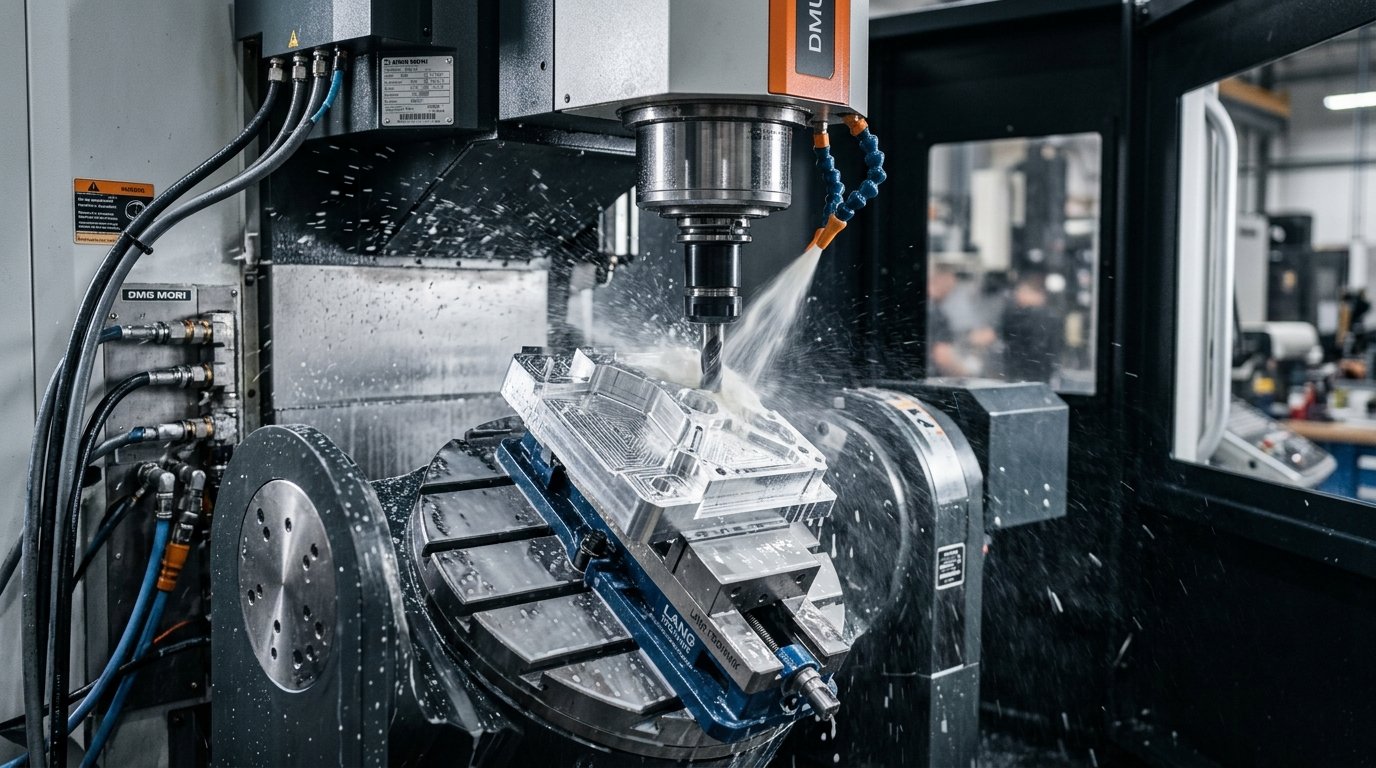
A quote covers material, machine time, setup and programming, tooling, inspection, finishing and margin. Machine time and setup usually dominate. Material matters more for expensive alloys and large stock removal. Inspection grows with tolerance tightness and documentation requirements.
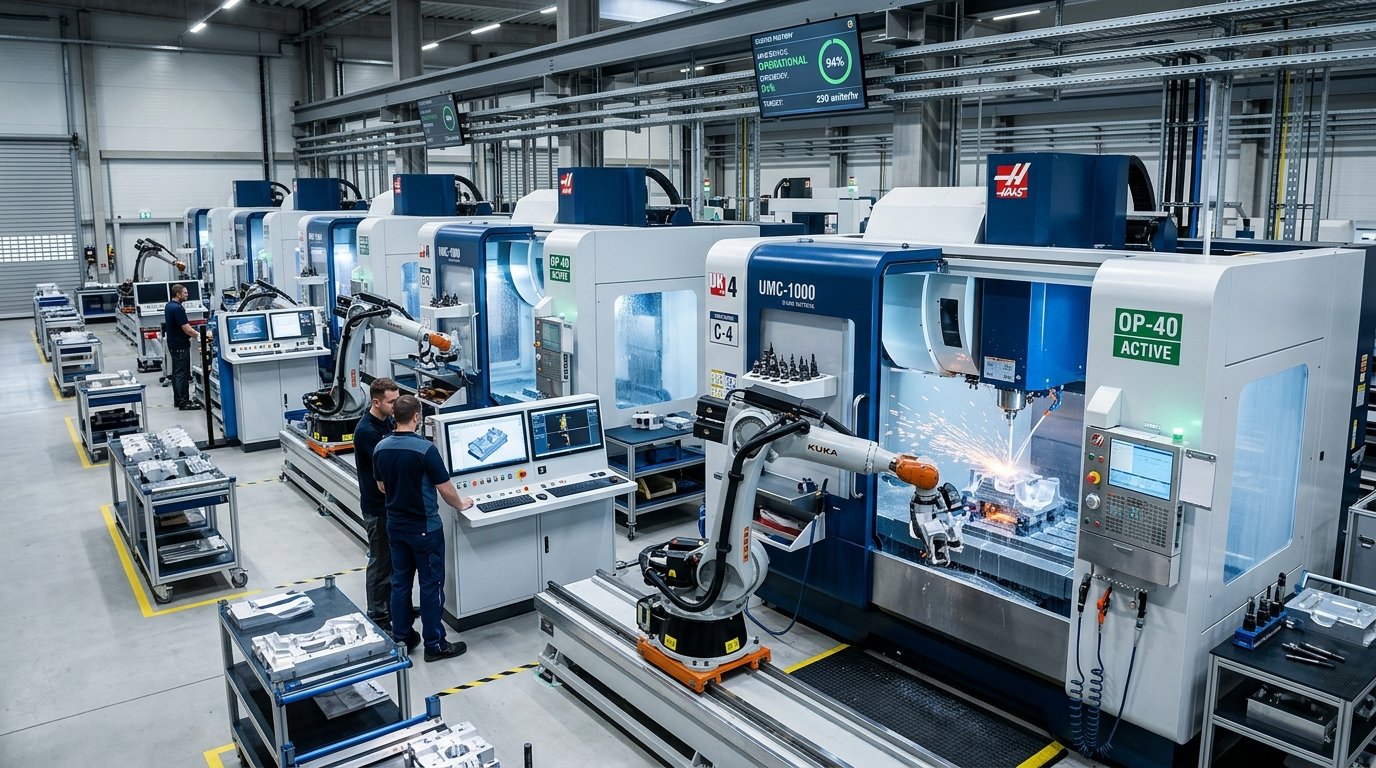
Setup behaves differently from the rest. It is a fixed cost per batch rather than per part, which is why unit price falls steeply as quantity rises at the low end and then flattens. A design that reduces setups therefore delivers savings at every volume, while one that reduces cycle time mainly helps at higher volumes.
1. Tolerances
This is the largest and most commonly misapplied driver.
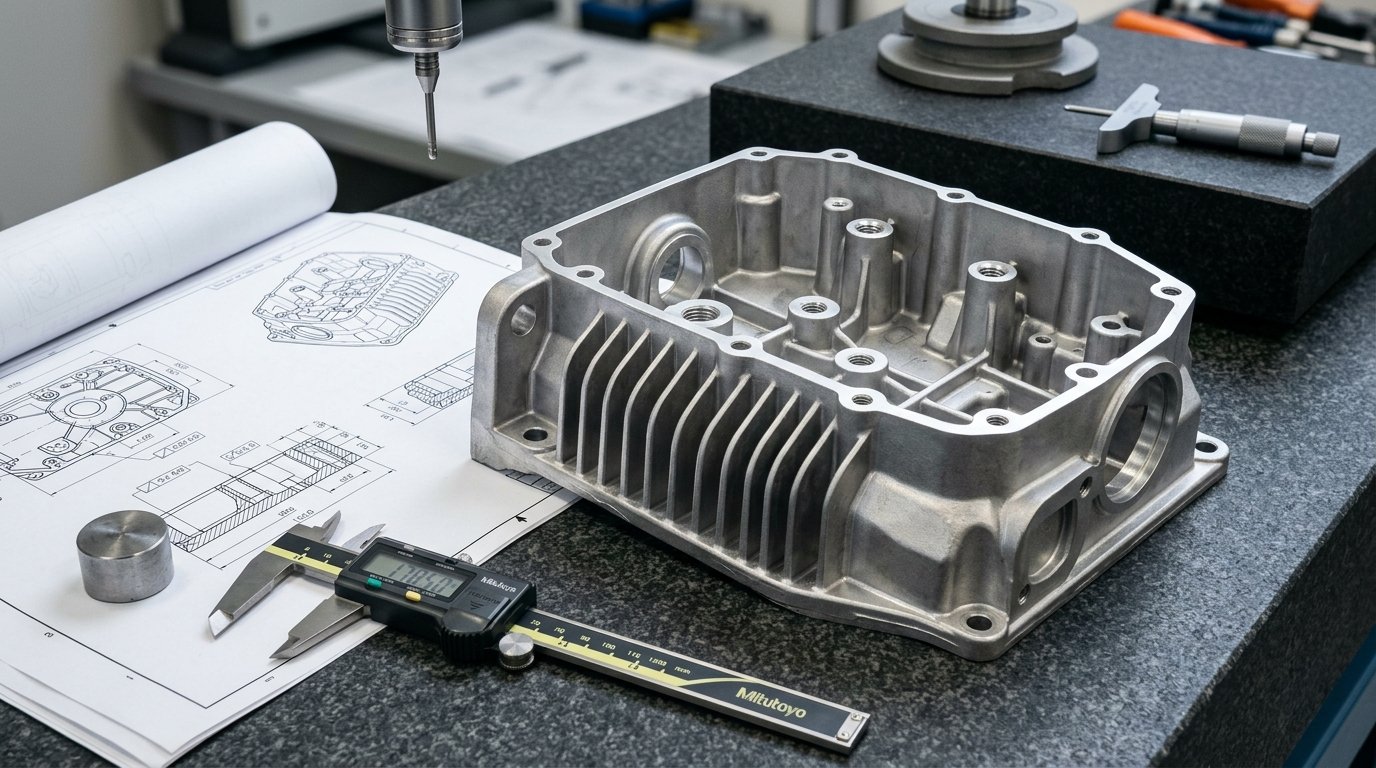
Tighter tolerances require slower feeds and speeds, more careful setups, better fixturing, more frequent tool changes, more inspection and higher scrap rates. Every one of those adds cost, and they compound.
Standard machining tolerances, typically around ±0.005 inches or ±0.127 mm for metals, are achievable at normal speeds with routine inspection. Moving to ±0.001 inches changes the process. Moving tighter than that changes it again, potentially requiring grinding, temperature-controlled inspection or specialised equipment.
The common error is applying a tight blanket tolerance across an entire drawing when only two or three features need it. A bearing bore and a mating face genuinely require control. A clearance hole and a cosmetic edge do not.
What to do: identify functional features and tolerance those tightly. Leave everything else at general tolerance, typically referencing ISO 2768 medium or fine as appropriate. This alone frequently reduces a quote substantially without any change to how the part performs.
2. Number of Setups
Every time a part is unclamped, repositioned and re-clamped, you pay for it twice. Once in the labour and machine time of the setup itself, and again in accumulated tolerance error, since features machined in different setups cannot hold the same relationship as features machined in one.
A part machinable from two directions costs considerably less than one requiring five, and holds better relationships between its features.
What to do: ask whether features on opposing or angled faces genuinely need to be there. Sometimes moving a hole to a face already being machined eliminates an entire operation. Where geometry genuinely demands multiple orientations, 5軸加工 can consolidate what would otherwise be several 3-axis setups, which often costs less overall despite the higher machine rate.
3. Material Selection
Material affects cost in three separate ways that are easy to conflate.
Raw stock price varies enormously. Aluminium 6061 is inexpensive and widely stocked. Titanium and specialist stainless grades cost multiples more.
加工性 determines how fast the material can be cut. Aluminium machines quickly. Stainless steel is slower and harder on tooling. Titanium is slower still and generates heat that requires careful management. A hard-to-machine material extends cycle time and consumes cutting tools, both of which appear in your price.
在庫状況 determines lead time and sometimes cost. Common grades in common forms are held in stock. Unusual alloys, specific tempers or non-standard bar sizes may require ordering, adding weeks.
What to do: confirm the material specification is driven by requirement rather than habit. Engineers frequently specify 7075 where 6061 would serve, or 316 stainless where 304 is adequate. Check the material options available and discuss alternatives with your supplier before finalising.
4. Part Size and Stock Removal
Machining is subtractive, so you pay for material you remove as well as material you keep.
A part machined from a large block where most of the volume becomes chips carries both high material cost and long cycle time. Where the finished geometry is far from the starting stock shape, that gap is pure cost.
What to do: consider whether near-net-shape starting stock is available, such as extrusion, tube or plate closer to the final envelope. For higher volumes, consider whether casting or forging a blank and machining only critical features is more economical than machining entirely from solid.
5. Internal Corner Radii
This one surprises engineers regularly. Internal vertical corners in a machined pocket cannot be sharp, because the cutting tool is round. The corner radius equals the tool radius.
Specifying a small internal radius forces a small diameter tool. Small tools are less rigid, must run at lower feed rates, deflect more and break more often. A pocket with 1 mm internal radii takes far longer to machine than the same pocket with 5 mm radii.
What to do: use the largest internal radius the design tolerates, ideally at least one third of the pocket depth. If a sharp internal corner is functionally required, discuss it explicitly, since alternatives such as corner relief or wire EDM may be more economical than forcing a tiny end mill.
6. Deep Pockets and Thin Walls
Tool length matters. A cutting tool extended far from its holder deflects, chatters and must run slowly to maintain accuracy. Deep cavities force long tools.
Thin walls compound the problem, since they flex under cutting force, producing chatter, poor finish and dimensional variation. Machining thin walls requires light cuts, multiple passes and sometimes custom fixturing to support the material.
What to do: keep pocket depth within about four times the pocket width where possible. Maintain wall thickness of at least around 0.8 mm in metals, thicker for plastics. Where a deep feature is unavoidable, flag it for DFM discussion rather than assuming it is routine.
7. Threads and Small Features
Threads add operations. Very small threads, very deep threads and threads in hard materials all add more.
Deep threaded holes beyond about three times the diameter risk tap breakage, which means a scrapped part at whatever stage the break occurs. Small diameter holes, particularly deep ones, require small drills with the same rigidity problems as small end mills.
What to do: use standard thread sizes wherever possible, since standard taps are cheap and available. Limit thread depth to what the joint actually requires rather than threading the full hole depth by default. Where a strong thread is needed in soft material, consider a threaded insert instead, which can cost less than machining and performs better.
8. Surface Finish Specification
As-machined finish comes free, since it is simply what the cutting process leaves. Anything better costs more.
Improved finishes require additional passes at lower feed rates, or secondary operations such as bead blasting, polishing, anodizing or plating. Each secondary operation adds handling, transport between operations and its own processing cost.
A cosmetic finish requirement on a part that lives inside an enclosure is pure cost with no return.
What to do: specify finish by function. Sealing surfaces and sliding interfaces need controlled finish. Structural brackets generally do not. Where a finish is cosmetic, define the acceptable standard clearly rather than leaving it to interpretation, since ambiguity here causes rejections that cost more than specifying properly.
9. Quantity
Setup and programming amortise across the batch. At quantity one, you carry the full setup cost. At quantity fifty, you carry one fiftieth.
This produces steep unit price reduction at low volumes and progressively flatter reduction as quantity rises. The practical implication is that ordering ten parts often costs far less per part than ordering two, sometimes barely more in total.
What to do: if you expect to need more parts within a reasonable timeframe, price the larger quantity before committing to the small one. Also ask about batching several different parts in one order, since suppliers can sometimes share setup efficiency across a family of similar components.
The Interaction Nobody Mentions
These factors are not independent. Tight tolerances on a thin wall in a hard material with a deep pocket is not the sum of four problems, it is a considerably harder problem than any of them alone. Cost rises faster than the individual factors suggest.
Conversely, relaxing one constraint sometimes unlocks savings elsewhere. Increasing an internal radius may allow a larger, more rigid tool, which permits faster feeds, which shortens cycle time beyond what the radius change alone would suggest.
This is exactly why a design for manufacture review before quoting is worth more than any checklist. A supplier’s engineering team looking at your actual geometry will see interactions that no general guidance can anticipate.
What a Good DFM Review Looks Like
A useful review returns specific comments on your part. It might note that a particular pocket radius forces a 3 mm tool where 6 mm would work, that a tolerance on a non-functional face could be relaxed, that a material substitution would cut cycle time, or that reorienting a feature would remove a setup.
A review that returns only a price has not examined the part. Treat willingness to provide detailed pre-quote feedback as a genuine selection criterion, because it is the clearest available signal of engineering capability.
A Practical Cost Reduction Sequence
Work through these in order before requesting a revised quote:
- Mark which features are functionally critical and relax tolerances on everything else
- Count the machining orientations your part requires and look for ways to reduce them
- Confirm the material is specified by requirement rather than convention
- Increase internal corner radii wherever the design allows
- Check wall thicknesses and pocket depths against the ratios above
- Standardise thread sizes and limit thread depths
- Specify surface finish by function rather than by default
- Price your realistic annual quantity, not just your immediate need
- Send the revised drawing for DFM review before finalising
Most parts carry savings in at least three of those. The exercise typically takes an afternoon and delivers more than a supplier change would.
Getting a Real Number
General cost drivers only take you so far. The specific saving available on your part depends on its geometry, material, tolerances and volume.
Elite Mold Tech provides engineering review before quoting, covering CNC加工 alongside molding, finishing and assembly from a single facility. Sending a drawing produces specific DFM comments on your geometry rather than a price alone, which is where the useful cost conversation starts.
よくある質問
Q: What is the biggest driver of CNC machining cost?
A: Machine time and setup usually dominate, and both are heavily influenced by tolerance specification. Applying tight tolerances only where function requires them is typically the single largest saving available on a drawing.
Q: How much does tolerance affect machining price?
A: Moving from standard to tight tolerances can increase cost substantially, because it slows cutting, requires better fixturing and increases inspection and scrap. The effect compounds when combined with difficult materials or thin sections.
Q: Is it cheaper to machine aluminium or steel?
A: Aluminium is generally cheaper on both counts, costing less as raw stock and machining considerably faster. Steel and stainless slow cycle times and consume more tooling, though material choice should follow function rather than cost alone.
Q: Does ordering more parts reduce the unit price?
A: Yes, particularly at low volumes, because setup and programming costs spread across the batch. The reduction is steep from one to fifty pieces and flattens progressively as quantities rise further.
Q: Why do internal corner radii affect cost?
A: Internal corners are cut by round tools, so a small radius forces a small diameter tool. Small tools are less rigid, must run slower, deflect more and break more often, all of which extend machining time.