
Nylon (PA) CNC Machining Service
Get precision Nylon (PA) CNC machined parts with excellent mechanical strength, wear resistance, and durability. Our advanced CNC machining capabilities produce accurate components with complex geometries, consistent tolerances, and quality surface finishes. Ideal for prototypes and production parts used in demanding industrial and mechanical applications.
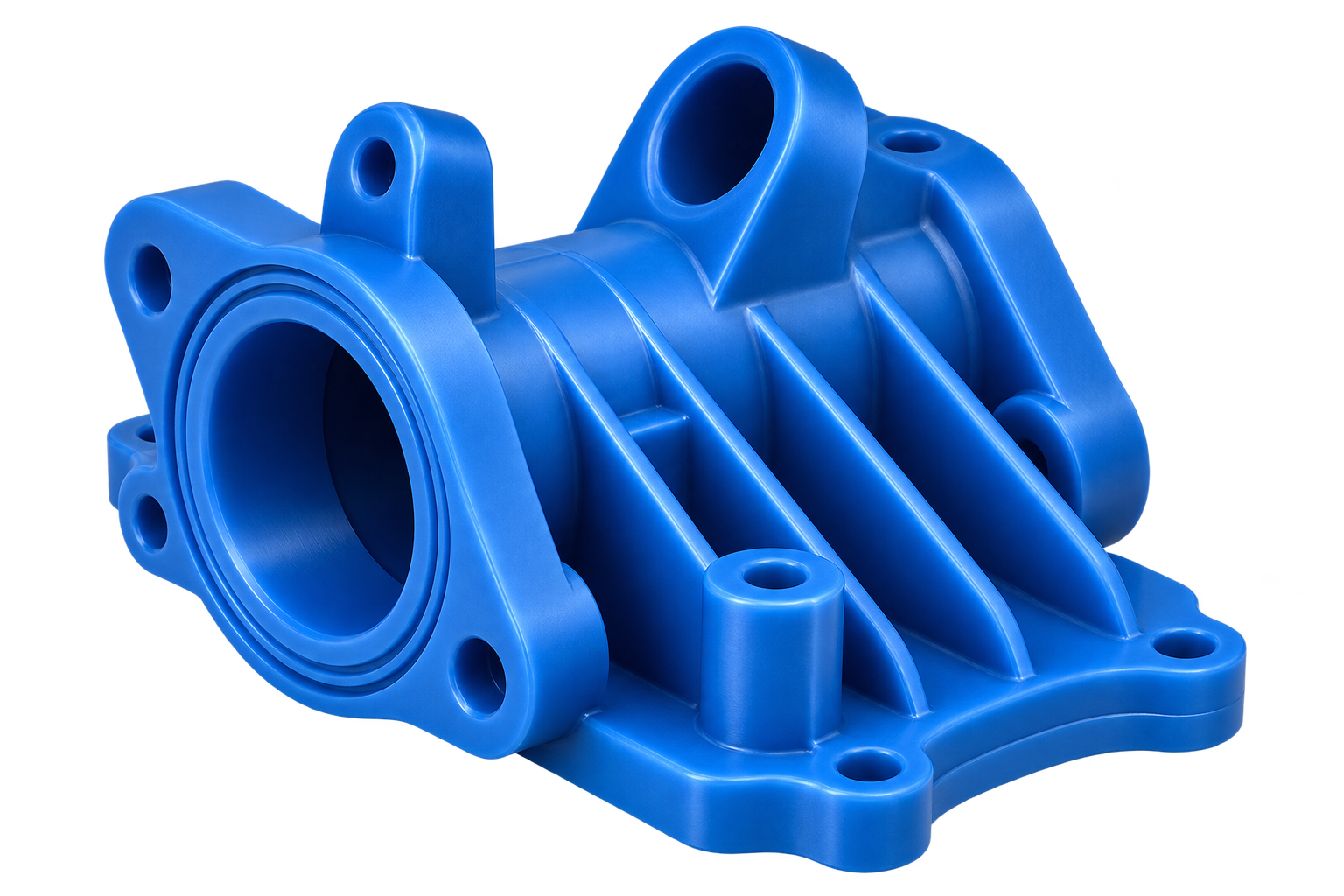
Nylon in CNC Machining
Nylon (PA) is a durable engineering thermoplastic valued for its high mechanical strength, excellent wear resistance, low friction, and good machinability. These characteristics make it an excellent material for CNC machined components that require reliable performance under repeated movement and mechanical loads.
Nylon can be precisely machined into complex geometries and functional parts while maintaining good dimensional accuracy. It is commonly used for gears, bearings, bushings, rollers, electrical components, automotive parts, fixtures, and industrial machinery components.
| Available Nylon Grades | PA6 Nylon, PA6 + GF15, PA6 + GF30, PA66 Natural, PA66 Black |
| 価格 | $ |
| リードタイム | 10日未満 |
| 肉厚 | 0.8 mm |
| 公差 | ±0.125 mm(±0.005 インチ) |
| 最大部品サイズ | 1200 × 500 × 150 mm |
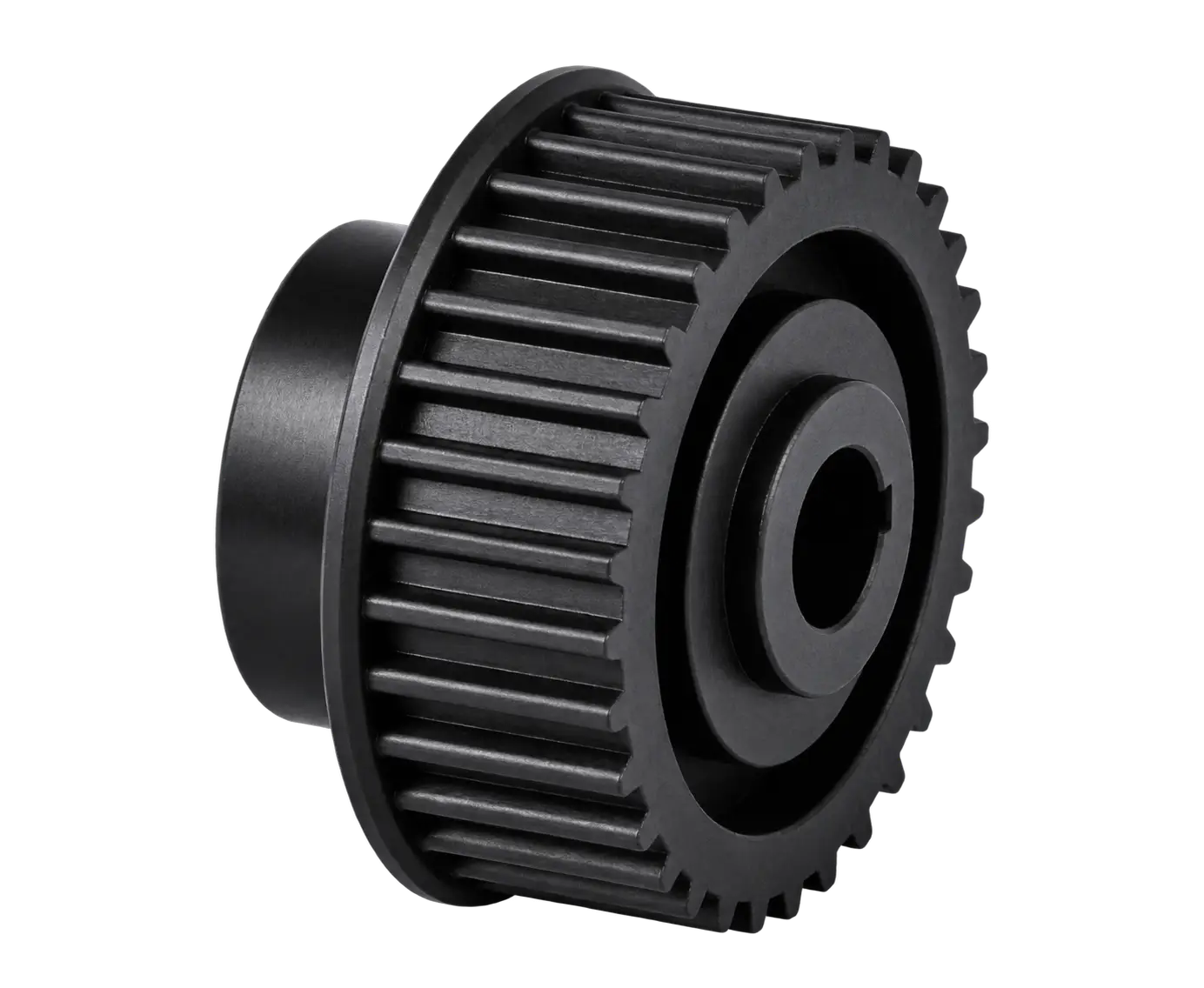
Nylon PA CNC Machining Materials
Machined Nylon Properties
Nylon (PA) is a high-performance engineering thermoplastic valued for its excellent mechanical strength, wear resistance, toughness, and low-friction characteristics. Its combination of durability and machinability makes it well suited for precision CNC components exposed to repeated movement, mechanical loads, and demanding operating conditions.
一般的なCNC加工公差
| 説明 | 一般公差または標準 |
|---|---|
| 一般寸法公差 | ±0.005″ (±0.127 mm) for metals; ±0.010″ (±0.254 mm) for plastics in line with ISO 2768-mK unless otherwise specified |
| 厳しい公差 | Down to ±0.001″ (±0.025 mm) available upon request, with detailed 2D drawings and GD&T specifications |
| 最小フィーチャーサイズ | ~0.020″ (0.50 mm), depends on part geometry, tool diameter, and material |
| 穴径公差 | ±0.002″ (±0.05 mm) typical; tighter tolerances with boring or reaming |
| 平坦性/平行性 | ≤0.002″ per 6″ (≤0.05 mm per 150 mm), varies by material and fixture setup |
| ネジの公差 | ISO/ASMEに準拠した標準のメートルねじとインペリアルねじ、ご要望に応じてカスタムねじや細目ねじも承ります。 |
| 角度公差 | 標準 ±0.5 |
| エッジコンディション | 特に断りのない限り、鋭利なエッジはデフォルトで折られ、バリ取りされます。 |
| 表面仕上げ(標準) | 機械加工時のRaは3.2μm(125μin)。研磨、ビーズブラスト、陽極酸化処理などによる仕上げの向上が可能。 |
| 最大部品サイズ | Milling: Up to 80″ × 48″ × 24″ (2,032 × 1,219 × 610 mm) Turning: Up to 62″ length × 32″ diameter (1,575 × 813 mm) |

Advantages and Limitations of Nylon CNC Machining
Nylon is widely used for CNC machining because it combines strength, wear resistance, low friction, and lightweight performance. However, factors such as moisture absorption and temperature sensitivity should be considered when selecting Nylon for precision components.
- High Mechanical Strength:
Nylon provides excellent strength and toughness, making CNC-machined parts suitable for repeated loads and demanding mechanical applications. - Low Friction & Wear:
Its naturally low-friction characteristics make Nylon particularly suitable for gears, bushings, bearings, rollers, and other moving components. - Good Chemical Resistance:
Nylon performs well against many oils, greases, fuels, and common chemicals, making it useful in various industrial environments. - Lightweight Performance:
Nylon offers useful mechanical strength at a significantly lower weight than many metals, making it suitable for weight-sensitive components. - Cost-Effective Material:
Its combination of machinability, durability, and affordability makes Nylon a practical choice for prototypes, custom parts, and low-volume production.
- Moisture Absorption:
Nylon can absorb moisture from its surroundings, which may cause dimensional changes and affect mechanical properties in precision applications. - Temperature Limitations:
Although Nylon performs well under moderate temperatures, prolonged exposure to high heat can reduce its stiffness and dimensional stability. - Machining Considerations:
Nylon requires appropriate cutting tools, feeds, speeds, and heat management. Poor machining parameters may cause deformation, dimensional variation, or an inconsistent surface finish.
エリート・モールド・テックでデザインに命を吹き込もう
Elite Mold Techの精密CNC機械加工を体験してください。複雑なプロトタイプから大規模な生産まで、私たちはあなたのアイデアを現実にする準備が整いました。あなたのプロジェクトの必要性を議論するために今日私達に連絡しなさい!
- 専門知識を広く共有
- 市場拡大
- 先進技術統合
- 共同イノベーションの機会
- 信頼性の高いオンデマンド・ソリューション
- すべてのアップロードは安全かつ機密です。
Nylon CNC Machining FAQs
Is Nylon difficult to machine?
Nylon is generally easy to CNC machine, but its moisture absorption and thermal sensitivity require proper machining control. Using suitable cutting tools, speeds, feeds, and cooling methods helps achieve accurate dimensions and smooth surface finishes.
Is Nylon flammable?
Recommended cutting speeds for brass vary depending on the specific alloy and machining process. Generally, cutting speeds for brass range between 100 to 300 meters per minute. The appropriate cutting speed helps maintain tool life and achieve a high-quality finish.
Which type of Nylon is best suited for machining?
PA66 (Nylon 66) is one of the most commonly used Nylon grades for CNC machining due to its high strength, stiffness, wear resistance, and thermal performance. It is suitable for producing durable precision components for demanding applications.
Which variety of Nylon is the strongest?
Brass generally offers easier machinability than aluminum. Compared to aluminum, brass has a lower tendency to stick to tools, allowing for faster machining at a lower power. Brass’s lower friction coefficient and superior chip formation result in less tool wear and higher precision during machining operations. Brass C360 is a highly machinable brass alloy, making it commonly referred to as free-machining brass.