Three processes cut flat material to shape, they overlap considerably in what they can handle, and choosing between them is often decided by what a supplier happens to own rather than by what the part needs.
That is a reasonable default when the part is undemanding. It becomes expensive when the part has a specific requirement, because each process has genuine limits that the others do not share. A material that cannot be lasered, a thickness that plasma handles poorly, an edge condition that rules out thermal cutting entirely.
This guide compares the three on the criteria that actually decide the choice.
각 프로세스의 작동 방식
Waterjet cuts with a high-pressure stream of water, usually carrying abrasive garnet for metals. It is a purely mechanical erosion process. No heat is applied to the material.
레이저 focuses a beam to melt or vaporise material, with an assist gas clearing the cut. It is a thermal process. Fibre lasers dominate metal cutting; CO2 lasers remain common for non-metals.
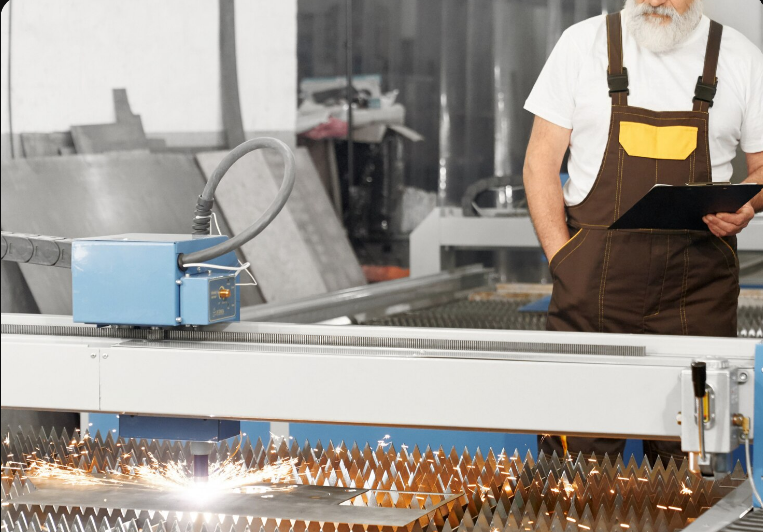
Plasma uses an ionised gas jet at very high temperature to melt material, blown clear by the gas flow. Also thermal, and only works on electrically conductive materials.
The Deciding Criteria
재료
This is often the first and last filter.
Waterjet cuts essentially anything. Metals, stone, glass, composites, ceramics, rubber, foam, plastics, and laminated or layered materials. It is the only one of the three with no material restriction worth mentioning.
레이저 cuts metals well, particularly steel, stainless and aluminium, though reflective materials such as copper and brass require appropriate laser sources. It cuts many plastics and wood, but some plastics produce toxic fumes when lasered, PVC being the standard example, and are unsuitable. Composites and layered materials often laser poorly because the layers respond differently to heat.
Plasma requires electrical conductivity, so it cuts metals only. No plastics, no composites, no glass.
If your material is non-conductive, plasma is out. If it is heat-sensitive, reflective or layered, laser becomes questionable. Waterjet remains available in every case.
두께
Plasma handles thick material efficiently and is often the most economical process for heavy plate.
Waterjet cuts thick material well and, unusually, cuts very thick sections that neither of the other processes reach practically. Cutting speed drops as thickness increases, which affects cost, but capability persists.
레이저 is fastest on thin material, where it substantially outperforms both alternatives. As thickness increases, laser speed and edge quality both decline, and beyond a certain point other processes become more sensible.
The general pattern: thin favours laser, medium is contested, thick favours plasma on cost and waterjet on quality.
열 영향 구역
The most important technical distinction between waterjet and the thermal processes.
Waterjet produces no heat affected zone. The material adjacent to the cut is unchanged, with no hardening, no tempering, no distortion from thermal stress, and no altered microstructure.
This matters when:
- The material is heat-treated and you cannot afford to alter its condition
- The part will be welded, since a hardened edge affects weld quality
- The part is thin or delicate and would distort thermally
- The material is hardened tool steel or similar
- The part goes into an application where edge properties are specified
Laser produces a small heat affected zone. Usually manageable, sometimes significant on sensitive materials.
Plasma produces a larger heat affected zone than laser, and enough heat input to cause noticeable distortion on thinner material.
If your part cannot tolerate heat input, waterjet is the answer and the comparison ends there.
엣지 품질
레이저 produces a clean, square, narrow-kerf edge on thin material, often good enough to use without secondary finishing.
Waterjet produces a good edge, though the cut surface shows characteristic striations that become more pronounced with thickness and speed. Slower cutting produces better finish, at higher cost. The edge is slightly tapered unless the machine has taper compensation.
Plasma produces the roughest edge of the three, with dross on the underside that usually requires cleaning, and a noticeable bevel.
For parts requiring a finished edge without secondary work, laser on thin material is usually the best choice. For parts that will be machined or finished afterward, edge quality matters less and cost dominates.
허용 오차
레이저 holds the tightest tolerances of the three on thin material, with a very narrow kerf.
Waterjet holds good tolerances, with the kerf wider than laser and some taper unless compensated. Capability is more consistent across thickness than laser, since laser accuracy degrades as material gets thicker.
Plasma is the loosest of the three, adequate for structural work and generally unsuitable where precision is required.
For any of these, if the part needs precision features, the practical approach is often to cut the profile with whichever process suits, then machine the critical features afterward.
Speed and Cost
레이저 is fastest on thin material by a wide margin, which makes it the cheapest option there.
Plasma is fast on thick material and has low operating costs, making it economical for heavy structural work.
Waterjet is the slowest, and abrasive consumption adds operating cost. It is generally the most expensive per metre of cut.
That cost difference is why waterjet is not the default despite its versatility. You pay for capability you may not need. Where the part has no heat sensitivity, no unusual material and no demanding edge requirement, laser or plasma will do the job for less.
비교 요약
| 요인 | Waterjet | 레이저 | Plasma |
| 자료 | Anything | Metals, some plastics, wood | Conductive metals only |
| Thin material | Capable | 최고 | Poor, distorts |
| Thick material | Capable, slower | Declines | Best on cost |
| Heat affected zone | 없음 | Small | Larger |
| Edge quality | Good, striated | Best on thin | Roughest, dross |
| 허용 오차 | Good | Best on thin | Loosest |
| 속도 | Slowest | Fastest on thin | Fast on thick |
| Relative cost | 최고 | 보통 | 최저 |
A Selection Sequence
1. Is the material conductive? If not, plasma is out.
2. Is the material heat-sensitive, hardened, layered or reflective? If yes, waterjet.
3. Will the part be welded, or does edge condition matter functionally? Waterjet avoids the hardened edge that thermal processes create.
4. How thick is it? Thin favours laser. Thick favours plasma on cost, waterjet on quality.
5. What edge quality do you need as-cut? If the part goes straight to use, laser on thin material. If it will be machined or finished, edge quality matters less.
6. What tolerance is required? Tight tolerance on thin material favours laser. Tight tolerance on features generally means secondary machining regardless of cutting process.
7. What volume? At higher volumes, per-part cutting cost matters more, which favours the faster processes where they are technically adequate.
Where Each Is Clearly Right
Waterjet: heat-treated metals, hardened tool steel, composites, glass, stone, layered materials, thick sections requiring good edge quality, and any part where thermal effects are unacceptable.
Laser: thin sheet metal in volume, parts needing a clean square edge without secondary work, tight profile tolerances, and intricate detail in thin material.
Plasma: thick structural steel plate, heavy fabrication work, and cost-sensitive cutting where edge quality and precision are secondary.
What Comes After Cutting
Worth considering during selection, because it changes the calculation.
Cut parts frequently need deburring, edge finishing, forming, welding or machining. A rougher cut edge that needs cleaning costs labour, and that labour can exceed the saving from a cheaper cutting process.
Conversely, if the part will be machined on all functional edges anyway, paying for a premium cut is money spent twice.
Look at the whole route rather than the cutting operation alone. A part cut by plasma and then machined may cost less than a laser-cut part, or considerably more, depending on how much machining is needed either way.
Practical Points When Ordering
Specify what matters, not the process. Tell the supplier the material, thickness, tolerance, edge requirement and whether heat input is acceptable. A supplier with several processes will pick correctly. Specifying the process yourself risks choosing wrong.
State clearly if the material is heat treated. This is the single most consequential piece of information and it is frequently omitted.
Ask about nesting. Parts cut from sheet are nested to minimise waste, and material utilisation affects cost. A design tolerant of nesting orientation cuts more economically.
Ask about secondary operations available. A supplier who can cut, form, finish and assemble removes handoffs, which matters more for schedule than most buyers expect.
Choosing Correctly for Your Part
The right process follows from material, thickness, edge requirement and what happens next. A supplier running several processes gives a more useful recommendation than one with a single capability to sell.
Elite Mold Tech runs 워터젯 절단 alongside sheet and tube fabrication, CNC machining and finishing from a single facility, which means process selection follows the part rather than available equipment. Sending a drawing with material and thickness produces a process recommendation and quote covering the full route.
자주 묻는 질문
Q: Which cutting process leaves no heat affected zone?
A: Waterjet, because it cuts by mechanical erosion rather than heat. Material adjacent to the cut is unchanged, which matters for heat-treated metals, parts that will be welded, and thin sections prone to thermal distortion.
Q: Is laser cutting always more accurate than waterjet?
A: On thin material, generally yes, with a narrower kerf and tighter tolerances. As thickness increases, laser accuracy and edge quality decline while waterjet capability stays more consistent.
Q: Can plasma cut aluminium and stainless steel?
A: Yes, since both are conductive. Edge quality is rougher than laser or waterjet and dross usually requires cleaning, so plasma suits structural work more than precision applications.
Q: Why is waterjet more expensive if it cuts everything?
A: It is the slowest of the three and consumes abrasive, which raises operating cost. You pay for versatility, so where a part has no heat sensitivity or unusual material, cheaper processes are adequate.
Q: Should I specify the cutting process on my drawing?
A: Generally no. Specify material, thickness, tolerance, edge requirement and whether heat input is acceptable, then let the supplier select. Specifying the process risks choosing one unsuited to the requirement.