
알루미늄 CNC 가공 서비스
Elite Mold Tech machines custom aluminum parts to your drawing, from one prototype to a full production run. We stock ten aluminum alloys, hold tolerances down to ±0.025 mm on request, and anodize, powder coat, and polish in house. Most aluminum CNC machining orders ship in under 10 days.
Why Engineers Choose Aluminum for Machined Parts
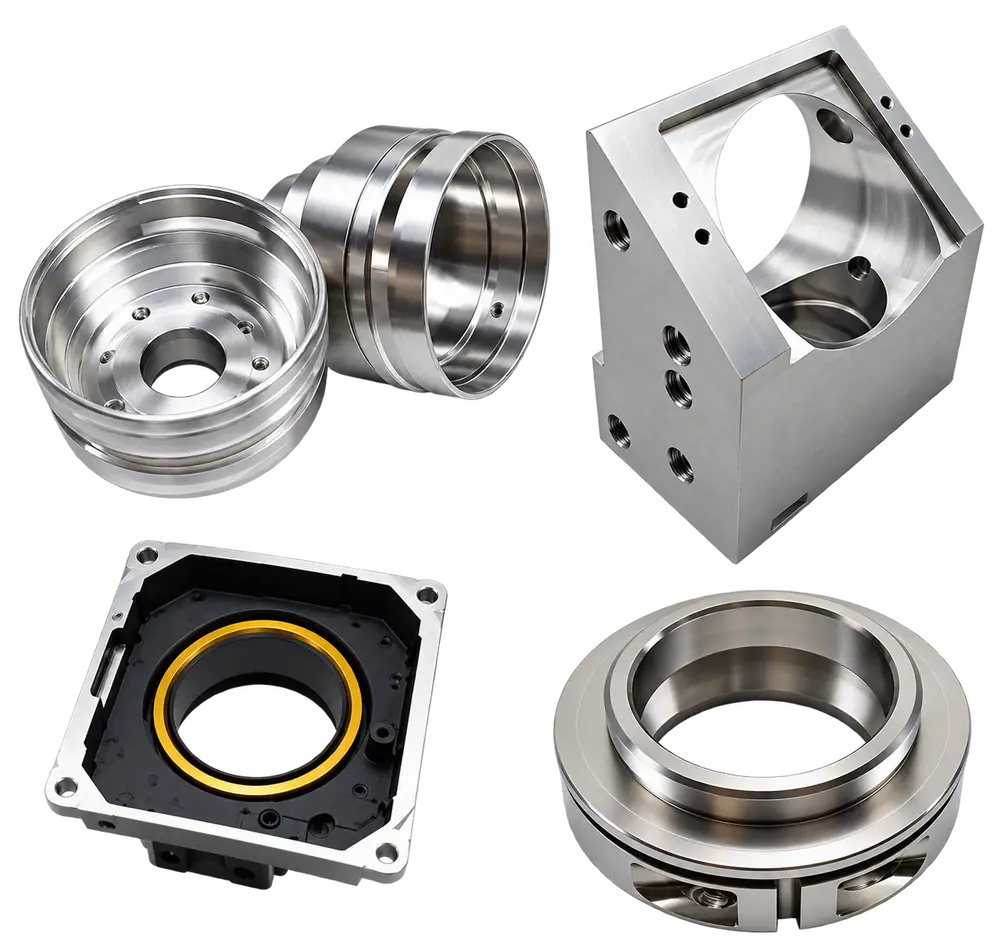
CNC machining aluminum is faster and cheaper than machining steel, because the metal cuts at higher feed rates. At 2.7 g/cm³ it weighs about a third as much as steel, conducts heat and electricity well, and forms its own oxide layer against corrosion. It also anodizes cleanly, so you can add hardness and color without a separate coating. For most parts that need metal strength without the weight, aluminum is the first material worth pricing.
Alloys: 10 in stock · Lead time: Under 10 days · Minimum wall: 0.75 mm · Tolerance: ±0.127 mm standard, ±0.025 mm on request · Finishes: 30+
Ten Aluminum Alloys, Matched to the Job
6061 알루미늄 CNC 가공
The default choice for most parts. It has good strength, cuts cleanly, welds well, and anodizes evenly. Used for brackets, housings, frames, and general structural work.
2024 알루미늄 CNC 가공
High fatigue resistance, which is why it appears in aircraft structures and truck wheels. It corrodes more easily than other alloys, so it usually needs a coating.
5052 알루미늄 CNC 가공
The marine alloy. It has excellent saltwater corrosion resistance and forms easily, though strength is lower. Common in tanks, enclosures, and sheet work.
5083 알루미늄 CNC 가공
Stronger than 5052 with the same corrosion resistance. It keeps its properties at cryogenic temperatures, so it suits pressure vessels and cold storage equipment.
6061-T6 알루미늄 CNC 가공
Heat-treated 6061 with the same machinability, for parts that carry real load. It is slightly less ductile than annealed 6061.
6063 알루미늄 CNC 가공
Softer than 6061 and chosen for appearance rather than strength. It takes the best anodized finish of any alloy here, so it suits trim, window frames, and visible panels. It is also the common extrusion alloy for aluminum section CNC machining.
6082 알루미늄 CNC 가공
A structural alloy with better corrosion resistance than 6061. It is common on European drawings for bridges, cranes, and marine parts.
7075 알루미늄 CNC 가공
Close to steel strength at aluminum weight. It costs more and machines slower, but it is the standard for aerospace fittings, gears, and high-stress structural parts. It does not weld well.
7075-T6 알루미늄 CNC 가공
Heat-treated 7075, the strongest alloy on this list. Used in aircraft structures, climbing hardware, and performance automotive parts where failure is not an option.
ADC12 (A380) 알루미늄 CNC 가공
A die casting alloy rather than a billet alloy. We machine ADC12 castings for automotive parts, electronic housings, and machinery components that need precise bores and sealing faces after die casting.
Quick Alloy Chooser
| If your part needs… | Start with | 왜 |
|---|---|---|
| General strength at low cost | 6061 or 6061-T6 | Cuts fast, welds, anodizes evenly |
| Maximum strength for its weight | 7075-T6 | Near steel strength, 503 MPa yield |
| Fatigue resistance under repeated load | 2024 | 140 MPa fatigue strength |
| Saltwater or outdoor exposure | 5052 or 5083 | Best corrosion resistance |
| A cosmetic anodized surface | 6063 | Most even anodized color |
| A European structural spec | 6082 | Common EN grade |
| Machining a cast blank | ADC12 | Built for die casting, then machined |
Still unsure? Our guide to choosing an aluminum alloy for CNC machining compares grades in more depth, and 6061 vs 7075 aluminum covers the most common choice. Tempers like T6 and T651 are explained in how to read aluminum alloys and tempers.
Tolerances We Hold on Aluminum Parts
Unless your drawing says otherwise, we machine to ISO 2768-mK. Tighter tolerances are available when you send a 2D drawing with GD&T. Our guide to aluminum CNC machining tolerances explains what each level costs.
| 기능 | 표준 |
|---|---|
| General dimensions | ±0.127 mm (±0.005 in) for metals, ISO 2768-mK |
| 엄격한 허용 오차 | Down to ±0.025 mm (±0.001 in) on request, with 2D drawing and GD&T |
| Minimum feature size | About 0.50 mm (0.020 in), depends on geometry and tool |
| Minimum wall thickness | 0.75 mm |
| Hole diameter | ±0.05 mm (±0.002 in) typical, tighter with boring or reaming |
| Flatness and parallelism | ≤ 0.05 mm per 150 mm (≤ 0.002 in per 6 in) |
| Angles | 통상 ±0.5° |
| Threads | Metric and imperial per ISO and ASME; custom threads on request |
| Edges | Broken and deburred by default |
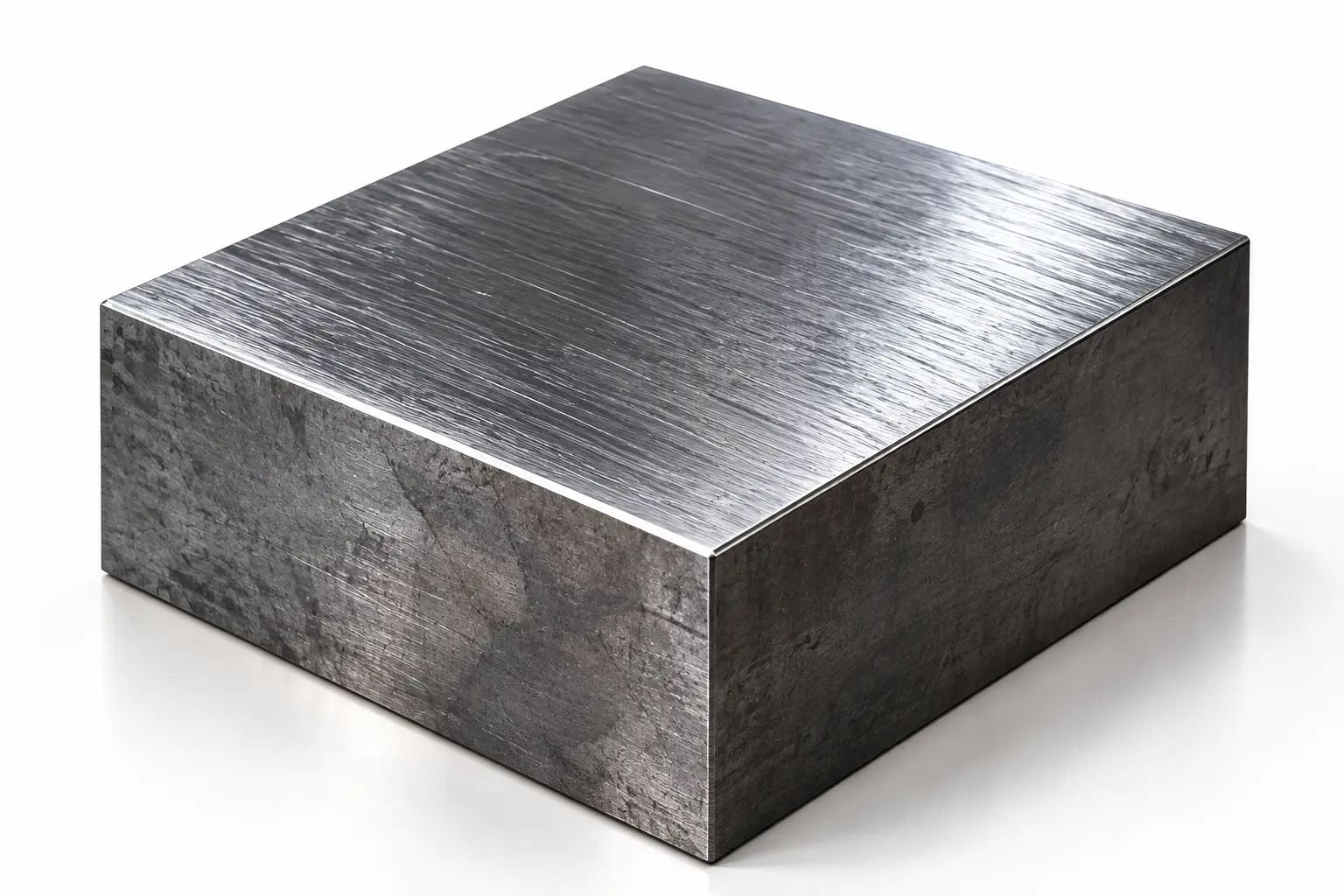
| As-machined surface | Ra 3.2 µm (125 µin) |
| 최대 부품 크기 | Milling up to 2,032 × 1,219 × 610 mm; turning up to 1,575 mm long × 813 mm diameter |
Finishes That Work Best on Aluminum
Aluminum takes more finishes than almost any other metal. The right one depends on wear, corrosion, appearance, and whether the part must conduct electricity. See all 30+ surface finishes.
| 완료 | 기능 | Best alloys | 참고 |
|---|---|---|---|
| 가공 후 상태 | Ra 3.2 µm, visible tool marks | All | Lowest cost |
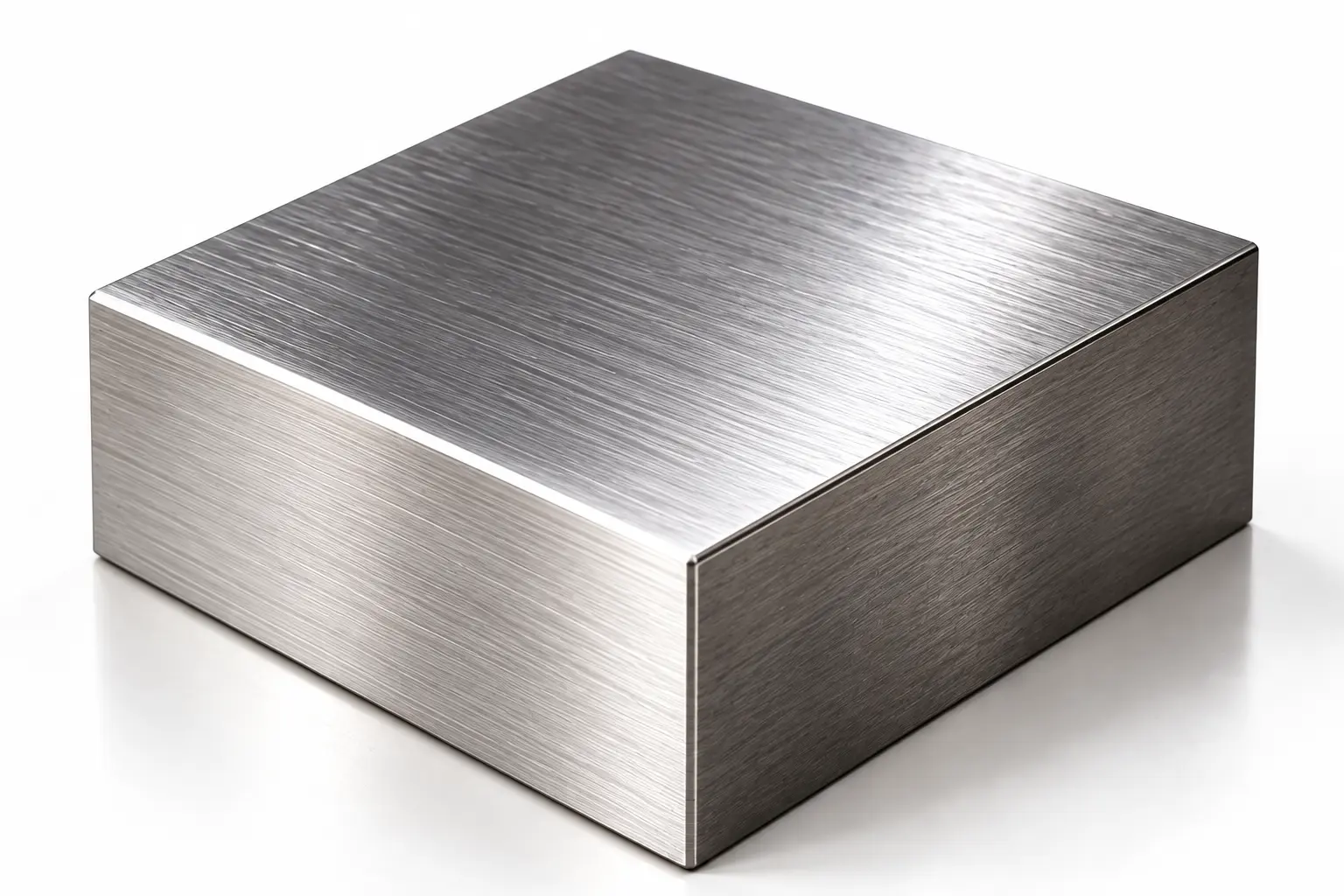
| 비드 블라스팅 | Even matte texture, hides tool marks | All | Often done before anodizing |
| 아노다이징 유형 II | Corrosion protection with color | 6061, 6063, 5052 | 6063 gives the most even color |
| Anodizing Type III (hard) | Thick, wear-resistant layer | 6061, 7075 | Adds thickness; plan tolerances for it |
| 크로메이트 변환 | Corrosion protection that stays conductive | All | Good for grounding points and enclosures |
| 파우더 코팅 | Thick, durable color coat | All | Not for tight-fit surfaces |
| 연마 | Bright, reflective surface | 6061, 6063 | Shows scratches more easily |
2024 and 7075 contain copper and zinc, so anodized color can look less even than on 6xxx alloys. For a cosmetic part, tell us early and we will suggest the best alloy and finish pair.
What Sets the Price of a Machined Aluminum Part
Aluminum is one of the cheapest metals to machine, but the price still moves with a few clear drivers. Knowing them helps you lower a quote before you send it.
Alloy: 7075 stock costs more and cuts slower than 6061.
Material removal: A part cut from a large block costs more than one cut from near-net bar or aluminum section stock.
Setups: Features on many sides need more setups, unless the part goes on a 5 axis CNC machine.
허용 오차: Holding ±0.025 mm everywhere costs far more than holding it only where parts mate.
Thin walls and deep pockets: These need slower cuts to avoid chatter and warping.
Finish and quantity: Anodizing adds a step, while larger batches spread setup cost across more parts.
Our aluminum CNC machining cost guide breaks down one real part, and our China vs USA CNC machining guide compares landed cost for US buyers.
Aluminum Parts We Machine
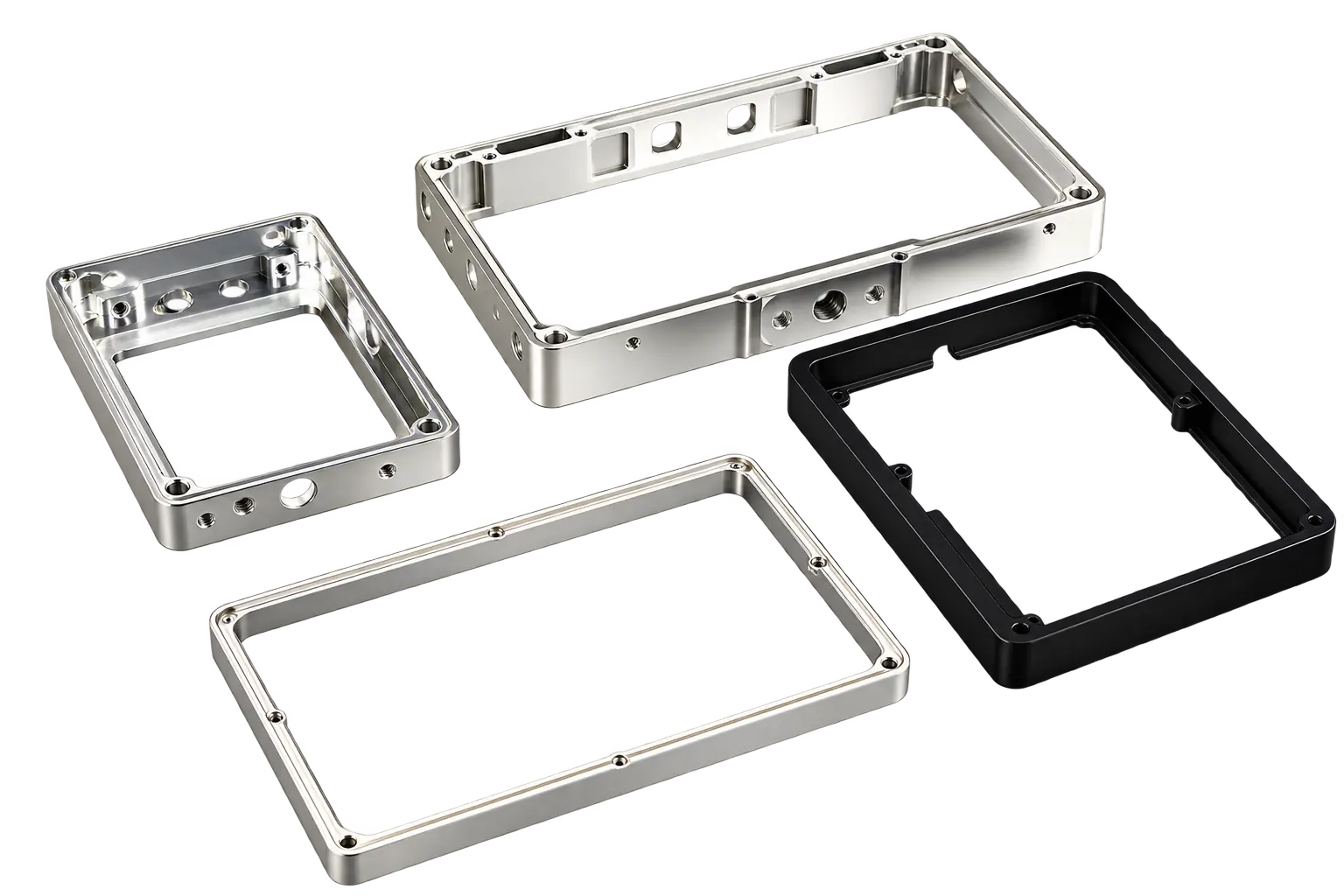
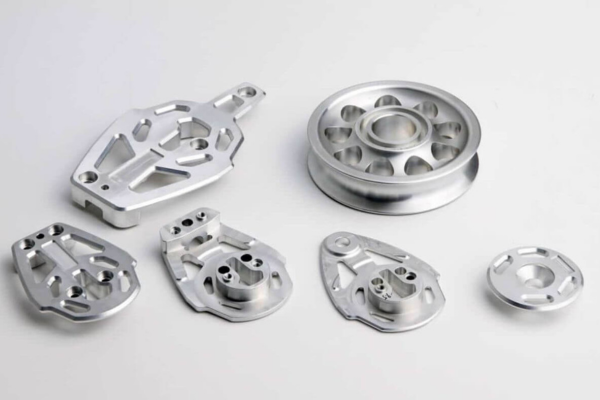
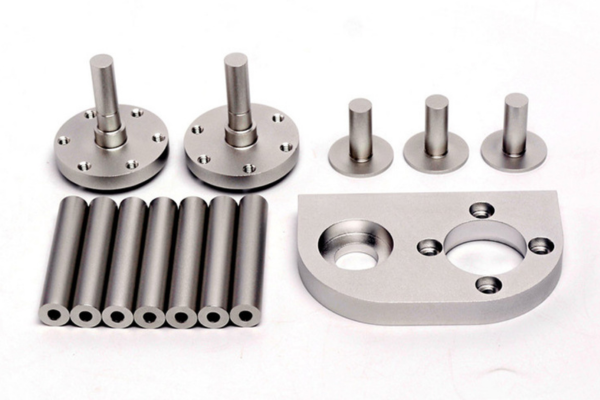
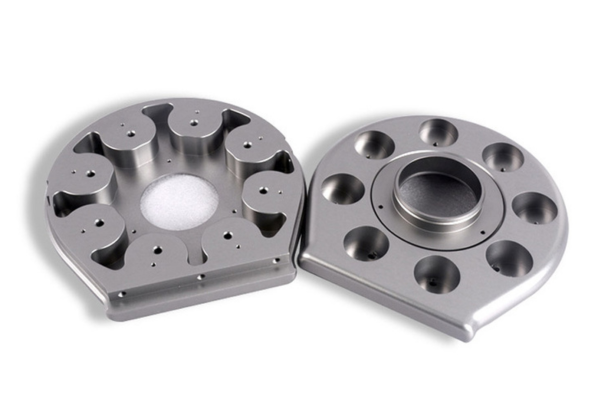
Enclosures and housings: Lightweight aluminum CNC machining for consumer electronics, sensors, and control boxes
Heat sinks: Finned parts in 6061 and 6063 that pull heat away from electronics
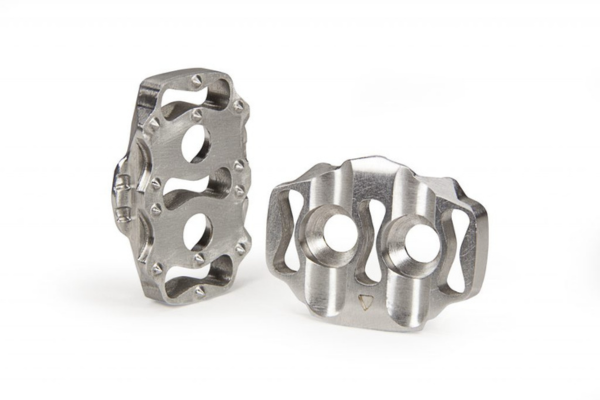
Robotics and automation parts: Arms, joints, mounts, and fixtures
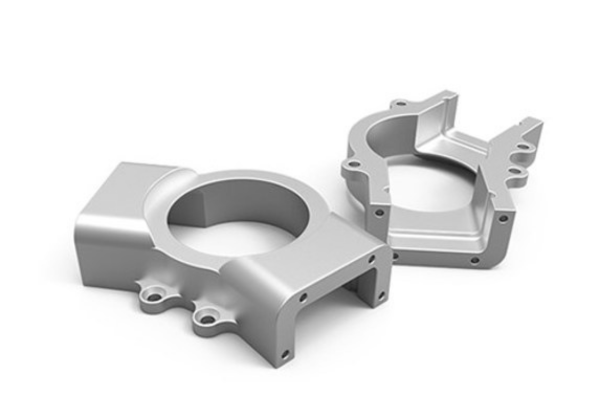
Aerospace brackets and fittings: 7075-T6 and 2024 parts for high-load use
Automotive parts: Prototype and small-batch brackets, covers, and machined castings
Molds and tooling: CNC machining aluminum molds for prototype molding and fast bridge tooling

Where Aluminum Is Not the Right Choice
Aluminum suits most machined parts, but not all of them. Choosing honestly up front saves a redesign later.
Where aluminum wins
Light: It weighs roughly a third of steel, which matters in anything that moves or flies.
Corrosion resistant: Its natural oxide layer protects it, and anodizing thickens that layer.
Conductive: Close enough to copper for heat sinks and electrical housings.
Fast to cut: Higher feed rates mean less machine time and a lower unit price.
Easy to finish: Anodizing, powder coating, and polishing all work well.
Tough in the cold: It keeps its toughness below zero, so it is used in cryogenic work.
Where it falls short
Soft surface: It marks easily, which is why parts are machined from alloys, not pure aluminum.
Higher stock cost than mild steel: It is refined from bauxite, so raw stock costs more.
Visible scratches: Polished or anodized surfaces show handling marks more clearly.
Heat limit: It softens above roughly 200°C, so avoid it near engines, exhausts, or furnaces. For hot or high-wear parts, compare stainless steel or titanium.
엘리트 몰드 기술로 디자인에 생명력 불어넣기
엘리트 몰드 테크의 정밀 CNC 가공을 경험해 보세요. 복잡한 프로토타입부터 대규모 생산까지, 당사는 고객의 아이디어를 현실화할 준비가 되어 있습니다. 지금 바로 문의하여 프로젝트에 필요한 사항을 논의하세요!
- 광범위하게 공유되는 전문성
- 시장 도달 범위 확대
- 고급 기술 통합
- 협업 혁신 기회
- 신뢰할 수 있는 온디맨드 솔루션
- 모든 업로드는 안전하고 기밀이 유지됩니다.
알루미늄 CNC 가공 자주 묻는 질문
CNC 가공에 가장 적합한 알루미늄 합금은 무엇일까요?
6061 is the best all-round choice, because it machines cleanly, welds well, and anodizes evenly at a low cost. Choose 7075 when you need maximum strength, and 5052 or 5083 for saltwater exposure. Tell us your load and environment, and we will confirm the grade.
알루미늄 부품에서 어떤 공차를 유지할 수 있습니까?
Our standard is ±0.127 mm (±0.005 in) under ISO 2768-mK. We hold down to ±0.025 mm (±0.001 in) on request when you send a 2D drawing with GD&T. Apply tight tolerances only where parts mate to keep cost down.
Can aluminum parts be anodized in color?
Yes. Type II anodizing comes in many colors, including black, red, blue, and gold. 6061 and 6063 give the most even color, while 2024 and 7075 can look less uniform.
알루미늄 가공 부품의 리드 타임은 얼마나 되나요?
Most aluminum CNC machining orders ship in under 10 days. Simple prototypes can be faster, while large batches and anodizing add time. We confirm the exact date in your quote.
6061과 7075 중 어느 쪽이 더 강할까요?
7075 is much stronger, with a tensile yield of 503 MPa against 276 MPa for 6061. It costs more, machines slower, and does not weld well. 6061 is the better value when its strength is enough.
알루미늄의 최소 벽 두께는 얼마입니까?
Our minimum wall thickness is 0.75 mm. Thin walls are possible, but they need slower cuts and can flex or warp, which raises cost. Where you can, design walls of 1.5 mm or thicker.
ADC12와 같은 알루미늄을 기계 주조하시나요?
Yes. We machine ADC12 (A380) castings, often adding bores, threads, and sealing faces after die casting. Casting first and machining second is usually the lowest-cost route for complex housings at volume.