Suppliers advertise 5-axis capability prominently, and engineers reasonably assume more axes means better parts. Sometimes that is true. Often it is not, and specifying 5-axis for a part that does not need it adds cost without adding value.
The reverse error is more expensive. Insisting on 3-axis machining for a part with features on multiple planes forces several separate setups, which costs more than a single 5-axis operation and produces worse feature-to-feature accuracy.
Understanding what each configuration actually does makes the choice straightforward.
What the Axes Are
A machine axis is a direction of controlled movement. The three linear axes are conventional:
- X moves left and right
- Y moves front and back
- Z moves up and down
Rotational axes rotate about those linear axes. The common ones are A, rotating about X, and B, rotating about Y. Some machines use C, rotating about Z.
The number in “5-axis” counts how many of these the machine controls.
3-Axis Machining
The cutting tool moves in X, Y and Z while the workpiece stays fixed. This is the most common machining configuration and handles a large share of all machined parts.
What it does well: flat faces, pockets, slots, holes and profiles accessible from a single direction. Programming is straightforward, setup is quick, machine rates are the lowest of the three, and the machines are widely available.
The limitation: the tool can only approach from one direction. Features on other faces require unclamping the part, repositioning it and re-clamping. Each of those setups costs time, and each introduces a small positional error, so features machined in different setups cannot hold as tight a relationship to each other as features machined together.
Typical uses: plates, brackets, covers, housings with features on one or two faces, and the majority of general engineering components.
4-Axis Machining
Adds one rotational axis, usually A rotating about X. In practice this most often means a rotary table or indexer holding the part.
There are two distinct modes worth distinguishing.
Indexed 4-axis rotates the part to a position, locks it, then machines with three-axis movement. This is the more common arrangement. It allows machining several faces of a part in one setup without the operator handling it, which removes setups and improves feature relationships.
Continuous 4-axis rotates during cutting, enabling helical features, cams and wrap-around geometry that indexing cannot produce.
What it does well: parts with features on multiple faces around one axis, cylindrical parts requiring milled features, and anything where eliminating manual repositioning matters.
Typical uses: shafts with flats or keyways, cylindrical housings with radial holes, parts with features on four sides.
5-Axis Machining
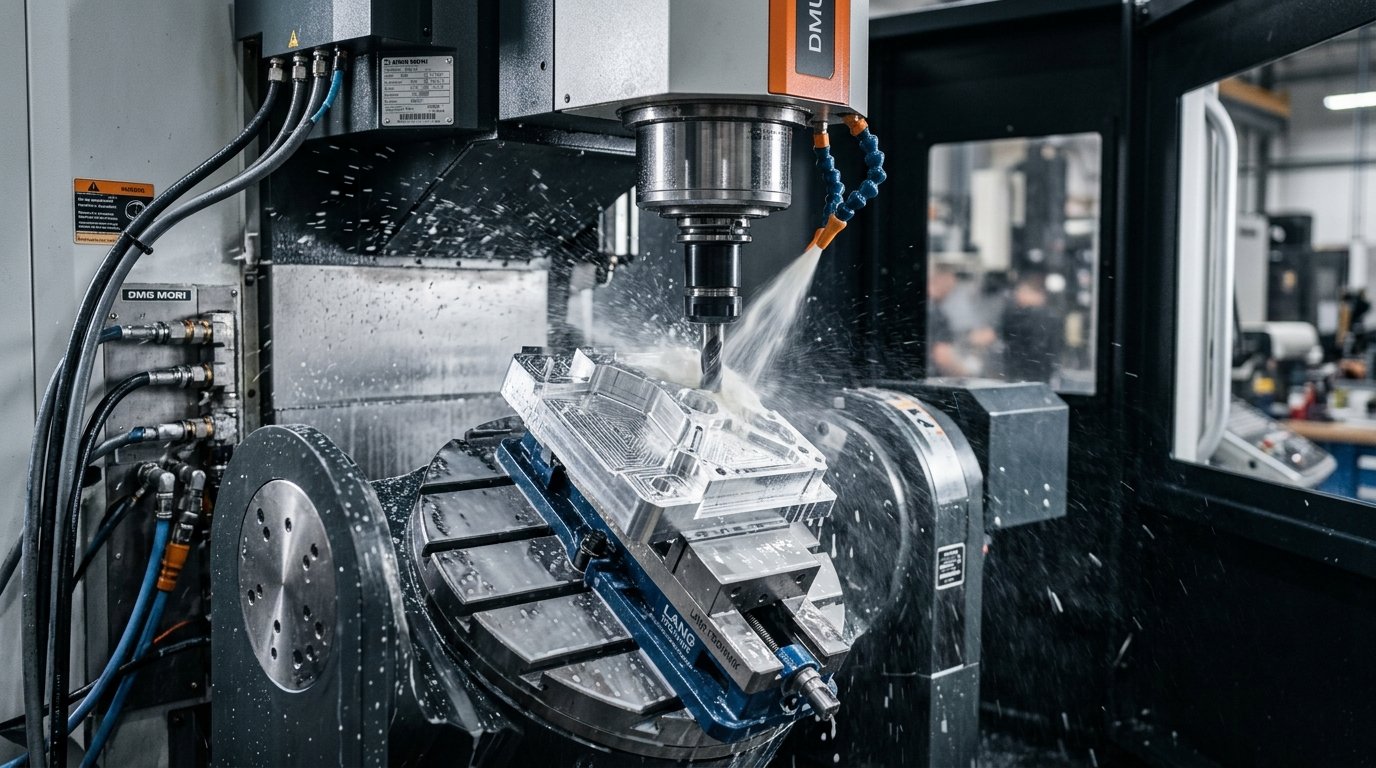
Adds a second rotational axis, allowing the tool to approach the part from essentially any direction.
Again, two modes matter.
3+2 machining, also called positional 5-axis, rotates both axes to orient the part, locks them, then machines with three-axis movement. This is how a large proportion of 5-axis work is actually done. It allows a complex part to be machined from many directions in one setup.
Continuous 5-axis moves all five axes simultaneously during cutting. This is required for genuinely sculptured surfaces such as turbine blades, impellers and complex organic forms, and it enables shorter, more rigid tools to reach into deep features by tilting rather than extending.
What it does well: complex geometry, features at compound angles, deep cavities requiring tool tilt, and consolidating what would be many setups into one. 5-axis machining also improves feature-to-feature accuracy simply because everything is cut in one clamping.
Typical uses: aerospace structural components, impellers and turbine geometry, medical implants, complex mold cores and cavities, and any part where features sit at angles to each other.
The Cost Comparison That Actually Matters
Machine hourly rate rises with axis count. A 5-axis machine costs more per hour than a 3-axis machine, sometimes considerably more. Programming also takes longer and requires more skill.
That leads many buyers to specify 3-axis by default to save money. For simple parts that is correct. For parts with features on multiple planes it is a false economy, because the comparison is not hourly rate against hourly rate. It is total cost against total cost.
Consider a part with features on five faces:
| Approach | Setups | Cost drivers |
| 3-axis | Five separate setups | Five setup charges, five fixtures or refixturing operations, accumulated positional error between faces |
| 3+2 five-axis | One setup | Higher hourly rate, longer programming, but one setup and no accumulated error |
At low quantities where setup dominates, the 5-axis route frequently costs less overall despite the higher rate. At high quantities where setup amortises across many parts, dedicated 3-axis fixturing may win.
This is why the honest answer to “which is cheaper” is that it depends on your part geometry and your quantity, and the only way to know is to have both priced.
How to Tell What Your Part Needs
Work through these questions.
Are all features accessible from one direction? If yes, 3-axis is almost certainly correct and anything more is unnecessary cost.
Are features on opposite faces, needing only a flip? Two 3-axis setups usually handle this economically.
Are features distributed around one axis, such as radial holes on a cylinder? 4-axis, likely indexed, is the natural fit.
Are features at compound angles, meaning angles in two planes at once? This is where 5-axis earns its cost. Producing compound angles on a 3-axis machine requires angled fixturing, which is expensive, imprecise and often impractical.
Does the part have deep features that a long tool would struggle to reach? 5-axis lets the tool tilt, allowing shorter and more rigid tools, which improves both finish and cycle time.
Does the part have genuinely sculptured surfaces? Continuous 5-axis is required.
Is the tolerance relationship between features on different faces critical? Fewer setups means less accumulated error, which favours higher axis counts regardless of geometry accessibility.
Common Misconceptions
“5-axis is more accurate.” Not inherently. A 5-axis machine is not more precise per axis than a good 3-axis machine. What it delivers is better feature-to-feature accuracy by eliminating setups, which is a different thing and matters only when relationships between faces are tight.
“5-axis is always faster.” Not for simple parts. For a flat plate with holes, a 3-axis machine is faster and cheaper. 5-axis gains time on complex parts by removing setups, not by cutting faster.
“We should specify 5-axis to be safe.” This adds cost with no benefit if the geometry does not require it. Specify the part requirements and let the supplier select the process, since they know their own machine capability and loading.
“4-axis is just a cheaper 5-axis.” They solve different problems. 4-axis handles features distributed around one axis. 5-axis handles compound angles. A part needing compound angles is not served by 4-axis at any price.
What to Put on Your Drawing
The most useful approach is to specify what the part requires rather than how to make it.
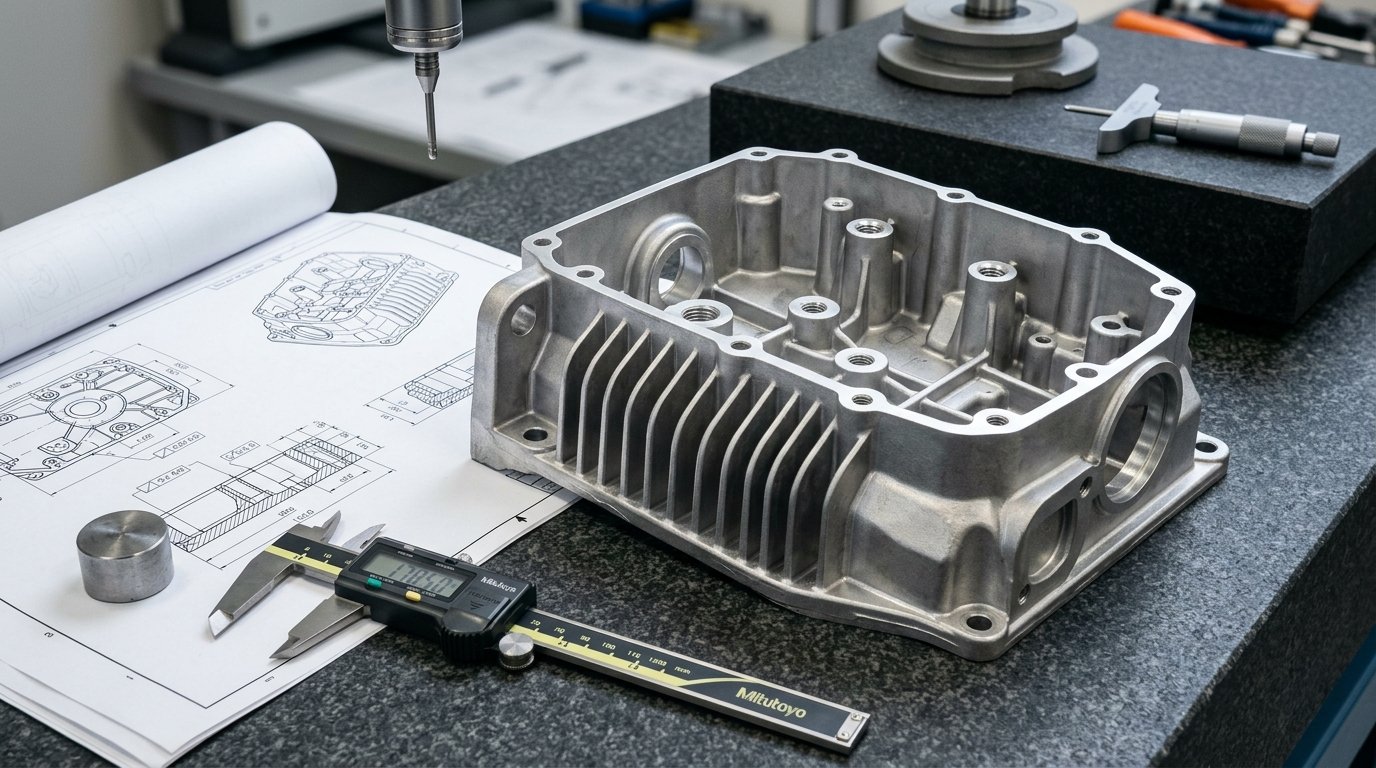
Define geometry, tolerances, surface finish and material clearly. Identify which feature relationships are critical, since that tells the supplier where setups matter. Let the supplier’s engineering team determine the machining strategy, because they know their machine capability, tooling and current loading.
Where you have a strong reason to prefer a particular approach, state the reason rather than the instruction. “These four holes must hold position relative to the bore within X” is more useful than “machine on 5-axis”, because it tells the supplier what actually matters and lets them find the best route to it.
Turning and Mill-Turn
Worth noting alongside the above, since it often solves the same problems differently.
Parts that are fundamentally cylindrical are usually better suited to Токарная обработка с ЧПУ than milling. Mill-turn machines combine turning with driven milling tools, allowing a cylindrical part with flats, cross holes and milled features to be completed in one operation.
For shafts, fittings, connectors and similar components, mill-turn frequently outperforms both 3-axis and 5-axis milling on both cost and accuracy. If your part is essentially round, ask about this route before assuming a milling approach.
Practical Guidance
For most general engineering parts, 3-axis is correct and sufficient. Do not pay for capability the geometry does not need.
Where features sit around a single axis, 4-axis indexing removes setups economically.
Where features sit at compound angles, where cavities are deep, or where feature-to-feature tolerance across faces is critical, 5-axis is usually cheaper overall despite the higher hourly rate.
Where the part is cylindrical, consider mill-turn before milling.
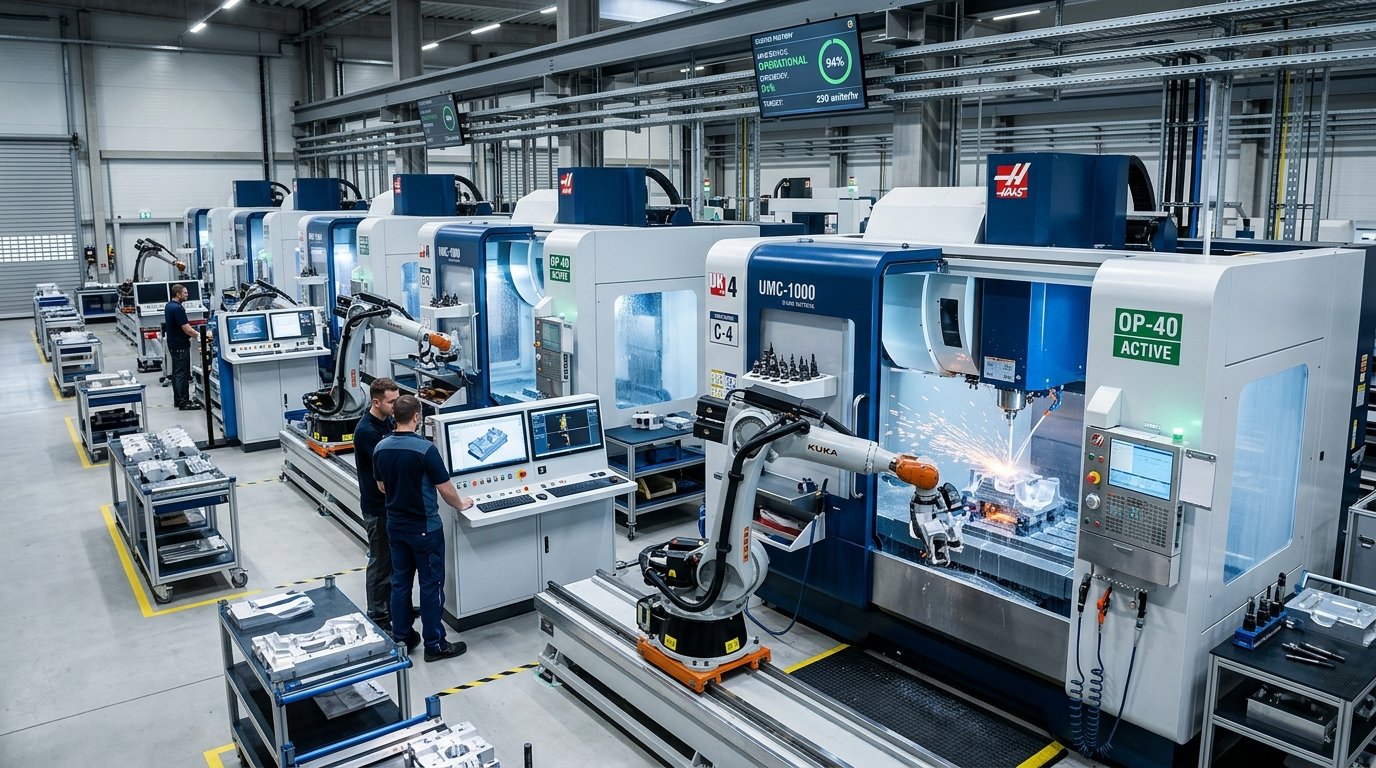
Elite Mold Tech runs 3, 4 and 5 axis machining alongside turning and mill-turn from a single facility, which means the process recommendation follows the part rather than the available machine. Sending a drawing produces a machining strategy assessment alongside the quote, including where a different approach would cost less.
Часто задаваемые вопросы
Q: Is 5-axis machining more accurate than 3-axis?
A: Not per axis. It delivers better relationships between features on different faces by machining them in one setup, which removes the accumulated error that separate setups introduce.
Q: When is 4-axis machining the right choice?
A: When features are distributed around a single axis, such as radial holes or flats on a cylindrical part. Indexed 4-axis removes manual repositioning without the cost of full 5-axis capability.
Q: Does 5-axis machining always cost more?
A: The hourly rate is higher, but total cost can be lower on complex parts because it eliminates multiple setups. For simple single-direction parts, 3-axis is cheaper on every measure.
Q: What is 3+2 machining?
A: A 5-axis machine rotating both axes to position the part, locking them, then cutting with three-axis movement. It handles most complex parts without the programming demands of continuous 5-axis.
Q: Should I specify the axis count on my drawing?
A: Generally no. Specify geometry, tolerances and which feature relationships are critical, then let the supplier select the machining strategy based on their equipment and current capacity.