By Phil Huang, Elite Mold Tech. Updated November 2, 2026.
7075 is the high-strength aluminum for CNC parts. It reaches close to steel strength at aluminum weight, which is why it shows up in aircraft fittings, gears, and climbing hardware. The price is real: it costs more, it cuts slower than 6061, and it does not weld well. This guide covers the properties, the trade-offs, stress corrosion, finishing, and when 7075 is worth paying for.
Choose 7075 when a part must carry high load at low weight. For everything else, 6061 does the job for less.
Key takeaways
- 7075 is much stronger than 6061. Our table lists 503 MPa yield for 7075 against 276 MPa for 6061.
- It costs more, wears tools faster, and does not weld well.
- 7075-T6 is susceptible to stress corrosion cracking. Overaged tempers such as T73 resist it better.
- It anodizes, but expect more shade variation than 6061, so ask for a sample if color matters.
- It softens in heat, so avoid it near engines, exhausts, or furnaces.
What is 7075 aluminum, and where is it used?
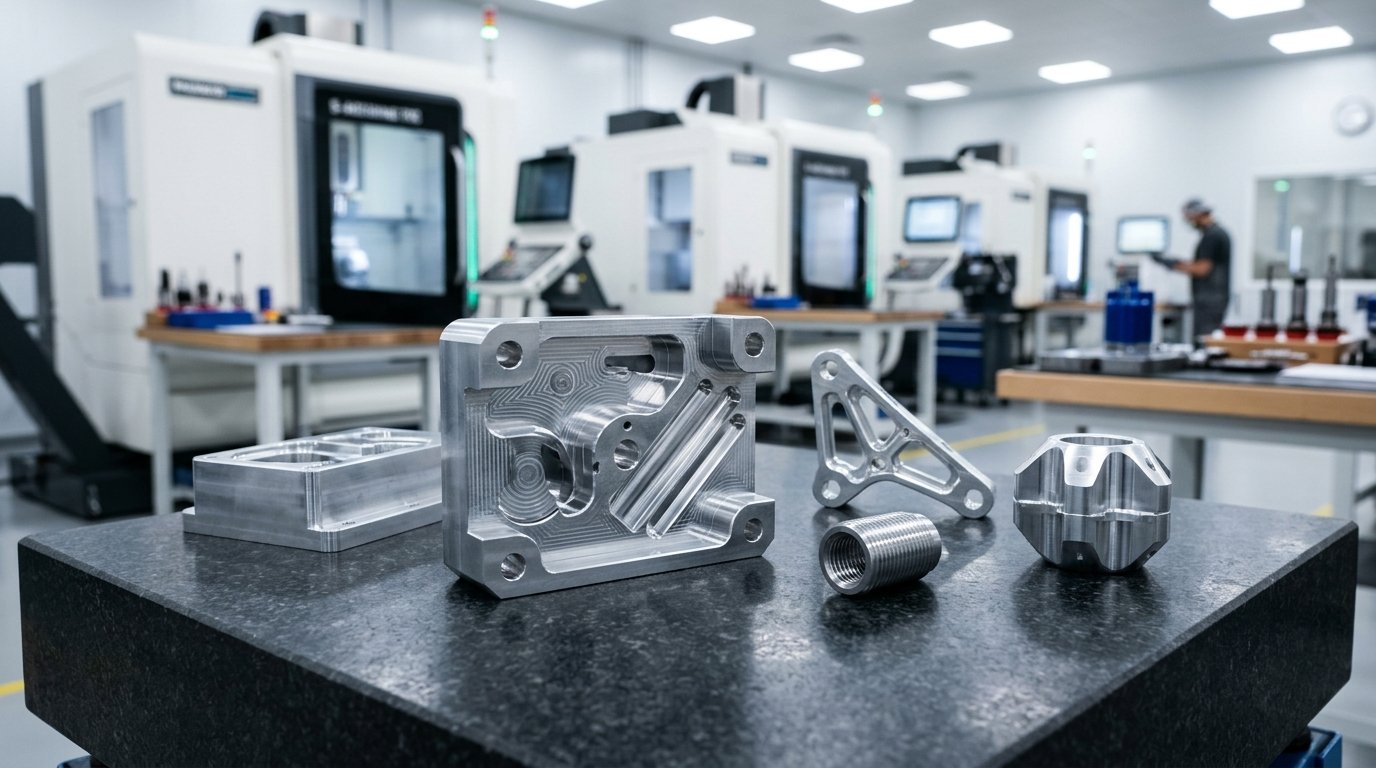
7075 is a zinc-based, heat-treatable aluminum alloy with close to steel strength at aluminum weight, and it is the standard for aerospace fittings, gears, and high stress structural parts (Elite Mold Tech, 2026). Our 7075-T6 listing adds aircraft structures, climbing hardware, and performance automotive parts, where failure is not an option.
Typical uses include:
- Aerospace fittings and brackets. Our aluminum CNC machining for aerospace parts guide covers what buyers ask for.
- Gears and drive parts. High hardness and fatigue strength matter here.
- Outdoor and sport hardware. Climbing gear and bike parts use it for low weight.
- Performance automotive parts. Racing parts trade cost for strength.
What are the mechanical properties of 7075-T6 and 7075-T651?
Published ultimate tensile strength for 7075-T6 sheet runs from 510 to 538 MPa, and published yield runs from 434 to 476 MPa (Protolabs, 2026). T651 plate lists a wider range because thicker plate is weaker in the middle. Hardness is about 150 Brinell for both.
Form | 두께 | Ultimate tensile | Yield | Elongation |
7075-T6 sheet | 0.008 to 0.249 in | 510 to 538 MPa | 434 to 476 MPa | 5~8% |
7075-T651 plate | 0.250 to 4.000 in | 462 to 538 MPa | 372 to 462 MPa | 3 to 9% |
Source: Protolabs aluminum 7075-T651/T6 data sheet (2026). Ranges by thickness, not single guaranteed values. Our own table lists 503 MPa yield, 160 MPa fatigue strength, 11% elongation, 150 Brinell, and a density of 2.81 g/cm³ (Elite Mold Tech, 2026).
The two sources do not match exactly. Our figure of 503 MPa is a typical value, and the Protolabs ranges are by thickness. Use either as a guide, and ask for the mill certificate when your drawing needs a hard number. 7075 T651 means the plate was stretched to relieve stress, as explained in our guide to aluminum tempers.
How much stronger is 7075 than 6061?
7075 is stronger by a wide margin. Our table puts yield at 503 MPa for 7075 and 276 MPa for 6061, and hardness at 150 Brinell against 95 (Elite Mold Tech, 2026). Density is higher too, 2.81 g/cm³ against 2.70 g/cm³, but the strength gain is far larger than the weight gain.
Property (our table) | 6061-T6 | 7075-T6 |
수율 강도 | 276 MPa | 503 MPa |
Fatigue strength | 96 MPa | 159 MPa |
Brinell hardness | 95 | 150 |
밀도 | 2.70 g/cm³ | 2.81 g/cm³ |
Welds well? | 예 | 아니요 |
Read our full guide to 6061 vs 7075 aluminum, or the guide to 6061 aluminum CNC machining if the lower cost fits your part.
Why is 7075 harder and costlier to machine?
7075 costs more and machines slower than 6061 because it is harder and wears tools faster (Elite Mold Tech, 2026). More tool wear and longer cycle times raise the price per part, and the alloy itself costs more per kilogram.
Sources do not fully agree on how hard it is. Protolabs lists “excellent machinability” for 7075, while other guides say its zinc content makes it harder to cut than 6061. In practice both are true: it cuts well compared with steel and slower than 6061. For the numbers behind this, see our guide to the machinability rating of aluminum.
- Tool wear. Expect more frequent tool changes than on 6061.
- Cycle time. Slower feeds raise machine hours.
- Stock cost. The raw plate or bar costs more.
- Welding. Do not plan welded joints. Use fasteners or machine the part from one block.
Our guide to aluminum CNC machining cost shows how these items add up.
What is stress corrosion cracking in 7075?
Stress corrosion cracking is a sudden crack that grows under steady tensile stress in a corrosive setting. 7075-T6 is a susceptible temper, while overaged tempers such as T73 are resistant (NASA Tech Brief 70-10527, 1970). The brief notes that a sharp notch can still start a fast failure in T73.
Take these steps in design:
- Keep sustained tensile stress low. Press fits and tight clamping load parts all day.
- Avoid sharp notches and corners. Use generous radii where the part is loaded.
- Ask for an overaged temper such as T73 if the part sits under load in a damp or salty place.
- Protect the surface. Anodizing or a conversion coating adds a barrier.
Our site does not list T73 or T7351 as available tempers, so ask us before you specify one. For critical aerospace parts, follow your own material specification.
How does 7075 take a finish?
7075 can be anodized, and we do anodizing, powder coating, and polishing in house for aluminum parts (Elite Mold Tech, 2026). Type II anodizing takes dye in black, red, blue, gold, and clear. The surface will look slightly different from 6061 because the alloy has more zinc and copper.
- Color. Expect shade changes between lots. Ask for a sample if the match matters.
- Thickness. Anodizing adds thickness, so mask any tight-fit feature.
- Hard parts. Gears and wear parts can need a different coating. Ask us.
See our guide to aluminum CNC surface finishes and our 알루미늄 아노다이징 서비스 page.
What tolerances apply to 7075 aluminum CNC machining?
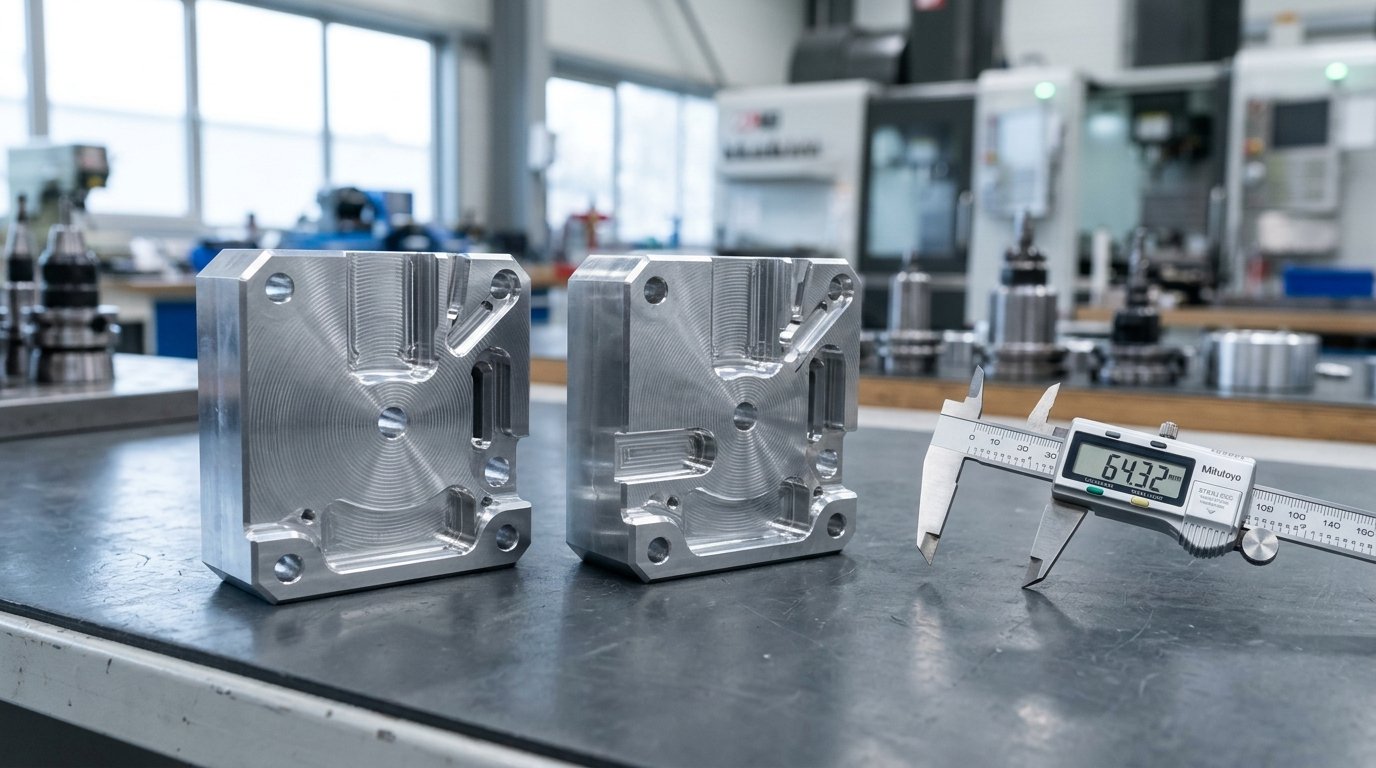
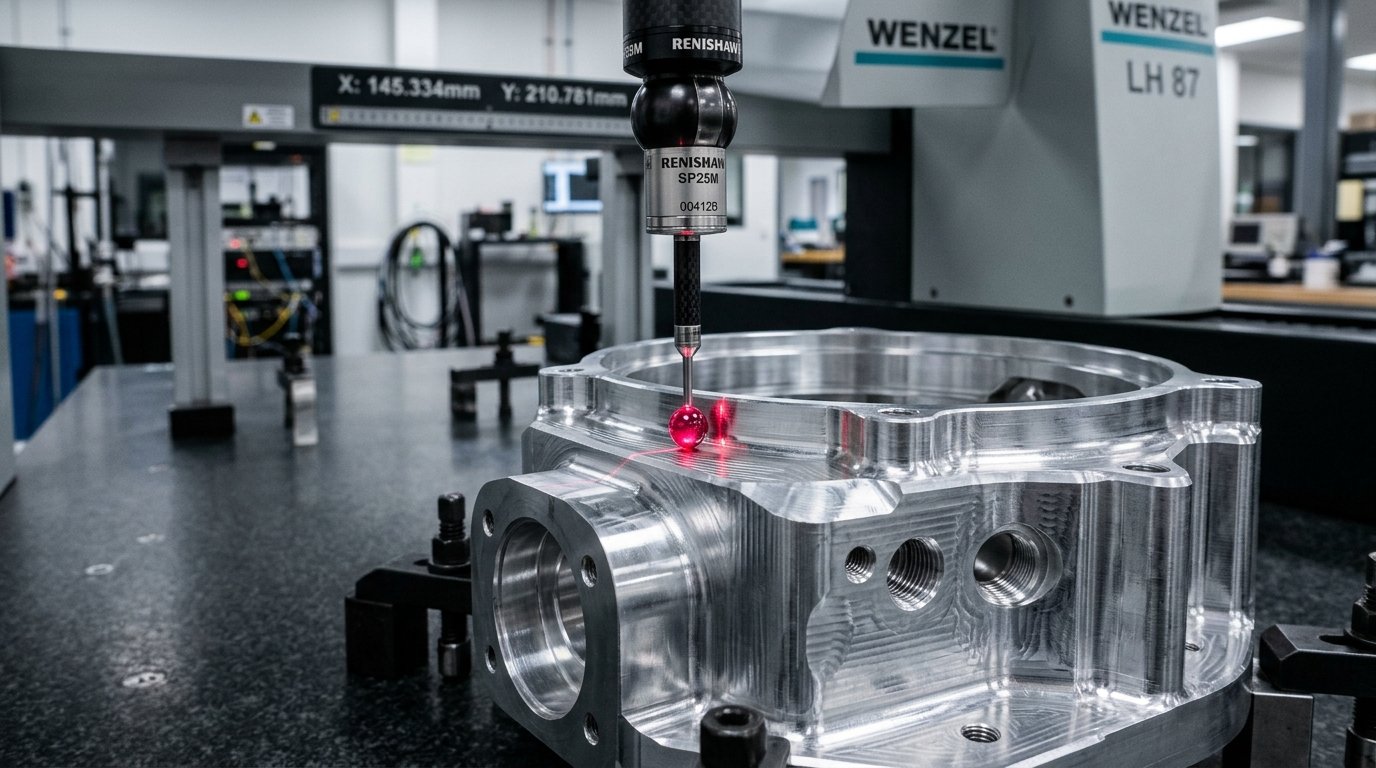
Our standard aluminum tolerance is ±0.125 mm (±0.005 in), and we can hold ±0.025 mm (±0.001 in) on critical features on request (Elite Mold Tech, 2026). 7075 machines stably when it comes as stress-relieved plate. Thin walls and deep pockets still need care.
Because 7075 is strong, designers sometimes make parts thinner and lighter. That is smart, but thin walls move during cutting. Read our aluminum CNC machining tolerances 그리고 design guidelines before you thin out a part.
When should you choose 7075, and when should you not?
Choose 7075 when strength-to-weight decides the design. Skip it when cost, welding, or heat matters more. Our site notes that aluminum softens above roughly 200°C, so it is the wrong choice near engines, exhausts, or furnaces.
Choose 7075 if | Choose 6061 if |
The part carries high load at low weight | General strength is enough |
You can fasten or machine from one block | You need to weld |
Budget allows higher cost | Cost is the priority |
The part is fatigue-critical | The part is mostly cosmetic or structural |
If you are unsure, send the drawing and the load case. We will tell you if 6061 is enough.
Get your 7075 parts quoted
Send your 3D file and 2D drawing, and tell us the temper and finish. Our engineers will check the design, flag anything that raises cost, and quote the part. We guarantee a response within 12 hours, and lead time is under 10 days for most orders, depending on alloy availability, part complexity, and finish.
시작할 준비가 되셨나요? 견적 요청하기, read about our aluminum CNC machining service, or visit the Elite Mold Tech home page.
자주 묻는 질문
Q: Is 7075 aluminum stronger than 6061?
A: Yes, by a wide margin. Our table lists 503 MPa yield for 7075 and 276 MPa for 6061. The trade is higher cost, slower machining, and poor weldability.
Q: Can you weld 7075 aluminum?
A: Not well. Our site says 7075 does not weld well. Use fasteners, or machine the part from one solid block so no weld is needed.
Q: What is the difference between 7075-T6 and 7075-T651?
A: Both are heat treated. T651 is also stretched to relieve internal stress, so plate warps less when you machine it. T651 is the usual temper for plate.
Q: Does 7075 suffer from stress corrosion cracking?
A: The T6 temper is susceptible, and overaged tempers such as T73 resist it better. Keep sustained stress low, avoid sharp notches, and protect the surface. Ask us about available tempers.
Q: Can 7075 be anodized?
A: Yes. Type II anodizing comes in black, red, blue, gold, and clear. Color can vary between lots, so ask for a sample if an exact match matters.
Q: Is 7075 worth the extra cost?
A: Only when you need the strength-to-weight ratio, such as aerospace fittings, gears, or high-load hardware. For general parts, 6061 does the job for less.
Sources
- Protolabs, Aluminum 7075-T651/T6 CNC Material Data Sheet (2026): protolabs.com
- NASA Tech Brief 70-10527, The Mechanism of Stress-Corrosion Cracking in 7075 Aluminum Alloy (1970): ntrs.nasa.gov
- Elite Mold Tech, Aluminum CNC Machining capability tables (2026): elitemoldtech.com/aluminum-cnc-machining