By Phil Huang, Elite Mold Tech. Updated November 2, 2026.
Aluminum CNC machining for aerospace parts uses high-strength alloys such as 7050, 7075, and 2024, held to tight tolerances and backed by documentation. Brackets, mounts, housings, and structural parts are the common aluminum aerospace parts. This guide covers which alloys fit which parts, what tolerances and paperwork to ask for, and the limits you should check before you choose a supplier.
Aerospace work has rules that other machining does not. We explain them plainly, including what Elite Mold Tech does and does not claim.
주요 내용
- Common aerospace aluminum alloys include 2024, 2014, 7050, and 7075, chosen for strength, fatigue life, and weight.
- Temper matters as much as the alloy. A T73 temper trades some strength for better stress-corrosion resistance.
- Ask every supplier for material certificates, inspection reports, and the quality standard they follow.
- Elite Mold Tech supports aerospace work that is not export-controlled. Export-controlled (ITAR) work needs a registered supplier.
- Send a 3D file, a 2D drawing with GD&T, and your specification for an accurate quote.
Why is aluminum used for aerospace parts?
Aluminum is used in aerospace because it is strong for its weight. It has a density of about one third of steel, and the high-strength alloys approach the strength of many steels. Lower weight saves fuel and raises payload. Aluminum also machines quickly, so complex parts cost less to produce than the same shapes in titanium.
That mix of low weight, strength, and machinability explains why aluminum is still the most common structural metal in aircraft, drones, and satellites. Titanium and nickel alloys take over where heat or extreme loads demand them.
Which aluminum alloys are used in aerospace?
The alloys most often used for machined aerospace parts are 2024, 2014, 7050, and 7075, with 6061 for lighter-duty parts. Elite Mold Tech lists 2024, 2014, and 7050 on its aerospace page and stocks 7075 and 6061 as well (Elite Mold Tech, 2026). The table below shows how they fit.
합금 | 일반적인 용도 | Why it is chosen |
7075 | Structural fittings, brackets, high-load parts | Highest strength of the common grades. Yield 503 MPa in T6 |
7050 | Thick structural parts | High-strength alloy used in aerospace structures |
2024 | Fatigue-critical structures | Good fatigue life. Yield 325 MPa on our table |
2014 | Heavy-duty structural parts | Strong 2xxx alloy listed on our aerospace page |
6061 | Housings, brackets, fixtures, ground equipment | Easy to machine and weld. Yield 276 MPa in T6 |
Source: Elite Mold Tech aluminum CNC machining and aerospace pages (2026). Strength values are for the temper shown on our spec sheet. Check your specification for the exact alloy and temper.
다음에 대한 안내서 CNC 가공용 알루미늄 합금 compares every grade we stock, and our 6061 대 7075 알루미늄 guide helps when strength is the question.
Why does temper matter on aerospace parts?
Temper sets strength, stress level, and corrosion behavior, so aerospace drawings always name it. T6 gives high strength. T651 adds stress relief by stretching, so plate stays flat after machining. T73 is an overaged temper that improves resistance to stress-corrosion cracking while giving up a little strength (Kaufman, ASM International, 2000).
Choose the temper from your specification, not by habit. If a part is a highly loaded 7xxx component in a corrosive setting, ask your design engineer whether T6 or an overaged temper such as T73 applies. See our guide to aluminum tempers for how each code reads.
What aluminum aerospace parts can be CNC machined?
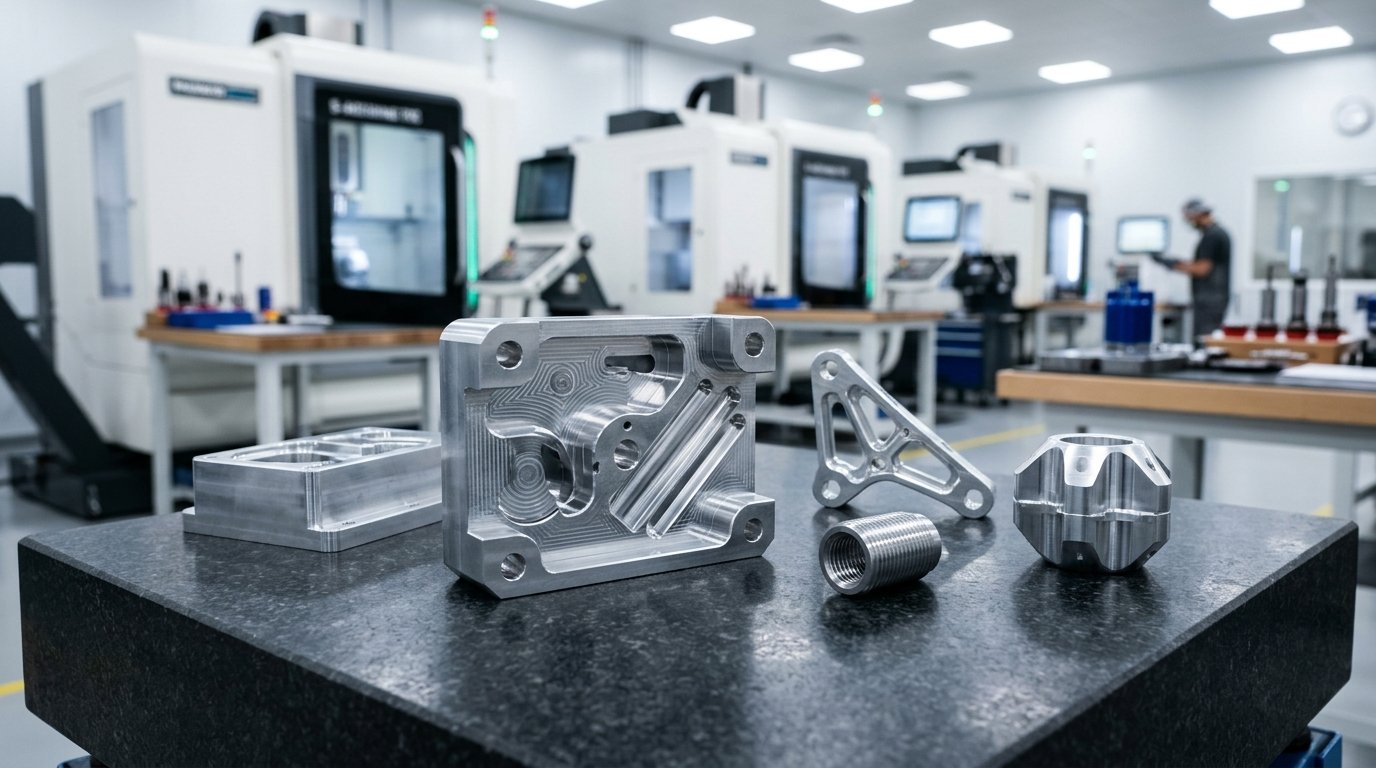
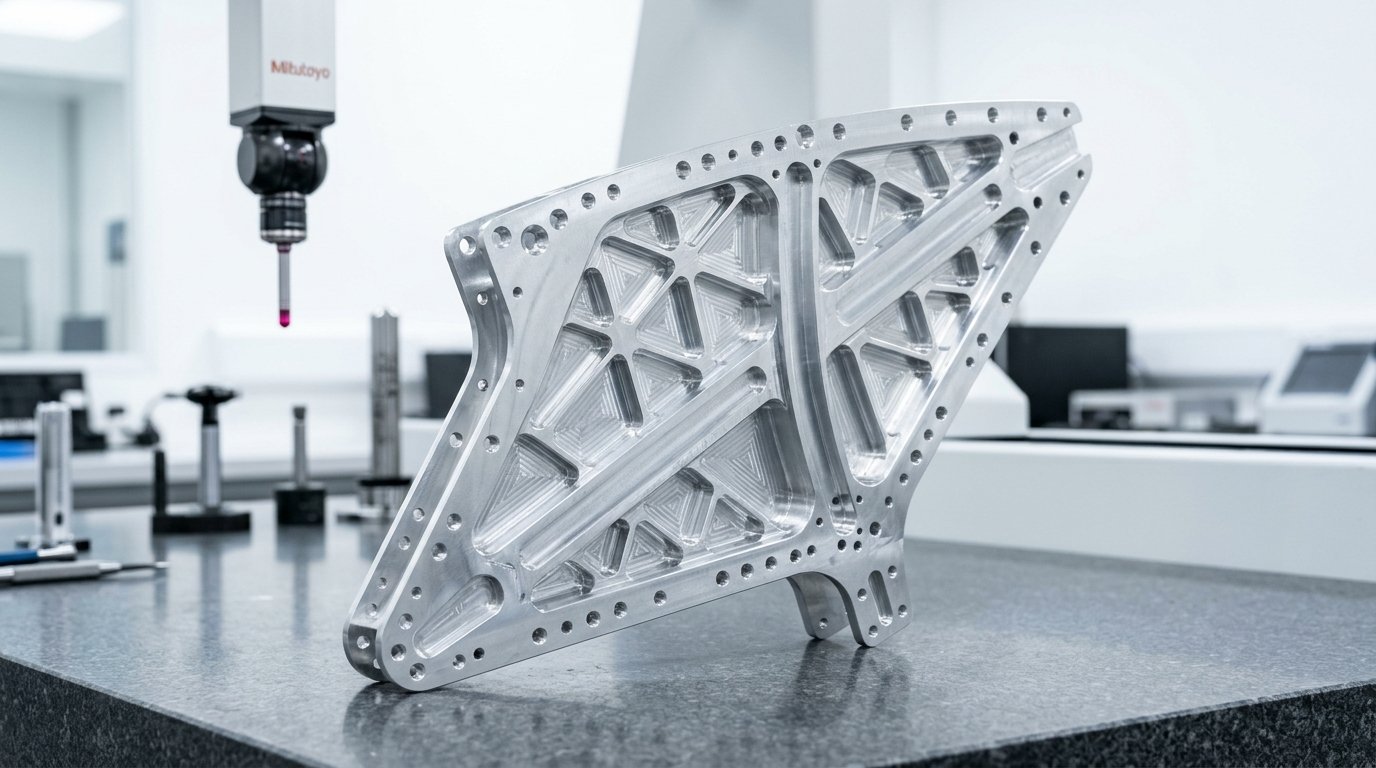
Elite Mold Tech lists these aerospace part types on its industry page: aircraft structural parts, brackets and mounts, housings and enclosures, actuator components, heat shields, landing gear parts, and engine components (Elite Mold Tech, 2026). Many of these are made in aluminum, with titanium, stainless steel, and nickel alloys for hotter or more loaded areas.
- Brackets and mounts. Light, stiff, and easy to produce in 6061 or 7075.
- Housings and enclosures. Avionics and sensor housings, often anodized.
- Structural fittings. High-strength 7xxx or 2xxx parts cut from plate or forgings.
- Actuator components. Tight-fit parts that need accurate bores and clean surfaces.
Complex shapes benefit from 5축 CNC 가공. It reaches several faces in one setup, so critical features stay in true position to each other.
What tolerances do aerospace aluminum parts need?
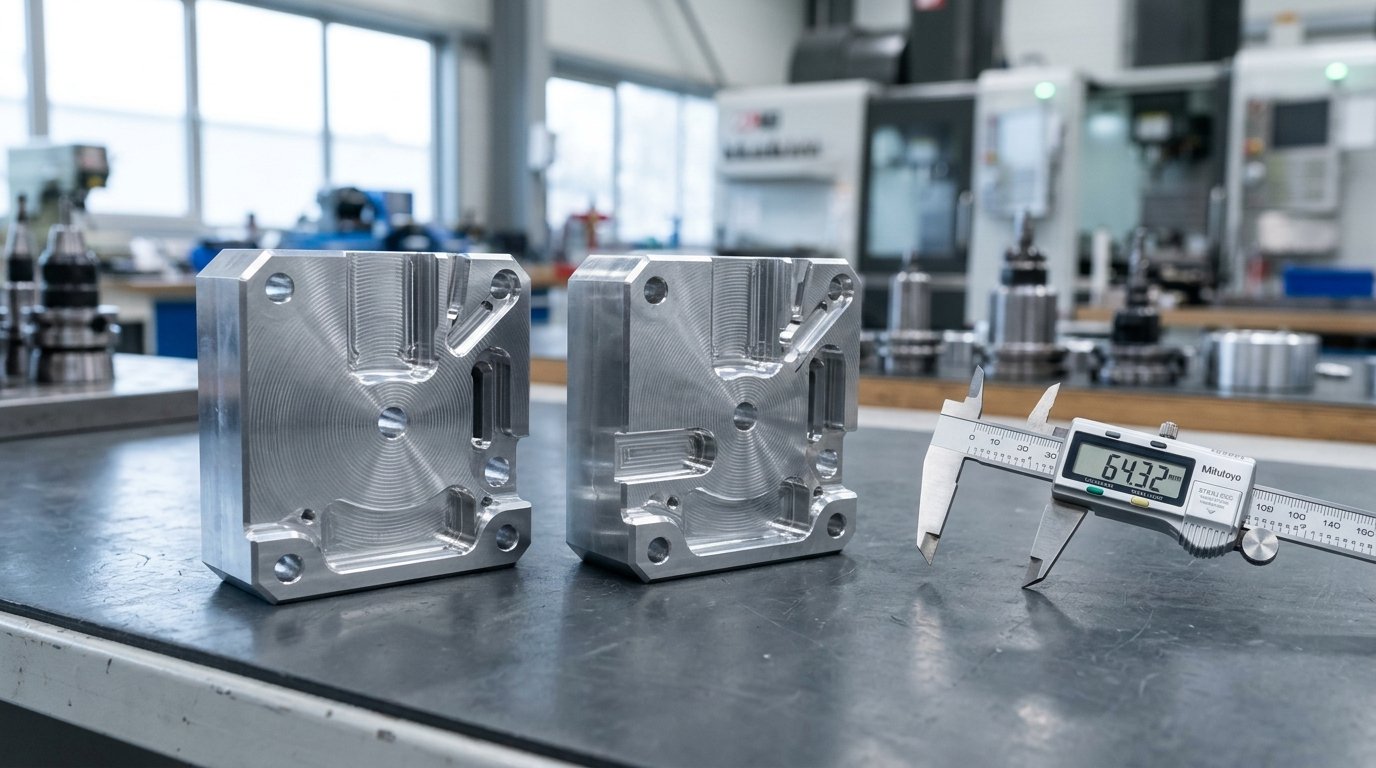
Tolerances come from your drawing and specification, not from a general rule. Our aluminum standard is ±0.005 in (±0.127 mm), and we hold ±0.001 in (±0.025 mm) on critical features when you send a 2D drawing with GD&T (Elite Mold Tech capability table, 2026). Mark tight limits only on mating and functional features.
- Send a 2D drawing with GD&T. It shows datums, form, and position requirements.
- Name the specification. Add any standard your program requires.
- State the finish. Anodizing adds thickness that changes fits.
- Ask us to confirm capability for any limit tighter than ±0.001 in before you order.
Read more in our guide to 알루미늄 CNC 가공 공차.
What finishes are common on aerospace aluminum?
Anodizing and chromate conversion coating are the most common finishes, because both protect aluminum from corrosion. Chromate conversion keeps the part electrically conductive, which helps with grounding. Anodizing adds a harder surface and a choice of colors (Elite Mold Tech, 2026).
Tell us the finish early, since each one changes dimensions and fit. See the 표면 마감 page for every option we list.
What quality documents should you ask for?
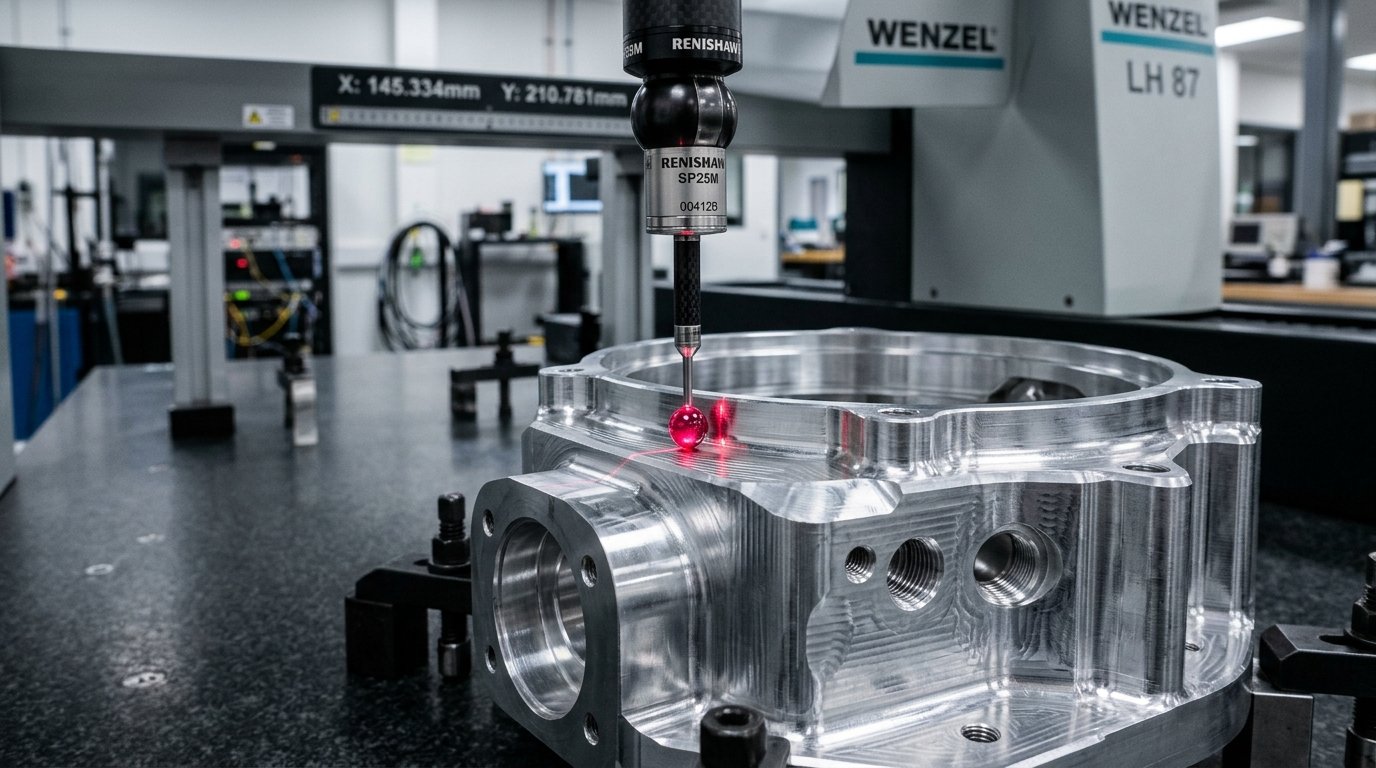
Ask for the documents your contract requires, and ask before you order. Common requests are a material certificate, an inspection report, and a certificate of conformance. Our aerospace page states that we conduct quality inspections against the BOM and original specifications and provide photos for shipment approval (Elite Mold Tech, 2026).
- Material certificate. Proves alloy and temper.
- Inspection report. Shows measured values on critical features.
- Certificate of conformance. States the parts meet the order.
- First article inspection. Ask whether it is available for your program.
Confirm with us which of these we supply for your part. Our 품질 보증 page explains our checks.
What about AS9100 and ITAR?
Check certification claims against a certificate, not a web page. Our aerospace page says we follow quality standards including AS9100. If your contract requires a certified supplier, ask for the certificate and verify it before you order. Elite Mold Tech supports aerospace projects that are not export-controlled. Export-controlled work under ITAR requires a US-registered supplier, so it should go to one.
This honest answer protects you. A wrong supplier on a controlled or certified program creates risk for your whole project. If your part is non-controlled and needs only standard documentation, we are a good fit.
What lead times and volumes can you expect?
Most orders take under 10 days to produce, plus shipping, and we guarantee a response to inquiries within 12 hours (Elite Mold Tech, 2026). Aerospace work for aluminum CNC machining aerospace parts usually starts with a small first lot, then moves to larger batches once the sample and paperwork pass.
Plan the schedule with transit and customs in mind, and add time for any first article review. Aerospace and defense buyers who need parts in days, not weeks, are often better served by a domestic supplier. For planned batches, a direct factory can work well. Our guide to China vs USA CNC machining explains the trade-offs. Aerospace CNC machining aluminum parts for non-controlled programs follows the same planning steps.
How do you choose an aerospace machining supplier in five steps?
- Check the program rules. Does it need certified or export-controlled supply?
- Match the alloy and temper to your specification.
- Ask for sample documents from a past order.
- Order a first article and inspect it against the drawing.
- Scale up once the sample and paperwork pass.
Send your aerospace drawing for a quote
Upload your 3D file and 2D drawing, and send your specification, alloy, temper, finish, and quantity. Our engineers will review the part and confirm what we can supply. We guarantee a response within 12 hours, and most orders take under 10 days.
시작할 준비가 되셨나요? 견적 요청하기, read about our 항공우주 산업 work, or visit the 엘리트 몰드 테크 홈페이지.
자주 묻는 질문
Q: Which aluminum alloy is best for aerospace parts?
A: It depends on the part. 7075 and 7050 suit high-strength structural parts, 2024 suits fatigue-critical structures, and 6061 suits lighter housings and brackets. Always follow your drawing and specification for alloy and temper.
Q: What does the T73 temper mean?
A: T73 is a solution heat treated and overaged temper that improves resistance to stress-corrosion cracking. It gives up a little strength compared with T6. Use it where long-term cracking risk matters more than peak strength.
Q: Can Elite Mold Tech machine ITAR parts?
A: Our aerospace work is for projects that are not export-controlled. ITAR parts require a US-registered supplier, so send them there. Tell us if you are unsure whether your part is controlled.
Q: Do you provide material certificates and inspection reports?
A: Tell us which documents your program requires when you request a quote, and we confirm what we supply. Our aerospace page describes quality inspections against the BOM and specifications, with photos for approval.
Q: What tolerance can you hold on aluminum aerospace parts?
A: Our standard is ±0.005 in (±0.127 mm), and we hold ±0.001 in (±0.025 mm) on critical features with a 2D drawing and GD&T. For tighter limits, ask us to confirm capability before you order.
Q: How do I protect my aerospace design when ordering from China?
A: Sign an NDA, share only what the shop needs, and confirm how files are stored. Read our IP protection approach on our site before you send sensitive drawings.
출처
- Elite Mold Tech, Aerospace Industry page (2026): elitemoldtech.com/industry/aerospace-industry
- Elite Mold Tech, 알루미늄 CNC 가공 능력 및 소재 표 (2026): elitemoldtech.com/aluminum-cnc-machining
- J. 길버트 카우프만, 『알루미늄 합금 및 템퍼 개론』, 제4장, ASM International (2000): materialsdata.nist.gov