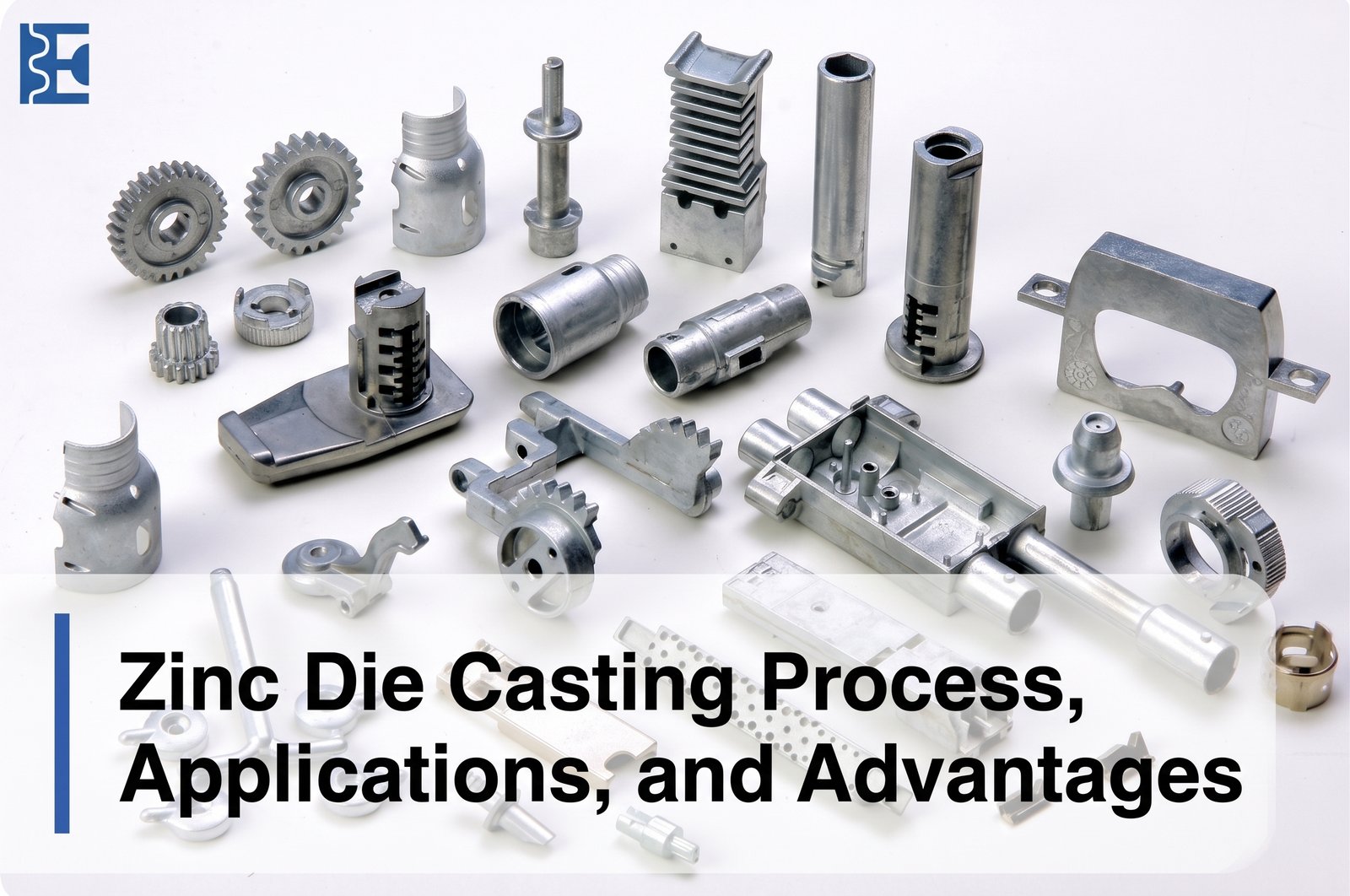
Zinc die casting is a high-pressure manufacturing process used to produce accurate metal parts with complex shapes, thin walls, smooth surfaces, and consistent dimensions. It is widely used when manufacturers need durable components in medium to high production volumes without relying on extensive machining for every part.
Zinc die casting is a process in which molten zinc alloy is injected at high pressure into a reusable steel die. After the metal solidifies, the die opens and the finished or near-finished part is ejected. The process can produce complex geometries with good dimensional repeatability and surface quality.
Zinc is especially useful for components that require strength, wear resistance, dimensional stability, and an attractive surface finish. Compared with producing every component from a solid block through CNC machining, die casting can reduce material waste and shorten production cycles when the required production volume justifies the tooling investment.
For manufacturers evaluating the right process, zinc die casting should be considered alongside other metal production methods. Elite Mold Tech provides die casting services for applications requiring precision metal components and scalable production.
How Does the Zinc Die Casting Process Work?
The zinc die casting process involves several controlled stages. Each stage affects the dimensional accuracy, surface quality, strength, and consistency of the final component.
1. Die Design and Preparation
Production starts with the design of a reusable steel die. The die contains the negative shape of the required component and includes features such as runners, gates, vents, cooling channels, and ejection mechanisms.
Good die design is essential because molten zinc must flow through the cavity efficiently. Engineers also need to consider wall thickness, draft angles, parting lines, shrinkage, and potential areas where air could become trapped.
Design for manufacturability at this stage can prevent defects and reduce unnecessary tooling changes later in production.
2. Zinc Alloy Melting
Zinc alloys are heated until they reach the required molten state. Common die casting alloys include Zamak grades because they offer a useful combination of strength, castability, dimensional stability, and surface finish.
The selected alloy depends on the application. A component that needs improved strength may require a different alloy than one designed primarily for decorative finishing or wear resistance.
3. High-Pressure Injection
The molten zinc is injected into the prepared die at high pressure. The pressure allows the material to fill detailed sections of the cavity quickly before solidification.
This is one of the major reasons zinc die casting can produce intricate components with relatively thin walls and fine details. The injection parameters must be carefully controlled because filling speed, pressure, temperature, and die conditions can influence the final part.
4. Solidification and Cooling
Once the cavity is filled, the zinc begins to solidify against the die surfaces. Cooling channels inside the tooling help control the temperature and support consistent cycle times.
Uniform cooling is important because uncontrolled temperature differences can contribute to dimensional variation, shrinkage, or other casting defects.
5. Part Ejection
After sufficient solidification, the die opens and ejector pins remove the casting from the cavity. The component is then separated from the runners, gates, and other excess material.
Depending on the design, additional operations may be required to achieve the final dimensions or appearance.
6. Trimming and Secondary Operations
Excess material is removed through trimming, deburring, or related processes. Some zinc die cast parts may also require secondary CNC machining, drilling, tapping, polishing, plating, painting, or other surface treatments.
Elite Mold Tech’s manufacturing capabilities include CNC machining services and assembly services, which can support projects requiring additional operations after casting.
Zinc Die Casting Process at a Glance
| Process Stage | What Happens | Main Purpose |
|---|---|---|
| Die design | Steel tooling is designed around the component geometry | Control shape and manufacturability |
| Alloy preparation | Zinc alloy is melted | Prepare material for injection |
| Injection | Molten zinc enters the die under pressure | Fill complex cavity details |
| Cooling | Casting solidifies inside the die | Establish final part geometry |
| Ejection | Part is removed from tooling | Release the casting |
| Trimming | Gates and excess material are removed | Prepare the part |
| Finishing | Machining or surface treatment may be applied | Meet final functional and cosmetic requirements |
| Inspection | Dimensions and appearance are checked | Verify quality and consistency |
Which Zinc Alloys Are Used in Die Casting?
Different zinc alloys provide different combinations of mechanical and manufacturing properties. Zamak alloys are among the most recognized materials for zinc die casting.
Zamak 3 is commonly selected when manufacturers need good castability, dimensional stability, and surface finishing characteristics. Zamak 5 provides higher strength and hardness than Zamak 3, making it suitable for applications where mechanical performance is more important.
The right alloy should not be selected based only on material cost. Engineers should consider load requirements, wear, corrosion exposure, finishing requirements, dimensional tolerances, operating temperature, and production volume.
Elite Mold Tech lists zinc die-cast materials including Zamak 3 and Zamak 5 within its manufacturing capabilities.
What Are the Applications of Zinc Die Casting?
Zinc die casting is used across industries because it can combine complex geometry with repeatable production and good surface quality. It is particularly valuable for components where appearance and mechanical performance both matter.
Automotive Components
Automotive manufacturers use zinc die casting for various brackets, housings, handles, connectors, and other precision components. Zinc can provide the dimensional stability and durability required for many smaller automotive parts.
Consumer Electronics
Zinc die casting can be used for housings, frames, brackets, heat-related components, and structural elements in consumer electronics. The process can produce detailed shapes while supporting attractive surface finishes.
Hardware and Industrial Components
Locks, handles, gears, fittings, brackets, and other hardware components can benefit from zinc’s combination of strength, wear resistance, and castability.
Electrical and Communication Products
Zinc die castings can be used for connectors, housings, shielding components, and other parts where dimensional accuracy and durability are important.
Appliances
Appliance manufacturers can use zinc die cast parts for handles, mechanisms, brackets, and functional hardware where a durable and consistent metal component is required.
The broad use of die casting across automotive, electronics, industrial equipment, aerospace-related applications, and consumer products reflects the process’s ability to produce complex metal components at scale.
What Are the Advantages of Zinc Die Casting?
Zinc die casting offers several advantages, but its value depends on the component design, production volume, alloy, tooling strategy, and quality requirements.
Excellent Dimensional Repeatability
Zinc die casting can produce large quantities of components with consistent dimensions. This is particularly important when parts need to fit with other components during assembly.
Complex Part Geometry
The high-pressure process allows molten zinc to fill detailed die cavities. This makes it possible to manufacture features that may require multiple machining operations when produced from bar or billet material.
Good Surface Quality
Zinc castings can achieve smooth surfaces directly from the die. Additional treatments such as polishing, plating, or painting can further improve appearance and performance.
High Production Efficiency
Once tooling has been developed and production parameters have been established, the reusable die can support repeated production cycles. This makes zinc die casting attractive for medium and high-volume manufacturing.
Reduced Material Waste
Unlike subtractive processes that remove significant amounts of material from a solid workpiece, die casting forms the component close to its final geometry. This can reduce material waste and the amount of secondary machining required.
Thin-Wall Capability
Zinc’s fluidity and die casting characteristics make it suitable for components requiring relatively thin sections and detailed features. However, the practical wall thickness depends on alloy, geometry, tooling, machine capability, and production conditions.
Strong Finishing Potential
Zinc die castings can be processed with several finishing methods. Depending on the application, manufacturers may use polishing, plating, painting, powder coating, or other treatments.
Elite Mold Tech’s die casting capabilities include surface finishing options and secondary processes for producing components that meet both functional and appearance requirements.
Zinc Die Casting vs. CNC Machining
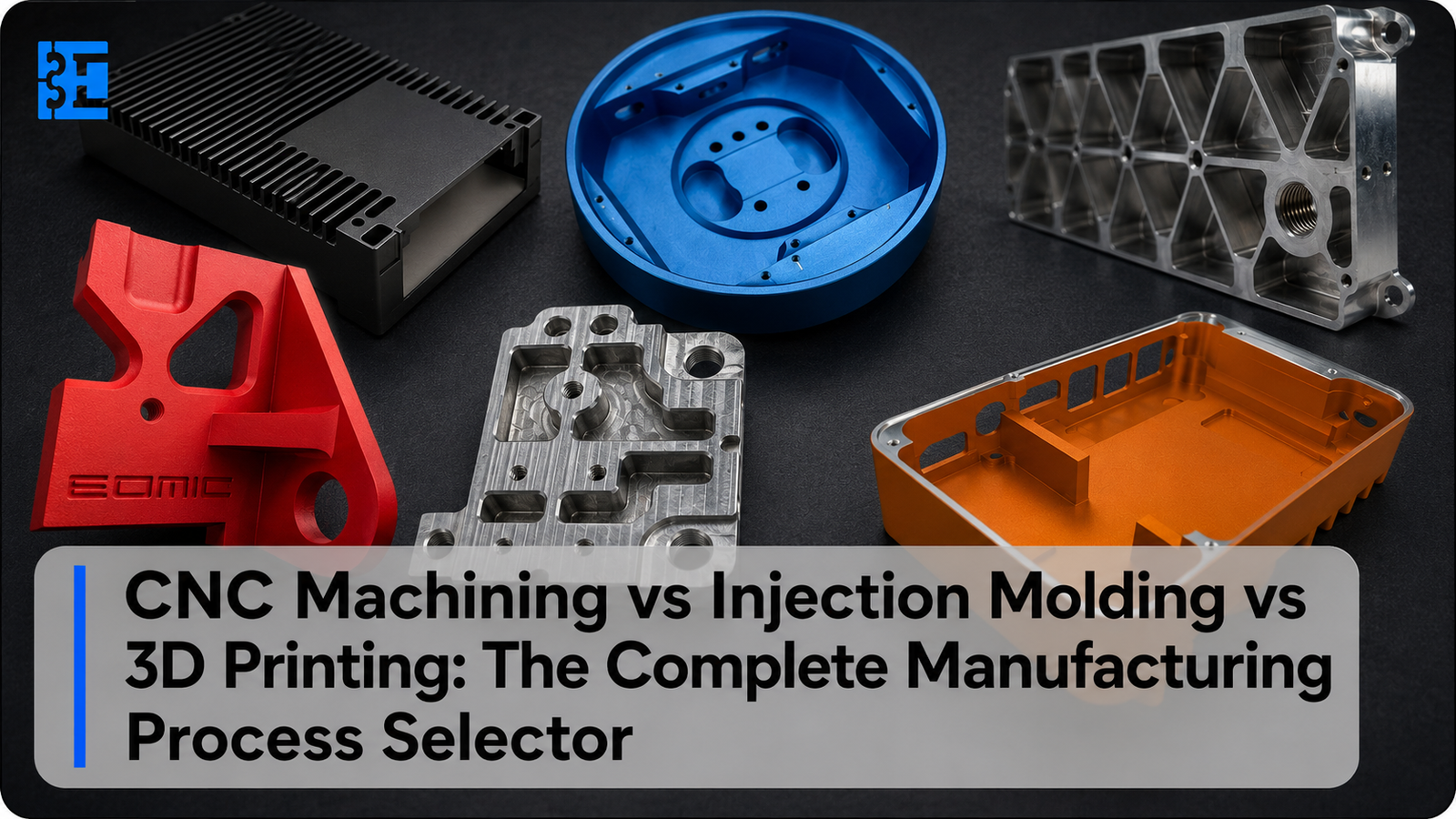
Zinc die casting and CNC machining solve different manufacturing requirements. CNC machining removes material from a workpiece to create the desired geometry, while die casting forms the component by injecting molten metal into a reusable die.
For prototypes or very low production quantities, CNC machining can often avoid the upfront tooling investment associated with die casting. For larger production runs, die casting can become more attractive because the tooling is reused across many parts.
The choice should therefore consider production volume, part complexity, dimensional requirements, tooling cost, material utilization, lead time, and finishing needs.
| Factor | Zinc Die Casting | CNC Machining |
| Production volume | Best suited to medium and high volumes | Suitable from prototypes to production |
| Tooling | Requires dedicated die tooling | Usually no casting die required |
| Complex geometry | Excellent for repeatable cast features | Excellent for precisely machined features |
| Material waste | Generally lower for near-net-shape parts | Depends on part geometry and stock material |
| Surface finish | Good as-cast finish with finishing options | Depends on tooling, cutting conditions, and finishing |
| Per-part cost at volume | Can become highly competitive | Can increase with machining time |
| Design flexibility | Dependent on die design | Highly flexible for many geometries |
| Best use case | Repeat production of complex metal parts | Prototypes and precision machined components |
For projects that require a combination of casting and machining, using both processes can be practical. A die-cast component can be produced close to its final shape and then CNC machined only where tighter dimensions or specific features are required.
What Design Factors Matter in Zinc Die Casting?
A successful zinc die casting project starts before the first part is produced. The component should be designed specifically for the casting process rather than treating die casting as an afterthought.
Wall thickness should be reviewed for consistency where possible. Sudden changes in section thickness can make filling and cooling more difficult. Draft angles should also be included to help the component release from the die.
Ribs and bosses can provide structural support without unnecessarily increasing material thickness. Gates, runners, vents, and ejector locations should be considered during tooling design.
Tight tolerances should only be specified where they are functionally necessary. Over-tolerancing every feature can increase tooling and secondary machining costs without improving the product’s actual performance.
For complex projects, engineering review and design-for-manufacturing analysis can identify potential problems before tooling begins. Elite Mold Tech states that its workflow includes design review, manufacturability checks, engineering assistance, production, and quality inspection.
How Is Zinc Die Casting Quality Controlled?
Quality control should cover more than the final visual inspection. A reliable production process considers material selection, tooling condition, casting parameters, dimensional inspection, surface quality, and secondary operations.
Critical dimensions should be measured against the approved drawing. Surface defects should also be evaluated according to the component’s functional and cosmetic requirements.
For assemblies, dimensional consistency is particularly important because even small variations can affect fit. Elite Mold Tech describes a quality process that includes product inspection, material selection, testing, and production controls.
A documented inspection approach also makes it easier to identify process variation and maintain consistency across production batches.
When Should You Choose Zinc Die Casting?
Zinc die casting is a strong option when a project requires repeatable metal components, complex geometry, good surface quality, and medium to high production volumes.
It may be especially suitable when the same component will be produced in large quantities and the tooling investment can be distributed across many parts.
For prototypes, one-off parts, or designs that are still changing frequently, CNC machining or 3D printing services may be more practical. Once the design has been validated, the project can transition to a higher-volume manufacturing process.
This prototype-to-production approach can reduce manufacturing risk because the design is tested before significant production tooling investment is made. Elite Mold Tech supports both prototyping and full-scale production through multiple manufacturing processes.
Why Work With an Experienced Zinc Die Casting Manufacturer?
The quality of a die-cast component depends on more than the casting machine. Tool design, alloy selection, process control, engineering review, inspection, and finishing all influence the final result.
An experienced manufacturer can help identify manufacturability issues before tooling, select an appropriate zinc alloy, determine practical tolerances, and recommend secondary operations where needed.
Elite Mold Tech describes its manufacturing model as supporting projects from prototypes through mass production and offers multiple manufacturing capabilities under one roof, including die casting, CNC machining, injection molding, 3D printing, and value-added services.
This integrated approach can be useful when a project requires more than casting alone. It can also simplify communication when machining, finishing, assembly, or other processes are required after casting.
Final Thoughts
Zinc die casting is a practical manufacturing solution for producing accurate, detailed, and repeatable metal components at production scale. Its ability to create complex shapes, support thin-wall designs, provide good surface quality, and reduce the need for extensive machining makes it valuable across automotive, electronics, industrial, hardware, and consumer product applications.
The best results come from selecting the right zinc alloy, designing the part for die casting, developing appropriate tooling, controlling casting parameters, and inspecting critical features throughout production.
If you are evaluating zinc die casting for a new component, start with the part drawing, 3D CAD model, material requirements, estimated annual volume, tolerances, and surface finish requirements. These details allow an experienced manufacturer to determine whether zinc die casting is the right process and what secondary operations may be required.
For broader manufacturing guidance, you can also explore Elite Mold Tech’s Metal Injection Molding guide and 304 vs. 316 stainless steel comparison to understand how different manufacturing methods and materials compare for production applications. Elite Mold Tech also provides instant quote and manufacturing support for projects that require engineering review and production planning.
Frequently Asked Questions
Is zinc die casting good for mass production?
Yes. Zinc die casting is particularly suitable for medium and high-volume production because reusable tooling can produce consistent parts over many production cycles.
Is zinc stronger than aluminum for die casting?
Neither material is universally better. Zinc generally offers advantages in detail replication, dimensional stability, and certain wear-related applications, while aluminum is often selected when low weight is a major requirement. The best choice depends on the component’s mechanical and environmental requirements.
Can zinc die cast parts be machined?
Yes. Zinc die castings can undergo secondary machining such as drilling, tapping, milling, or other operations when specific features require tighter dimensions or additional processing.
What surface finishes can be applied to zinc die castings?
Depending on the application, zinc die castings can receive finishes such as polishing, plating, painting, or other surface treatments. The required finish should be considered during part and tooling design.
How do I know if zinc die casting is right for my part?
Review the part geometry, production volume, tolerances, required strength, surface finish, operating environment, and tooling budget. An engineering review can then determine whether zinc die casting or another process is the better fit.
About the Author:
Alex Morgan specializes in technical content for precision manufacturing, with a focus on CNC machining, injection molding, die casting, 3D printing, sheet metal fabrication, and custom mold manufacturing. With more than a decade of experience in B2B manufacturing content and SEO, he creates technically accurate content designed for engineers, product developers, procurement teams, and manufacturing decision-makers. His work helps global manufacturers clearly communicate complex production capabilities, material options, tolerances, tooling processes, and quality standards to customers across the US, Europe, and Asia-Pacific. He writes for manufacturing companies where technical expertise, precision, and reliability matter.