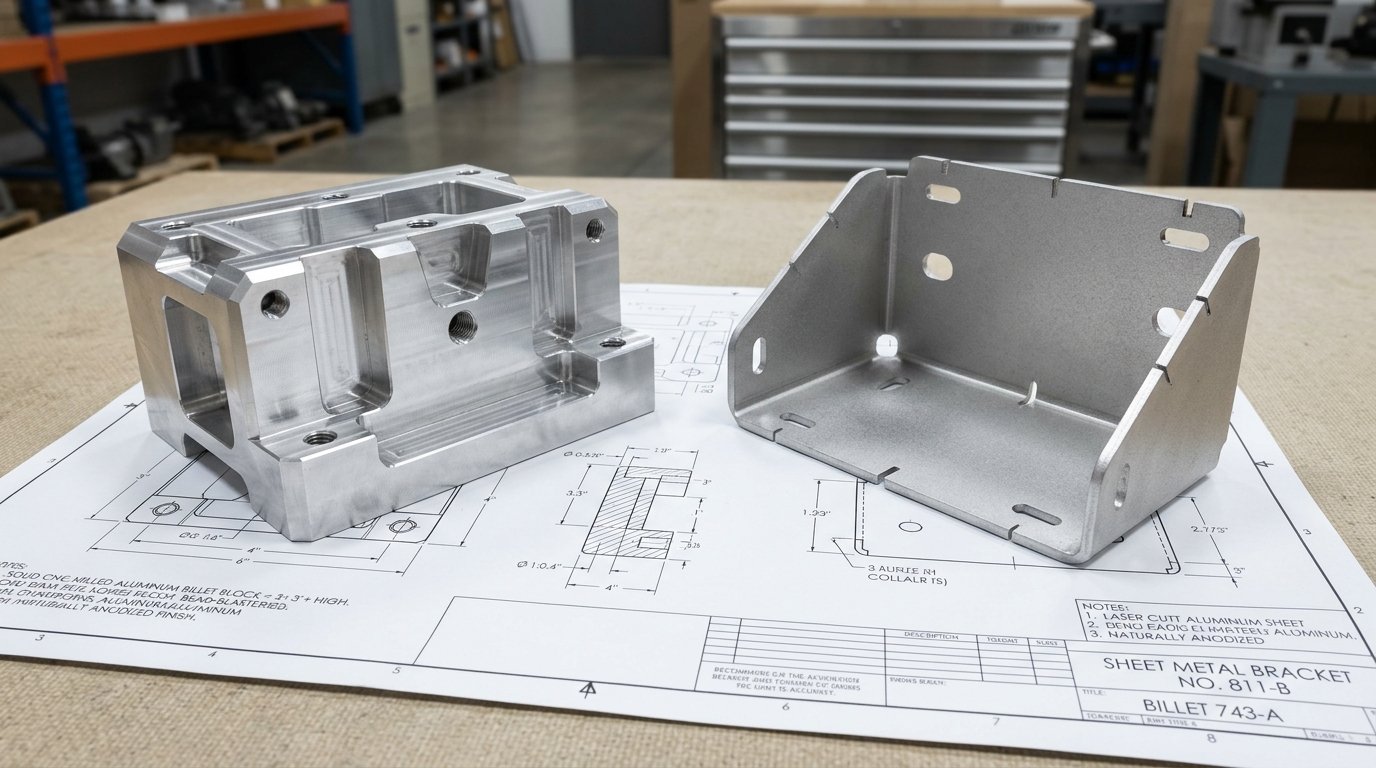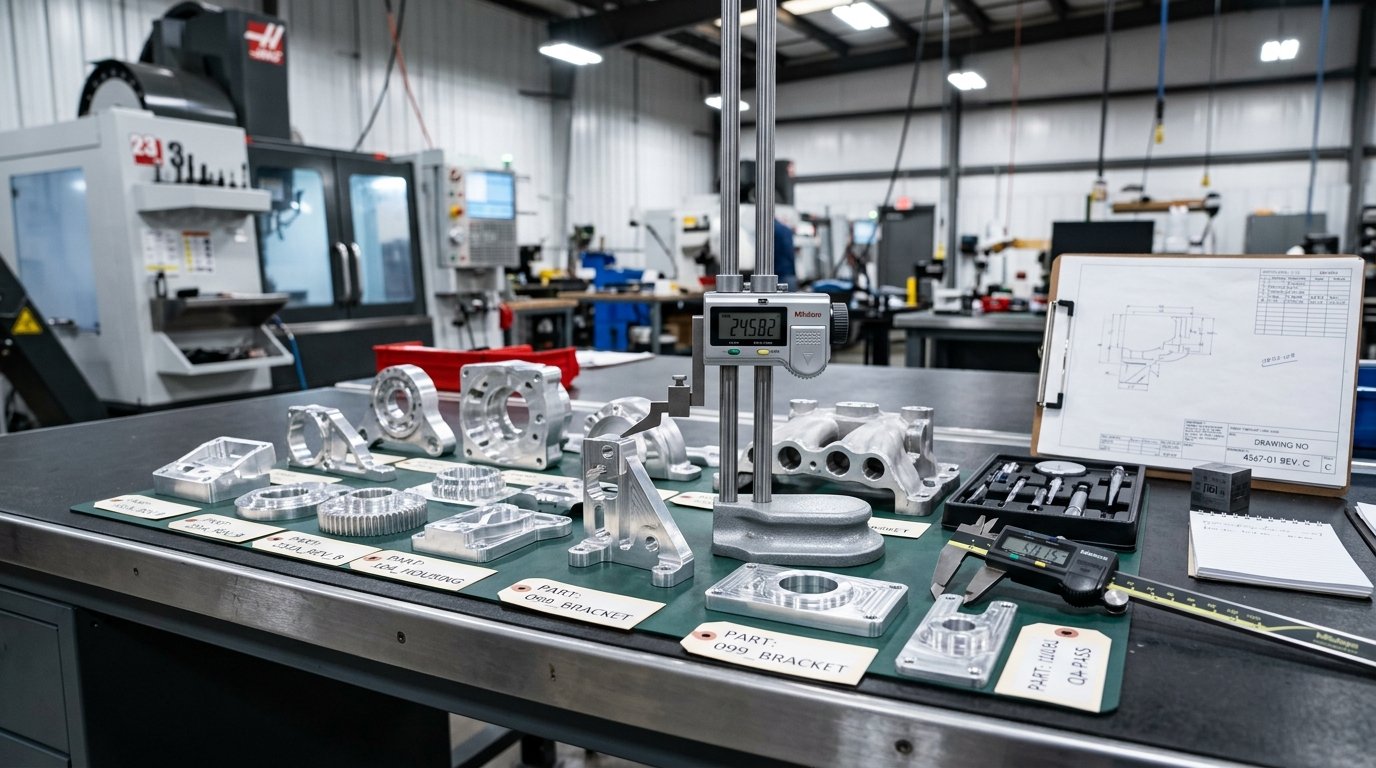
The eight Protolabs alternatives most worth comparing for aluminum CNC machining are Elite Mold Tech, Xometry, Fictiv, RapidDirect, 3ERP, PCBWay, SendCutSend and Jiga. Protolabs is hard to beat on speed for simple prototypes. Buyers usually look elsewhere when unit price at 50+ parts, finish options or part complexity start to matter more than a one-day ship date.
Quick verdict:
- Lowest unit price on repeat aluminum parts: a factory-direct manufacturer such as Elite Mold Tech, RapidDirect or 3ERP
- Widest process menu in one portal: Xometry
- Managed programs with traceability: Fictiv
- US-made simple 6061 plate parts: SendCutSend
- Choose and keep your own machine shop: Jiga
Why Do Engineers Switch From Protolabs?
Protolabs built its reputation on automation. It runs its own CNC factories, quotes from a CAD upload with automated design-for-manufacturability (DFM) feedback, and states that parts can ship in as fast as one day. For a single 6061 bracket needed by Thursday, that is a strong offer.
The same model creates the reasons people shop around.
Price climbs less steeply than buyers expect. Automation is optimized for fast, small orders. At 100 or 500 pieces, the per-part price often stays higher than a shop that quotes production work by hand.
A narrower menu. Protolabs’ own factories list three aluminum grades on the CNC page: 6061-T651, 7075-T651 and 2024-T351. Finish choices are also more limited than at full-service shops. Need 6082, 5083 or a specific anodize color match? You’ll likely look elsewhere or use its separate network service.
Two services under one name. Since acquiring Hubs, Protolabs also runs Protolabs Network, which routes jobs to partner shops in China, the USA and India with lead times from five business days. Its tolerances, pricing and lead times are different from the in-house factories. Some buyers don’t realize which service their quote came from.
None of this means Protolabs is overpriced for what it does. It means it’s priced for speed, and not every order needs speed.
When Staying With Protolabs Is the Right Call
It’s worth saying plainly: for some projects, the best alternative is no alternative.
Stay with Protolabs if:
- You need one to five simple parts in two or three days, and the cost of waiting is higher than the part price.
- Your design changes every week and you want instant DFM feedback on each revision.
- Your company already has Protolabs approved as a supplier, and adding a new vendor would take longer than the project.
- You need ITAR registration and AS9100D from a supplier that machines in its own US facilities.
Switching makes the most sense once a design is stable and you’re ordering the same aluminum part repeatedly. That’s when consistency and unit price take over from speed.
8 Protolabs Alternatives at a Glance
| Supplier | Model | Fastest stated lead time | Default tolerance | Aluminum options | Certifications listed |
| Elite Mold Tech | Factory-direct | Quoted per drawing | Agreed per drawing | 6061, 7075 and other common grades | Confirmed on quote |
| Xometry | Marketplace, 5,000+ suppliers | 3–4 days expedited | ±0.005 in. metals | 6061, 5052, 2024, 6063, 7050, 7075, MIC-6 | ISO 9001:2015, ISO 13485, IATF 16949, AS9100D |
| Fictiv | Managed partner network | 1 day | ISO 2768 Medium | 6061-T6, 7075-T6, 7050, 2024, 5052, 6063, 3003, MIC6 | ISO 9001:2015, ISO 13485 |
| RapidDirect | Factory-owned, China | 1 day, 5 days typical | ISO 2768-m | 6061, 2024, 5052, 5083, 6063, 6082, 7075 | ISO 9001, ISO 13485, IATF 16949 |
| 3ERP | Factory-owned, China | 3 days, 7 days typical | ±0.13 mm | 7075-T651, 6061-T6, 6082-T651, 6060, 5052 | ISO 9001:2015 |
| PCBWay | Online manufacturer, China | 1 day | ±0.005 in. up to 12 in. length | 4 aluminum types | Not listed on CNC page |
| SendCutSend | Own US facilities | 2–5 days | ±0.005 in. | 6061-T6 only | Not listed on CNC page |
| Jiga | Curated supplier network | Varies by supplier | Varies by supplier | Varies by supplier | AS9100D, ISO 9001, ITAR, NADCAP (network) |
Taken from each supplier’s own website in October 2026. Specifications change, so confirm on your quote.
The 8 Alternatives in Detail
1. Elite Mold Tech: factory-direct for repeat aluminum parts
Elite Mold Tech runs its own machining, finishing and assembly lines, plus sheet metal fabrication and injection molding. Engineers review each drawing before quoting, so tolerances, anodize spec and delivery date are agreed before machining starts.
The trade-off is quote speed. You won’t get a price in 30 seconds. You do get a supplier who keeps your programs and fixtures for the next order, which is where most of the savings on a 200-piece reorder come from.
Best for: stable designs ordered in batches of 10 to 1,000, especially when parts combine machining with molding or sheet metal.
2. Xometry: the broadest single portal
Xometry gives you instant quotes for CNC, sheet metal, 3D printing and molding through one account. Its network is the largest here, and its certification list covers aerospace, medical and automotive work. Standard CNC lead time is 3 to 7 business days.
Best for: teams that buy many processes and value one purchase order over the lowest unit price. Limitation: you don’t choose the shop, so cosmetic consistency between orders isn’t guaranteed.
3. Fictiv: managed manufacturing with program support
Fictiv, now part of MISUMI, coordinates partner factories in the US, Mexico, India and China. It states no minimum order quantity and a 95.4% on-time, in-full rate for CNC orders. It leans toward hardware companies scaling into production.
Best for: companies that want a program manager and traceability across many part numbers. Limitation: enterprise-style service carries enterprise-style overhead on small orders.
4. RapidDirect: owned factories with instant quoting
RapidDirect machines in its own plants in Shenzhen, Dongguan and Foshan. It’s one of the few suppliers combining instant online quotes with factory ownership, and it lists seven aluminum alloys including 6082 and 5083.
Best for: buyers who want a Protolabs-style quoting experience at factory-direct prices. Limitation: add shipping time from China to every lead time.
5. 3ERP: engineer-led low-volume runs
3ERP machines in Zhongshan, China, and has a US office in Missouri. It quotes ±0.01 mm as achievable, lists a typical seven-day lead time and positions low-volume production from 100 units.
Best for: small production batches where you want an engineer on email. Limitation: ISO 9001 is the only certificate listed for CNC work.
6. PCBWay: electronics and mechanical parts together
PCBWay started in circuit boards and now offers CNC machining from China with parts ready in as fast as one day. Its tolerance chart scales with part length, starting at ±0.005 in. for parts up to 12 in.
Best for: electronics teams ordering boards and machined enclosures together. Limitation: specific aluminum grades and certifications aren’t listed on its main CNC page, so ask before ordering regulated parts.
7. SendCutSend: fast US-made 6061 parts
SendCutSend is known for laser cutting and has added CNC machining from its facilities in Nevada, Kentucky and Texas. Machined parts ship in 2 to 5 days, but only in 6061-T6 and within a 7 × 7 × 12 in. envelope.
Best for: simple US-made 6061 brackets, plates and blocks. Limitation: one alloy and a small size range.
8. Jiga: pick and keep your own shop
Jiga matches your RFQ to vetted suppliers but lets you talk to the shop directly and build a relationship. Its network includes AS9100D, ITAR and NADCAP-qualified suppliers, which makes it relevant for defense and aerospace buyers.
Best for: buyers who like a platform’s sourcing but want to know exactly who makes their parts. Limitation: no single published lead time or material list. Every quote depends on the matched supplier.
Which Supplier Fits Which Use Case?
Most buyers don’t need the “best” supplier. They need the right one for the job in front of them. This table matches common aluminum jobs to the supplier type that usually handles them well.
| Your job | What matters most | Supplier type to try first |
| 1–3 functional prototypes this week | Speed | Protolabs, Fictiv, SendCutSend (6061 only) |
| 5 design variants to compare | Fast quotes on each revision | Xometry, RapidDirect |
| 20 validation units with anodizing | Finish consistency, inspection report | Factory-direct: Elite Mold Tech, 3ERP |
| 200-piece pilot run | Unit price, repeatability | Factory-direct: Elite Mold Tech, RapidDirect |
| Enclosure plus circuit boards | One supplier for both | PCBWay |
| Defense or ITAR-controlled part | Registration and US machining | Jiga (ITAR network), Protolabs, Xometry |
| Machined part plus molded or sheet metal parts | One tolerance stack, one shipment | Elite Mold Tech |
Two cases sit on the line. A 50-piece order of a simple part may still be cheapest on an instant platform. A 10-piece order of a complex 5-axis part may already favor a factory-direct shop that quotes setup properly. The quantity crossover depends on the part as much as the number.
How Protolabs Pricing Compares at 1, 10 and 100 Parts
There is no public price list for custom parts, from Protolabs or anyone else. But the shape of the price curve is predictable, and it explains most switching decisions.
Every CNC job has a fixed cost: programming the toolpath, setting up the fixture, checking the first part. At one piece, that fixed cost is most of the price. At 100 pieces, it’s spread across all of them, and machine time and material dominate.
Automated systems like Protolabs’ reduce fixed cost through software, which is why they compete well at one piece. Shops that quote by hand spend more on setup but often run longer batches more efficiently, and they don’t carry a platform margin. So the curves tend to cross somewhere between 10 and 100 pieces, depending on the part.
Where exactly? It depends on geometry, alloy, tolerance and finish. The only reliable way to find out is to test it:
- Choose one real aluminum part with a full 2D drawing.
- Quote it at 1, 10 and 100 pieces with Protolabs and two alternatives, one platform and one factory-direct.
- Use the same finish spec on every quote.
- Compare delivered cost, including freight and duties, not the line price.
Most teams find the crossover point within a week of quoting. After that, the decision makes itself.
Aluminum Grade Availability: An Overlooked Reason to Switch
For many aluminum parts, 6061 is all you need. But production designs often call for something else, and grade availability varies more than buyers expect.
- 6061-T6 / T651: offered everywhere on this list. The default for prototypes and most brackets.
- 7075-T6 / T651: offered by most suppliers. Chosen for high strength-to-weight parts.
- 6082: common in Europe, roughly equivalent to 6061. Listed by RapidDirect and 3ERP, not by Protolabs’ own factories.
- 5083: a marine-grade alloy with good corrosion resistance. Listed by RapidDirect and Protolabs Network.
- MIC-6 cast tooling plate: dimensionally stable, used for fixtures and base plates. Listed by Xometry, Fictiv and Protolabs Network.
If your production drawing specifies a grade your prototype supplier doesn’t stock, the prototype isn’t fully representative. Alloy designations follow the Aluminum Association international registration system, so ask for a mill certificate confirming both alloy and temper. Our guide to materials for CNC machining compares common options.
How Do Inspection and Quality Checks Differ?
Quality differences between suppliers rarely show on the first prototype. They show on the third reorder, when a bore is 0.03 mm undersize and nobody can say which machine made it.
Ask every supplier the same three questions.
What inspection is included by default? Some suppliers include only a visual check and a few caliper measurements. Others measure every dimension on the first part with a coordinate measuring machine (CMM). Both are legitimate, but they aren’t the same product.
Who holds the quality certificate? A platform can hold ISO 9001 or AS9100 for its own processes while your parts are machined by a partner with different credentials. Ask for the certificate of the site that makes your part. An ISO 9001-certified quality system at the factory is a sensible baseline for production parts.
What happens when a part is out of tolerance? Look for a written non-conformance process: how fast they respond, whether they remake at their cost, and whether they investigate the cause.
A practical tip: put “first-article inspection report required” on your purchase order for every new part number. It costs little, and it gives you a measured baseline to compare every later batch against.
Risks of Switching, and How to Manage Them
Moving away from a supplier you know carries real risk, even when the new quote is cheaper. These are the problems we see most often, and how to prevent them.
The drawing leaves too much to interpretation. Automated platforms often work from a 3D model with default tolerances. A new supplier will interpret missing information differently. Before switching, put tolerances, thread callouts, edge breaks and finish specs on a 2D drawing. Reference the ISO 2768-1 general tolerance standard for anything not toleranced individually.
The first batch is treated as routine. It isn’t. Ask for a first-article inspection report and compare critical dimensions against parts from your previous supplier before assembly.
Lead time comparisons aren’t like for like. A “5-day” lead time ex-works from China and a “3-day” lead time from a US plant are not comparable until shipping is added.
Overseas sourcing adds trade risk. Import duties on machined parts have changed several times in recent years. Check the current rate with your customs broker before building a cost case on a China quote.
IP exposure. Sign an NDA before sharing files, and ask how many companies will see your drawing during quoting.
Plan one extra week for the first order with any new supplier. It’s a one-time cost, and it’s much cheaper than a rejected batch.
What You Give Up When You Leave Protolabs
A fair comparison has to include the downside. Leaving an automated supplier costs you some things, and it helps to know which before you switch.
Instant DFM on every upload. Protolabs’ software flags undercuts, deep pockets and thin walls in minutes. With an engineer-led quote, you get the same feedback, often in more depth, but it may take a day.
Predictable rules. Automated platforms publish design guidelines, and if your part fits them, the outcome is predictable. A full-service shop will machine more complex geometry, but the result depends more on the conversation you have with them.
One-day options. Few factory-direct suppliers, and almost none overseas, can match a one-day ship date once freight is included.
An approved-vendor shortcut. If your purchasing team already has Protolabs set up, adding a new supplier means paperwork: supplier forms, NDAs, payment terms, sometimes an audit.
For many teams the answer is to keep both. Use the fast automated option for early prototypes, and give stable, repeat parts to a factory-direct supplier. That split usually gives you speed where you need it and lower cost where volume builds up. Our notes on designing thin-walled parts cover one of the features that most often needs a conversation with the shop.
How Should You Choose a Replacement Supplier?
Work through these in order and most of the list eliminates itself:
- Certification first. Aerospace needs AS9100. Medical devices need ISO 13485. Check that the certificate covers the site making your part. Our aerospace parts page lists what that sector usually asks for.
- Alloy and finish. Can the supplier supply your exact grade, temper and anodize spec?
- Quantity. Under 10 parts, favor speed. Over 50, favor unit price and consistency.
- Delivery location. Compare delivered dates, not quoted lead times.
- Communication. Who answers when a dimension is out? A named engineer, or a support ticket?
For a broader comparison of prototype suppliers, see our list of aluminum CNC machining services for prototypes.
Frequently Asked Questions
Who are Protolabs’ main competitors?
The main competitors for CNC machining are Xometry, Fictiv, Jiga and factory-direct manufacturers such as RapidDirect, 3ERP, PCBWay and Elite Mold Tech. SendCutSend competes on simple US-made 6061 parts. Each competes on a different strength: speed, process range, program management or unit price.
Why is Protolabs expensive for larger quantities?
Protolabs is built around automated, fast turnaround on small orders, and its pricing reflects that speed. At 100 parts or more, shops that quote production by hand and reuse fixtures can often offer lower unit prices. The crossover point depends on the part, so compare quotes at several quantities.
Does Xometry own Protolabs?
No. Xometry and Protolabs are separate, competing companies. Protolabs acquired Hubs, which now operates as Protolabs Network, a partner-network service alongside Protolabs’ own factories. Xometry runs its own marketplace of more than 5,000 suppliers and is not part of Protolabs.
Is it cheaper to machine aluminum parts in China?
Machining rates in China are often lower, especially at 50 parts or more. Air freight, import duties and longer transit can reduce or erase that advantage on small, urgent orders. Compare the delivered cost per part, and check current duty rates for your country before deciding.
What is the fastest Protolabs alternative?
For simple parts, Fictiv, RapidDirect and PCBWay all state lead times as fast as one day, and SendCutSend ships 6061 parts in 2 to 5 days from US facilities. Real delivery depends on geometry, finish and shipping, so compare delivered dates rather than headline lead times.
Picking the Right Protolabs Alternatives for Your Next Order
If speed on a handful of simple parts is your priority, Protolabs remains a strong option, and Xometry or SendCutSend are close substitutes. Once a design is frozen and you’re reordering, the stronger options are the factory-direct manufacturers that keep your setup, finish and inspection data on file.
Elite Mold Tech machines, anodizes and inspects aluminum parts in-house for prototype batches and short production runs. Request a quote at the quantities you’re considering, and compare the curve against your current supplier.