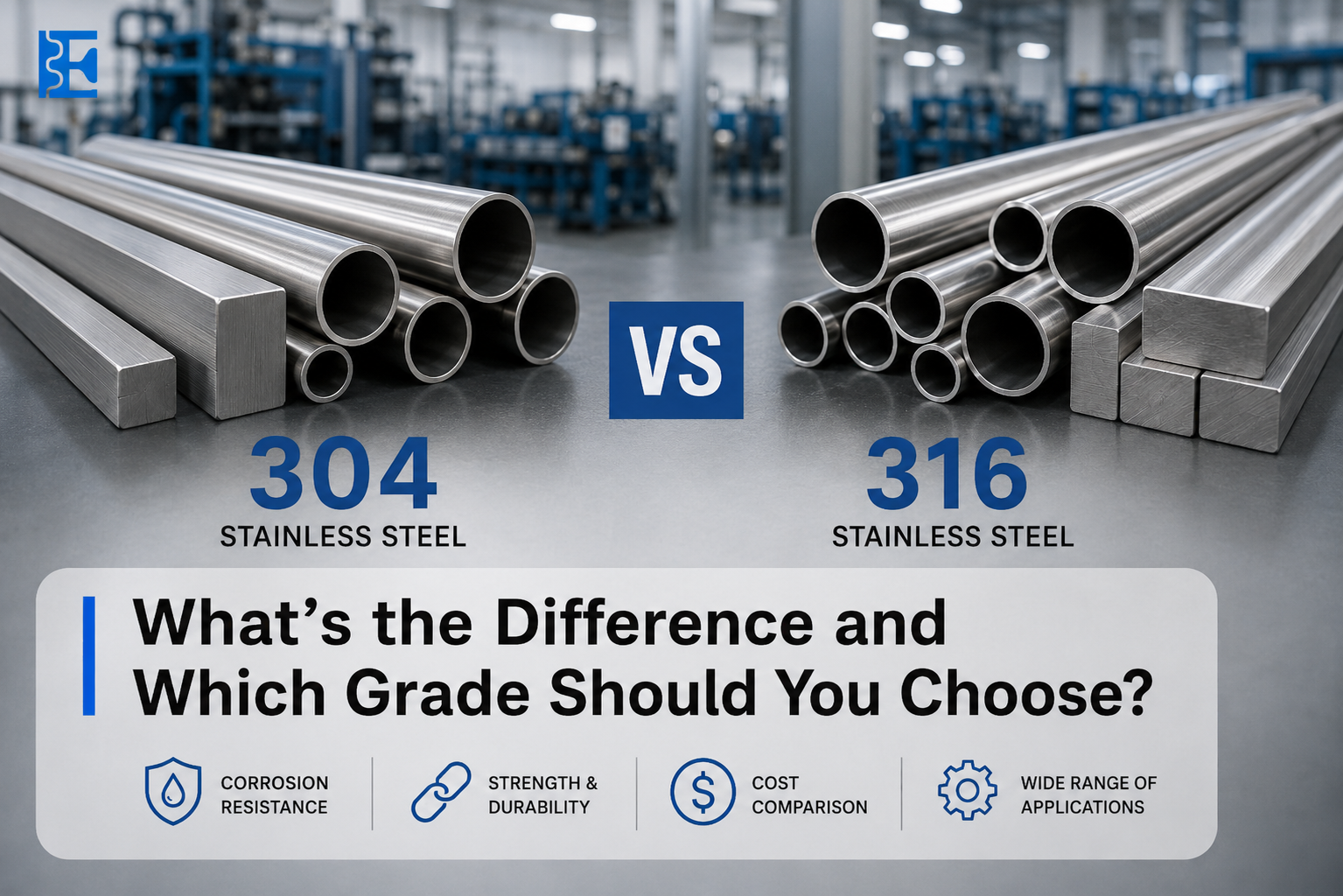
1. Introduction : Quelle est la principale différence entre l'acier inoxydable 304 et l'acier inoxydable 316 ?
La principale différence métallurgique entre l'acier inoxydable 304 et l'acier inoxydable 316 réside dans le fait que La nuance 316 contient entre 21 et 31 % en molybdène (Mo), tandis que la nuance 304 n'en contient pas.4
L'ajout de ce seul produit chimique modifie radicalement le comportement de chaque matériau face aux contraintes environnementales.6 Si l'acier inoxydable 304 est l'option la plus répandue et la plus économique pour les applications générales, l'acier inoxydable 316 offre une résistance supérieure à la corrosion par piqûres induite par les chlorures, ce qui en fait la référence incontestée dans les environnements maritimes, chimiques et pharmaceutiques hautement stériles.
Sur (https://elitemoldtech.com/), nous aidons les ingénieurs, les responsables des achats et les concepteurs de produits à évaluer et à choisir les matériaux les mieux adaptés pour conception de moules d'injection sur mesure, services d'usinage CNC de précision, à grande vitesse services d'emboutissage, et avancé services de moulage par injection de métal (MIM).8 Le choix d'une qualité inadaptée peut entraîner une défaillance mécanique prématurée, tandis que le recours à des matières premières surdimensionnées peut faire grimper inutilement les coûts de fabrication.7
2. Tableau comparatif technique : acier inoxydable 304 vs 316
Afin de faciliter les décisions techniques en matière d'approvisionnement et d'achat, le tableau ci-dessous présente les principales caractéristiques, les coûts et les limites de ces deux qualités :
| Caractéristique de performance | Acier inoxydable 304 (UNS S30400) | Acier inoxydable 316 (UNS S31600) | Guide d'approvisionnement en ingénierie |
| Teneur en chrome | 18/01 TP3T – 20/01 TP3T | 16/01 TP3T – 18/01 TP3T | Le chrome réagit avec l'oxygène pour former une couche d'oxyde passive et protectrice. |
| Teneur en nickel | 8,01 TP3T – 10,51 TP3T | 10.0% – 14.0% | Le nickel stabilise la structure cubique à faces centrées, ce qui améliore la ténacité. |
| Teneur en molybdène | Aucun | 2,0% – 3,0% | Le molybdène améliore la résistance à la corrosion par piqûres localisées au chlorure. |
| Résistance à la corrosion par piqûres (PREN) | 18,0 – 20,0 | 23,0 – 29,0 | Des valeurs plus élevées indiquent une meilleure résistance à la corrosion localisée. |
| Indice d'usinabilité AISI | 70% (version de base) | 60% (référence) | Le 304 se coupe plus facilement ; le 316 est plus visqueux et use plus vite les outils. |
| Résistance à la corrosion | Excellent dans les milieux doux | Performances supérieures en milieux salins et acides | Indiquez « 316 » si les pièces sont en contact avec du sel, des acides ou des produits nettoyants agressifs. |
| Coût initial des matières premières | Base de référence | De 20% à 40% (supérieur) | Cette prime est déterminée par les coûts mondiaux du molybdène et des alliages de nickel. |
| Les meilleures applications | Électroménager, matériel de restauration, supports | Matériel naval, implants médicaux, tuyauterie chimique | Adapter les matériaux à l'exposition environnementale réelle, sans surdimensionner les spécifications. |
3. Composition chimique et caractéristiques techniques
Les aciers 304 et 316 appartiennent tous deux à la famille des aciers inoxydables austénitiques, qui se caractérisent par leur nature non magnétique, leur grande ductilité et leur excellente aptitude au formage.7 Leurs profils chimiques sont strictement définis par des normes internationales telles que ASTM A240 4:
Pourcentages massiques des éléments selon la norme ASTM A240
| Élément | Nuance 304 (UNS S30400) | Nuance 304L (UNS S30403) | Nuance 316 (UNS S31600) | Nuance 316L (UNS S31603) |
| Carbone (C) | 0,081 TP3T max | 0,031 TP3T max | 0,081 TP3T max | 0,031 TP3T max |
| Chrome (Cr) | 18.00% – 20.00% | 18.00% – 20.00% | 16.00% – 18.00% | 16.00% – 18.00% |
| Nickel (Ni) | 8.00% – 10.50% | 8.00% – 12.00% | 10.00% – 14.00% | 10.00% – 14.00% |
| Molybdène (Mo) | — | — | 2.00% – 3.00% | 2.00% – 3.00% |
| Manganèse (Mn) | 2,001 TP3T max | 2,001 TP3T max | 2,001 TP3T max | 2,001 TP3T max |
| Silicium (Si) | 0,751 TP3T max | 0,751 TP3T max | 0,751 TP3T max | 0,751 TP3T max |
| Azote (N) | 0,101 TP3T max | 0,101 TP3T max | 0,101 TP3T max | 0,101 TP3T max |
| Phosphore (P) | 0,0451 TP3T max | 0,0451 TP3T max | 0,0451 TP3T max | 0,0451 TP3T max |
| Soufre (S) | 0,0301 TP3T max | 0,0301 TP3T max | 0,0301 TP3T max | 0,0301 TP3T max |
| Fer (Fe) | Solde | Solde | Solde | Solde |
Le rôle structurel du molybdène
Dans l'acier inoxydable 304 standard, les ions chlorure provenant de l'eau de mer ou des produits de nettoyage chimiques peuvent pénétrer dans les imperfections microscopiques du film protecteur d'oxyde de chrome, provoquant une corrosion par piqûres et une corrosion caverneuse localisées.13
L'ajout de molybdène dans la nuance 316 agit comme un bouclier chimique.15 Le molybdène modifie le réseau cristallin, formant ainsi un composé extrêmement stable et capable de s'auto-réparer, qui empêche les ions chlorure de détériorer la surface passivée.15
Variantes à faible teneur en carbone : pourquoi choisir les nuances 304L et 316L ?
Lors d'opérations de soudage classiques, les températures dans la zone affectée thermiquement (ZAT) atteignent entre 425 °C et 860 °C.17 Dans cette gamme, les nuances standard à plus forte teneur en carbone présentent sensibilisation— là où le carbone se lie au chrome pour former des carbures de chrome le long des joints de grains.17 Cela épuise le chrome présent localement, nécessaire à la protection contre la corrosion, rendant ainsi le cordon de soudure vulnérable à une oxydation rapide (dégradation de la soudure).17
Pour éliminer ce mode de défaillance, des variantes à faible empreinte carbone 304L et 316L limiter la teneur en carbone à un maximum de 0,031 % en poids.4 Ce taux extrêmement faible empêche la précipitation de carbures, garantissant ainsi que les joints soudés conservent exactement la même résistance à la rouille que le métal de base.15
4. Profils de résistance à la corrosion et calculs du PREN
Pour comparer scientifiquement la résistance de différents alliages aux dommages chimiques localisés, les ingénieurs ont recours à la Indice d'équivalence de résistance à la corrosion par piqûres (PREN) formule 19:
$$PREN=\%Cr+3,3\%Mo+16\%N$$
Étant donné que les aciers austénitiques utilisent l'azote comme stabilisateur interstitiel, un coefficient de  est appliquée.19 En substituant les valeurs chimiques standard de la norme ASTM A240 dans cette équation, on constate un contraste frappant 13:
- Acier inoxydable 304 PREN :
 13
13 - Acier inoxydable 316 PREN : 13
Dans le secteur maritime, une valeur PREN de 32 est largement reconnu comme le seuil minimal permettant une immersion permanente en eau de mer sans risque de piqûres.13 Bien que l'acier de nuance 316 (PREN ~25) ne réponde pas à ce critère pour une immersion permanente sans entretien régulier, il résiste facilement au brouillard salin, à l'humidité côtière et aux zones régulièrement exposées aux projections d'eau, là où l'acier de nuance 304 s'oxyderait rapidement.14
Taux de corrosion comparés dans les milieux chlorés et marins
Lors d'essais en laboratoire simulant des environnements marins agressifs (par exemple, exposition à une solution de chlorure de sodium à 3,51 % en poids) :
- Nuance 304 présente une vitesse de corrosion de 0,01 mm/an.21
- Nuance 316 présente un taux de corrosion de seulement 0,001 mm/an—soit dix fois plus () amélioration de la durabilité.21
Lorsque la concentration en ions chlorure dépasse 200 ppm, l'acier inoxydable 304 standard subit une corrosion caverneuse et une corrosion par piqûres rapides, les vitesses de corrosion pouvant atteindre 0,02 à 0,05 mm/an.22 Dans des conditions identiques, l'acier 316 reste chimiquement passif, garantissant ainsi une étanchéité parfaite et l'intégrité structurelle.22
5. Évaluation des propriétés mécaniques et physiques
Les responsables des achats commettent souvent l'erreur de choisir l'acier de nuance 316, car ils pensent qu'il est plus résistant que l'acier de nuance 304.23 En réalité, leurs propriétés mécaniques et de résistance à la charge sont pratiquement identiques à l'état recuit standard 24:
| Propriétés mécaniques | Acier inoxydable 304 | Acier inoxydable 316 | Conséquences techniques sur les applications |
| Résistance maximale à la traction | 515 MPa (75 000 psi) |  515 MPa (75 000 psi) 515 MPa (75 000 psi) | Limites identiques sous des charges statiques ou structurelles maximales. |
| Limite d'élasticité (décalage 0,21 TP3T) | 205 MPa (30 000 psi) | 205 MPa (30 000 psi) | Limites de déformation identiques sous des charges de service normales. |
| Allongement (sur 50 mm) | 40% | 40% | Excellente ductilité ; permet l'emboutissage profond de pièces complexes. |
| Dureté Rockwell B | 70 HRB (92 HRB max.) | 79 HRB (95 HRB max.) | Le 316 est légèrement plus dur, ce qui augmente sa résistance à l'usure, mais aussi l'usure des outils. |
| Densité | 7,93 g/cm³ – 8,00 g/cm³ | 7,98 g/cm³ – 8,00 g/cm³ | Les courbes de poids sont pratiquement identiques. |
| Limite maximale de température en continu | 870 °C | 925 °C | Le 316 offre une limite d'élasticité supérieure à des températures élevées. |
Magnétisme et comportement des matériaux lors du travail à froid
Les aciers 304 et 316 sont tous deux totalement amagnétiques à l'état recuit.25 Cependant, les procédés de travail à froid — tels que l'usinage CNC, le pliage, l'estampage ou l'emboutissage rotatif — génèrent des contraintes de cisaillement localisées qui transforment une partie de l'austénite non magnétique en martensite magnétique.25
Comme l'acier de nuance 316 présente une teneur en nickel plus élevée (de 10% à 14%), sa structure austénitique est nettement plus stable.28 Par conséquent, l'acier de nuance 316 conserve une grande résistance à la magnétisation, ce qui en fait le matériau de prédilection pour les implants chirurgicaux, les appareils d'IRM et les systèmes de guidage aérospatiaux sensibles.27
6. Caractéristiques de l'usinage et de la fabrication CNC
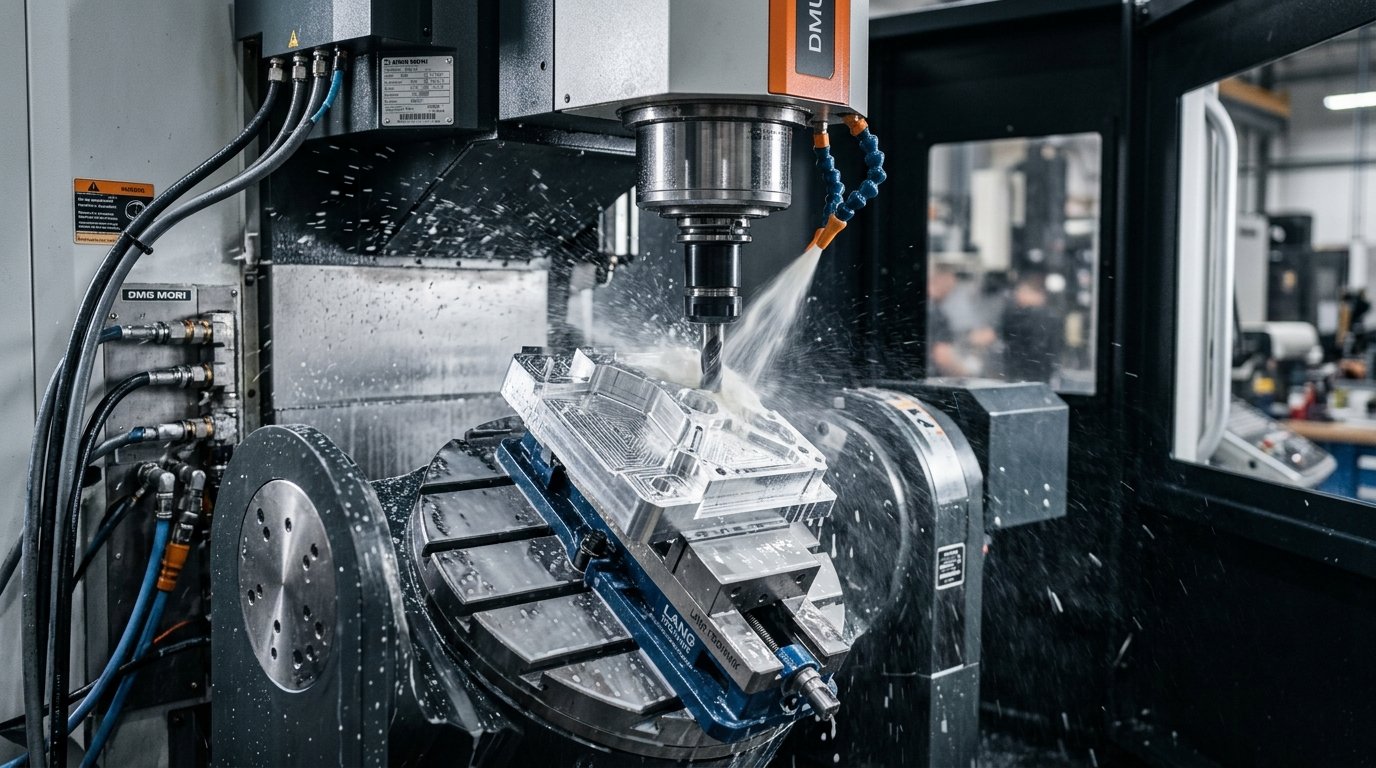
Les aciers inoxydables austénitiques sont réputés difficiles à usiner en raison de leur faible conductivité thermique, de leur grande ténacité et de leur forte tendance à l'écrouissage.23
Indice d'usinabilité et optimisation de l'avance et de la vitesse
Selon les normes AISI, la nuance 304 présente un indice d'usinabilité de 70% (par rapport aux aciers au carbone à usinage facile), tandis que la nuance 316 présente une valeur de 60%.30 La présence de molybdène dans l'acier 316 le rend plus « collant » lors de l'usinage, ce qui nécessite de réduire la vitesse de coupe de 15% afin de maîtriser la charge thermique au niveau du tranchant de l'outil.24
À (https://elitemoldtech.com/3-4-axis-cnc-machining/) Nos programmeurs CNC utilisent des paramètres spécifiques pour la broche et le débit de copeaux afin de garantir une grande précision dimensionnelle :
| Paramètres d'usinage | Acier inoxydable 304 | Acier inoxydable 316 | Outillage recommandé et stratégie de parcours d'outil |
| Vitesse de coupe en fraisage () | 70 à 120 m/min | 60 à 100 m/min | Fraises en carbure monobloc revêtues de TiAlN ou d'AlTiN. |
| Vitesse d'avance au fraisage () | 0,03 – 0,06 mm par dent | 0,02 – 0,05 mm par dent | Un avancement constant et positif empêche l'écrouissage. |
| Vitesse de tournage () | 80 à 160 m/min | 65 – 140 m/min | Plaquettes en carbure revêtues à géométrie positive. |
| Spécifications relatives au liquide de refroidissement | Liquide de refroidissement standard | Fluide de refroidissement haute pression (+20% Flow) | Les additifs extrême pression réduisent la micro-rugosité. |
La règle d'or pour l'usinage de l'acier inoxydable : Veillez à ce que l'outil ne frotte jamais !29 Si l'avance est trop faible ou si la broche marque le pas, le frottement de l'outil crée une couche superficielle durcie par écrouage qui endommage immédiatement les arêtes de coupe en carbure.24 Elite Mold Tech utilise des configurations CNC à haute rigidité et des trajectoires d'outils positives afin de garantir que la fraise reste en dessous de la zone d'écrouissage.29
Pliage, emboutissage et services de fabrication de pointe
- (https://elitemoldtech.com/tube-bending/): L'acier de nuance 304 est souvent choisi pour les structures complexes à plusieurs plans, car sa ductilité supérieure lui permet de se plier en douceur tout en présentant un retour élastique réduit.33 Pour les conduites marines ou hydrauliques, nous utilisons un cintreuse à mandrin rotatif à commande numérique sur de l'acier inoxydable 316L afin d'obtenir des rayons parfaits, sans affaissement.34
- (https://elitemoldtech.com/metal-stamping/): Nous fabriquons des matrices d'estampage progressif sur mesure pour la production en grande série de supports, de blindages anti-interférences électromagnétiques et d'attaches.8 Si les aciers 304 et 316 peuvent tous deux être emboutis, la résistance légèrement supérieure du 316 nécessite des systèmes de presse robustes afin d'éviter l'usure des matrices.27
- Moulage par injection de métal (MIM): Pour les géométries tridimensionnelles complexes qu'il est impossible ou trop coûteux de réaliser par fraisage, nos services MIM sur mesure allient la flexibilité de conception du moulage plastique à l'acier inoxydable 316L fritté afin de fournir des pièces d'utilisation finale denses et à haute résistance.10
7. Recommandations en matière d'approvisionnement par secteur d'activité
Le choix entre l'acier 304 et l'acier 316 dépend fortement de l'environnement d'exploitation et des réglementations propres au secteur 35:
Matériel pour l'alimentation et les boissons
Les aciers 304 et 316 sont tous deux certifiés aptes au contact alimentaire selon les normes de la FDA et de la NSF.7 L'acier inoxydable 304 est le choix par défaut pour la transformation du lait, les conduites de brasserie et les appareils électroménagers.26 Toutefois, dans les systèmes destinés à traiter des aliments très acides ou salés (par exemple, la purée de tomates, les agrumes, les saumures) ou dans les installations recourant à un nettoyage en place (CIP) agressif à base de chlore, l'acier de nuance 316 est obligatoire pour empêcher la prolifération bactérienne à l'intérieur des piqûres de corrosion microscopiques.7
Matériel naval et infrastructures côtières
Pour toute pièce installée à moins de 8 km d'un littoral, l'acier inoxydable 316 est la norme absolue.35 L'utilisation de l'acier inoxydable 304 dans les zones exposées aux embruns marins ou à l'immersion en eau salée entraîne une défaillance structurelle et l'apparition de taches de couleur thé en l'espace de quelques mois.36 Les treuils de bateau, les structures de protection des plateformes pétrolières en mer et les éléments architecturaux côtiers font largement appel à l'acier inoxydable 316L.35
Traitement des produits médicaux et pharmaceutiques
Les salles blanches à usage médical, les cuves de préparation de médicaments et les implants orthopédiques exigent une pureté chimique absolue.18 L'acier 316L est la norme dans ce secteur.39 Sa nature non réactive garantit que les acides organiques et les désinfectants chimiques ne provoquent pas de lixiviation des métaux.36 Pour les dispositifs implantables, l'acier inoxydable 316L spécialisé, conforme à la norme ASTM F138, garantit une biocompatibilité élevée et un risque nul pour le patient.21
8. Analyse des coûts et coût total de possession (TCO)
Les décisions d'approvisionnement ne devraient jamais reposer uniquement sur les coûts initiaux des matériaux.41 Une analyse approfondie du cycle de vie démontre que payer un supplément pour l'acier de nuance 316 permet souvent de réaliser des économies substantielles à long terme.41
Upfront Sourcing Premium
Le grade 304 se négocie généralement entre $2,50 et $5,00 par kilogramme, alors que la nuance 316 va de de $3,50 à $6,50 par kilogramme.35 Cet écart de prix — qui correspond à une prime de 20% à 40% sur le coût des matières premières — s'explique par le coût élevé du molybdène (en moyenne entre 1,420 et 1,424 dollars par livre en 2026) et de la teneur en nickel plus élevée de la nuance 316.35
Comparaison des coûts sur un cycle de vie de 20 ans
Dans les environnements corrosifs (tels que les installations de traitement chimique ou les installations côtières), l'acier de nuance 304 a une durée de vie réelle de seulement 5 ans avant que la corrosion par piqûres ne rende son remplacement nécessaire.21 En revanche, l'acier de nuance 316 peut facilement résister à plus de 20 ans d'utilisation continue.21
Vous trouverez ci-dessous un modèle financier réaliste du coût total de possession (TCO) basé sur un composant industriel type de 100 kg 21:
| Élément de coût du coût total de possession (horizon de 20 ans) | Acier inoxydable 304 | Acier inoxydable 316 | Justification technique et financière |
| Matériaux de base et usinage | $1 000 (référence) | $1,400 (+$400) | Le 316 coûte plus cher à l'achat en raison de ses éléments d'alliage et de la difficulté accrue de son usinage.21 |
| Durée de vie prévue des composants | 5 ans | 20 ans | L'acier 304 se détériore sous l'effet de la corrosion sous contrainte ; l'acier 316 résiste à l'attaque des chlorures.21 |
| Remplacements obligatoires (20 ans) | 3 fois | 0 fois | La détérioration répétée des équipements oblige à procéder à des remises à neuf du système.21 |
| Approvisionnement cumulé en matériaux | $5,000 | $1,400 | En optant pour le 316, on évite les cycles d'approvisionnement répétés.21 |
| Main-d'œuvre de maintenance cumulée | $2 000 (4 × $500) | $500 (1 x $500) | On économise ainsi du temps de travail en évitant les réparations par soudure et les démontages.21 |
| Coûts liés aux arrêts de production | $4,000 | $1,000 | La réduction des arrêts de production permet d'éviter des pertes de productivité coûteuses.21 |
| Coût total de possession cumulé | $11,000 | $2,900 | L'acier de nuance 316 permet une réduction des coûts de 741 TP3T sur 20 ans 21. |
9. Foire aux questions (FAQ)
L'acier inoxydable 316 est-il meilleur que le 304 ?
L'acier de nuance 316 est particulièrement adapté aux environnements contenant de l'eau salée, des chlorures et des acides industriels puissants.7 Cependant, l'acier 304 constitue le choix le plus économique et le plus pratique pour les produits destinés à un usage intérieur et dans des conditions atmosphériques normales, en l'absence d'exposition à des produits chimiques agressifs.7
L'acier inoxydable 304 rouille-t-il ?
Oui.5 Bien que l'acier 304 soit très résistant à la corrosion, il peut rouiller et se piquer s'il est exposé de manière prolongée à l'eau de mer, à l'air salin, à l'eau de Javel ou aux produits chimiques de piscine.15
L'acier inoxydable 316 est-il magnétique ?
À l'état recuit, l'acier de nuance 316 est totalement amagnétique.25 Toutefois, un usinage CNC intensif (fraisage, tournage) ou un travail à froid peut entraîner l'apparition de légères propriétés magnétiques dues à une transformation de phase localisée en martensite.25 Il reste nettement moins magnétique que le 304 sous les mêmes contraintes.27
Quel type d'acier inoxydable est le mieux adapté à l'industrie agroalimentaire ?
La nuance 304 est la norme pour la manutention générale de produits secs, l'industrie laitière et la brasserie.7 Il convient d'opter pour l'acier inoxydable 316 pour les aliments à forte teneur en sel, les ingrédients acides (tels que les agrumes ou les produits à base de tomate) ou les équipements régulièrement nettoyés avec des désinfectants à base de chlore.7
Pourquoi l'acier inoxydable 316 est-il qualifié d'« acier inoxydable de qualité marine » ?
Il contient entre 21 % et 31 % de molybdène, ce qui renforce sa résistance à la corrosion par piqûres induite par les chlorures, lui permettant ainsi de mieux résister à l'air marin et aux embruns salés que les nuances standard.30
Quelle est la différence entre le 304L et le 316L ?
Le « L » signifie « faible émission de carbone » ( 0.03%).15 Ces variantes sont conçues pour les applications de soudage afin d'empêcher la précipitation de carbure de chrome, garantissant ainsi que les joints soudés conservent toute leur résistance à la corrosion.18
10. Collaborez avec Elite Mold Tech pour une fabrication de précision
Choisir la nuance d'acier inoxydable appropriée n'est que la moitié du chemin ; pour garantir la précision dimensionnelle des alliages résistants et durcissables par écrouissage, il faut pouvoir compter sur une fabrication réalisée par des experts.24
Au Elite Mold Tech, nous utilisons des fraiseuses et des centres de tournage CNC de pointe à 3, 4 et 5 axes, ce qui nous permet de respecter des tolérances standard de 0,05 mm et des tolérances de haute précision allant jusqu'à 0,005 mm.9 Nous sommes spécialisés dans :
- Usinage CNC de haute précision: Usinage optimisé de l'acier inoxydable, du titane, de l'aluminium et des plastiques techniques.9
- (https://elitemoldtech.com/quick-turn-injection-molding/): Outillage et moulage de pointe, associés à des systèmes de refroidissement conformationnel, afin d'optimiser les temps de cycle et d'éliminer la déformation des pièces.39
- Conseil complet en matière de conception pour la fabrication (DFM) : Des conseils d'ingénieurs professionnels pour optimiser vos conceptions en termes de rentabilité et de facilité de fabrication avant le lancement de la production.44
Prêt à vous lancer dans votre prochain projet ? Contactez notre équipe d'ingénieurs dès aujourd'hui pour nous envoyer vos fichiers CAO et recevoir un devis détaillé et compétitif dans les 24 heures.44