A buyer pays an invoice marked “tooling” and reasonably assumes the mold is theirs. Years later, wanting to move production, they ask for the tool and discover the situation is more complicated than the invoice suggested.
This is one of the most common and most avoidable disputes in outsourced manufacturing. It is avoidable because everything that causes it can be settled in a short written agreement before any money changes hands. It is common because that agreement frequently does not exist, and nobody notices until the relationship is ending, which is exactly when goodwill is least available.
This guide covers what tooling ownership actually involves, what a workable agreement addresses, and what a transfer looks like in practice.
Three Separate Things People Confuse
Ownership disputes usually stem from treating three distinct matters as one.
Legal ownership is who holds title to the physical asset. This is determined by contract, not by who paid an invoice. An invoice labelled “tooling” may represent payment for tooling amortisation, for the right to have parts produced from a tool, or for outright purchase, and those are very different arrangements.
Physical possession is who has the tool. Your supplier does, and will continue to unless something changes. Ownership without possession is only as useful as your ability to enforce it.
Transfer rights are whether you can move the tool, under what conditions, at what cost, and with what notice. This is separate from ownership. A contract can grant ownership while imposing conditions on removal.
A complete agreement addresses all three explicitly. Many address only the first, or none.
Why Ambiguity Persists
Several factors keep this vague.
Tooling costs are often quoted separately and paid upfront, which creates the impression of a purchase without anything documenting it as one.
Some suppliers offer subsidised or free tooling in exchange for production commitments. That is a legitimate commercial model, but it means the tool is not yours in any straightforward sense, and the terms need to be explicit.
Small buyers frequently do not ask, and suppliers rarely volunteer. Neither party wants to open a difficult conversation at the start of an otherwise positive relationship.
Cross-border enforcement is complicated enough that vague terms rarely get tested until they must be.
None of that is sinister. It is just how commercial relationships drift when nobody writes things down.
What a Workable Agreement Covers
Title and When It Passes
State plainly who owns the tool and at what point ownership transfers. Commonly this is on final payment. Whatever the trigger, it should be a specific, verifiable event rather than an assumption.
Identification
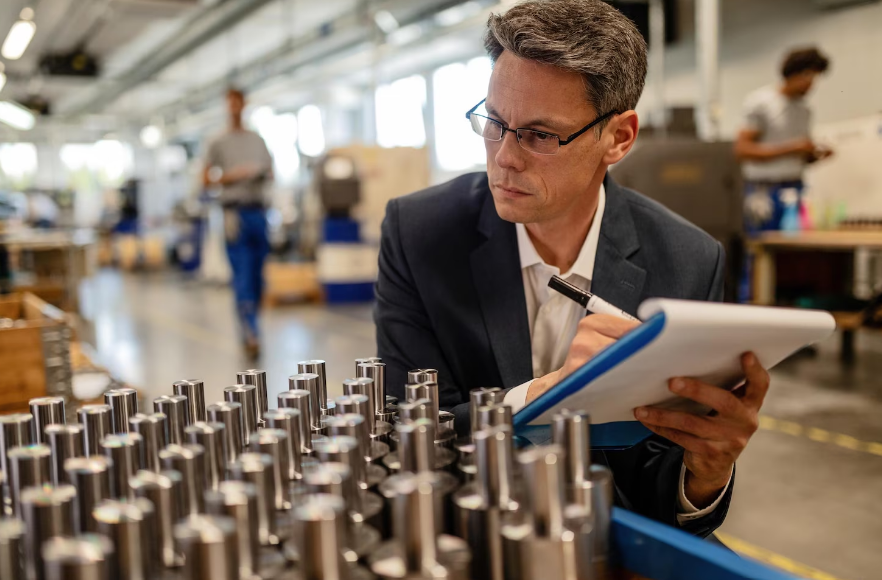
Each tool should carry a unique identifier, physically marked, recorded in the agreement. Vague references to “the mold for part number X” become problematic when a supplier holds several tools, has built a replacement, or has modified the original.
Photographs of the tool with its marking, taken at handover, cost nothing and settle a surprising number of later disagreements.
Storage and Maintenance
Specify where the tool is stored, who maintains it, at whose cost, and to what standard. Molds require cleaning, corrosion protection and periodic replacement of wear components. A tool stored badly for two years may not run when you need it.
Agree the maintenance schedule, who performs it, and whether records are provided. Agree what happens to storage cost during periods of no production, since some suppliers charge for this and it is better known in advance.
Wear Components and Spares
Ejector pins, springs, guide bushes and similar components wear and get replaced. Agree who supplies them and who pays.
Where the tool includes proprietary components such as hot runner systems, note the make and model. Sourcing a replacement for an unidentified component years later is difficult.
Transfer Terms
The most important section, and most often missing.
Specify notice required, cost of preparation for shipment, who pays for crating and freight, what condition the tool will be handed over in, and what documentation accompanies it. Tool drawings, steel certificates, maintenance records and the last set of process parameters all matter to whoever runs it next.
Also specify what happens to any outstanding balance. It is reasonable for a supplier to require accounts settled before release. It is not reasonable for that to be discovered only when you ask.
Supplier Insolvency
If the supplier ceases trading, a tool in their possession may be treated as their asset by creditors, regardless of your contract. This risk varies by jurisdiction and cannot be eliminated by agreement alone.
What helps is documentation strong enough to establish your claim: a clear ownership clause, evidence of payment, physical marking identifying the tool as yours, and where practical, a registered security interest under the relevant local regime. For high-value tooling, this is worth taking legal advice on rather than relying on general guidance.
Exclusivity and Design Rights
Separate from the physical tool: can the supplier use your design, or produce similar parts for others? Confidentiality terms and design ownership should be documented alongside tooling ownership, since a tool you own is limited protection if the geometry can be reproduced.
Settle IP arrangements before transferring CAD files rather than after a concern arises.
Subsidised Tooling Arrangements
Some suppliers offer tooling free or at reduced cost against a production commitment, recovering the investment through unit price.
This is legitimate and can suit buyers with limited upfront capital. It needs clear terms:
- What production commitment triggers the arrangement
- What happens if volumes fall short
- Whether ownership transfers at any point, and on what condition
- What buy-out cost applies if you want the tool early
Without these written down, a low tooling invoice converts into a supplier relationship you cannot exit without renegotiating from a weak position. That may be an acceptable trade. It should be a knowing one.
Moving a Tool in Practice
Buyers who have ownership sorted sometimes still find transfer harder than expected. Several practical points.
A tool built for one machine may not run on another. Shut height, tie bar spacing, ejector arrangement, clamping and water connections all vary. Confirm compatibility with the receiving molder before shipping, not after.
Process parameters travel with difficulty. The new molder will need to re-establish settings, and first parts from a transferred tool rarely match the last parts from the previous molder immediately. Budget for sampling and requalification.
Tools need work on arrival. Expect cleaning, inspection and often replacement of wear components. A receiving molder who says the tool is ready to run without inspection is not doing you a favour.
Documentation matters more than buyers expect. Tool drawings, steel specification, previous process sheets and maintenance history all shorten the requalification. Request them as part of transfer terms.
Allow real time. Between notice, preparation, freight, inspection, machine fitting and sampling, a tool transfer is a project rather than a shipment. Planning it as a several-week exercise avoids production gaps.
Practical Steps Before You Pay
- Ask directly, in writing, who owns tooling under the proposed arrangement
- Request the ownership and transfer terms as a document, not an email reply
- Confirm the tool will be physically marked with your identifier
- Agree storage and maintenance responsibility and cost
- Agree transfer notice, cost and documentation
- Photograph the marked tool at handover
- Keep payment records tied specifically to the tool
None of this needs to be adversarial. A supplier confident in the relationship documents it readily, because clear terms protect them as much as you. Reluctance to put it in writing is itself informative.
Reading the Response
How a supplier handles this conversation tells you something.
A good response is straightforward: here are our standard terms, here is what we do on storage and maintenance, here is what transfer involves. A supplier who has done this before has a document ready.
A response that avoids specifics, defers the conversation, or treats the question as a sign of mistrust is worth noting. The question is routine in professional manufacturing relationships, and discomfort with it usually indicates either inexperience with international customers or terms the supplier would rather not state plainly.
Where This Sits in Supplier Selection
Tooling ownership belongs in the same conversation as certification, capability and quoting, before commitment rather than after.
Elite Mold Tech documents tooling terms as part of the quotation process for moulage de production and prototype tooling, covering ownership, storage, maintenance and transfer, alongside DFM review before steel is committed. If you are evaluating a tooling programme, the terms are available in writing at quotation stage rather than on request later.
Questions fréquemment posées
Q: If I paid for the mold, do I own it?
A: Not automatically. Ownership is determined by your written agreement rather than by an invoice, and payments labelled tooling can represent purchase, amortisation or production rights depending on the terms.
Q: Can a supplier refuse to release my mold?
A: Potentially, if outstanding balances exist or if the agreement imposes conditions on release. This is why transfer terms, including notice, cost and any preconditions, should be documented before payment.
Q: What happens to my mold if the supplier goes out of business?
A: A tool in their possession may be treated as their asset by creditors depending on jurisdiction. Clear ownership documentation, payment evidence and physical marking strengthen your claim, and legal advice is worthwhile for high-value tooling.
Q: Will my mold run on a different machine after transfer?
A: Not necessarily. Shut height, tie bar spacing, ejector arrangement and water connections all vary between machines, so confirm compatibility with the receiving molder before shipping the tool.
Q: What documentation should come with a transferred mold?
A: Tool drawings, steel specification, maintenance records and the most recent process parameters. These substantially shorten requalification at the new molder and should be specified in your transfer terms.