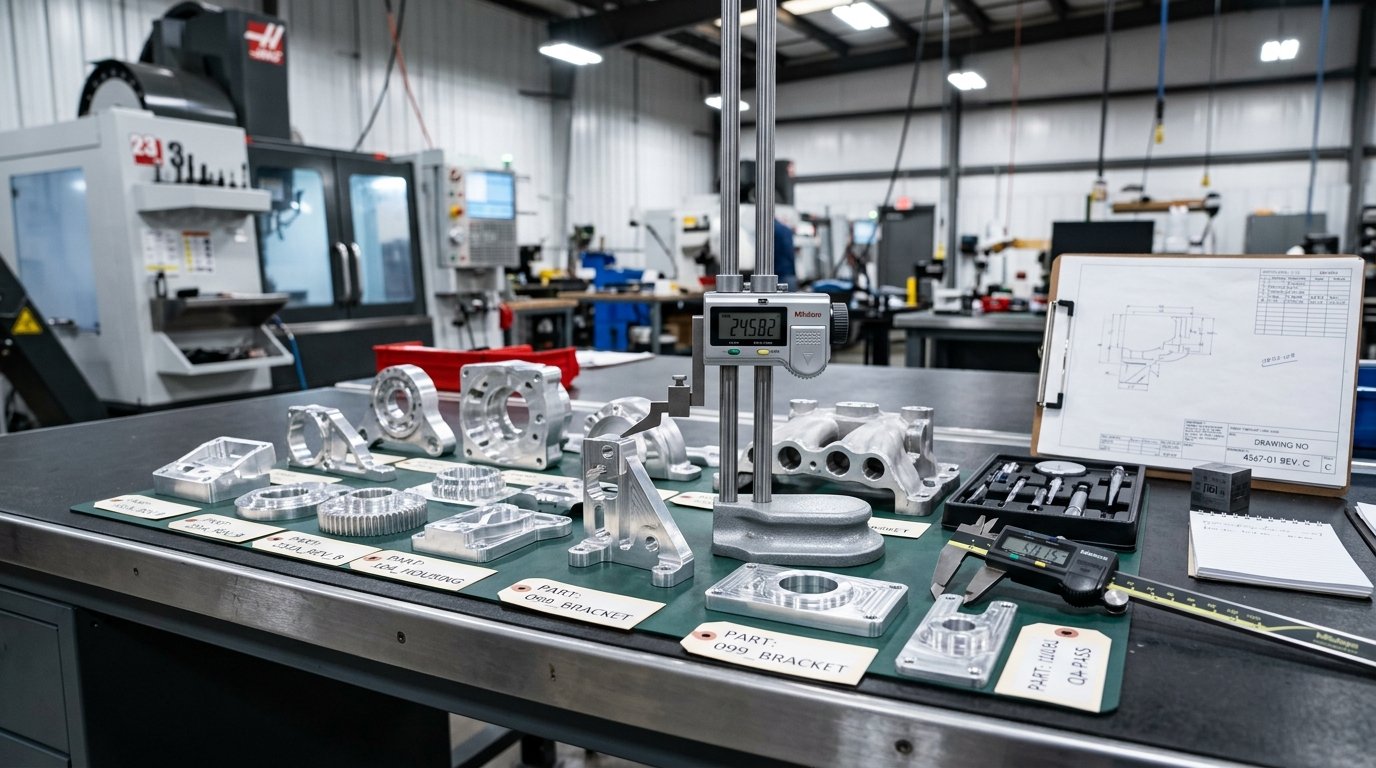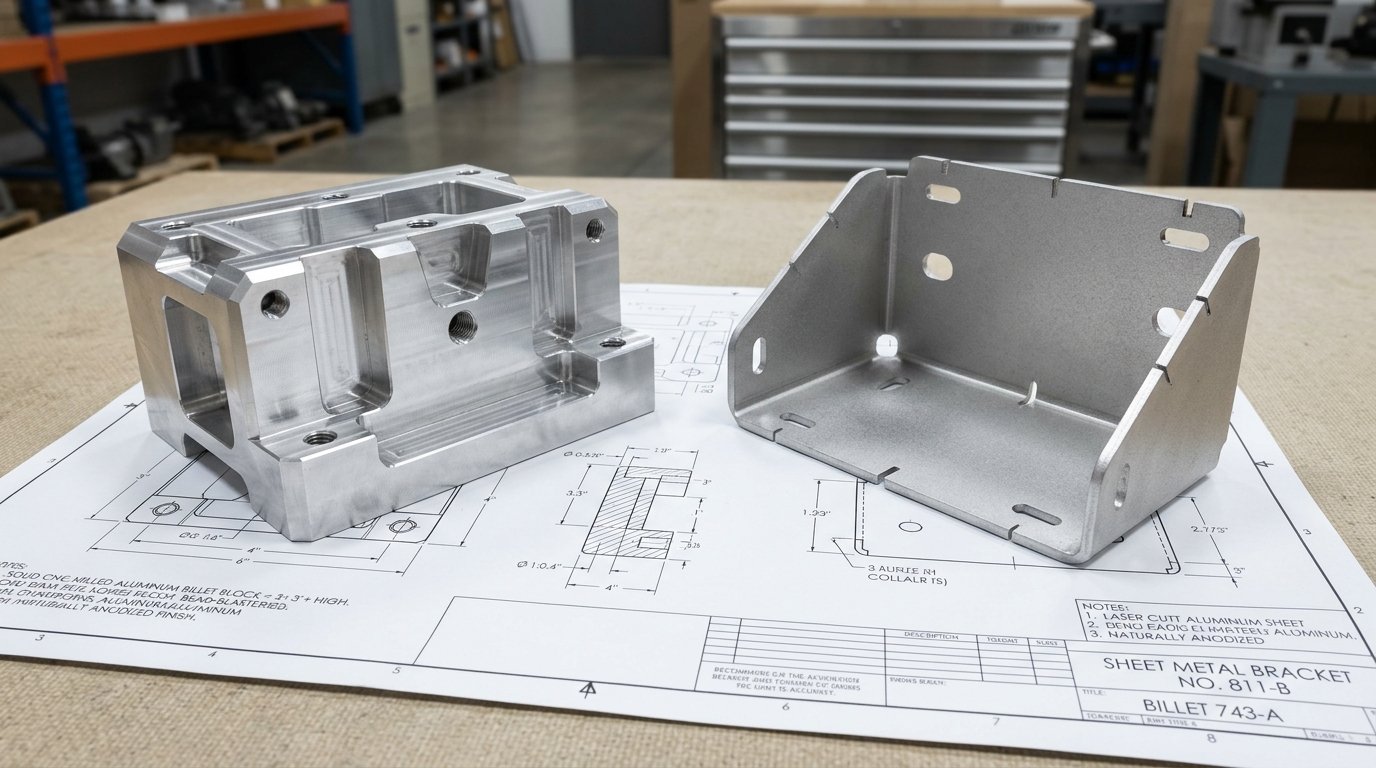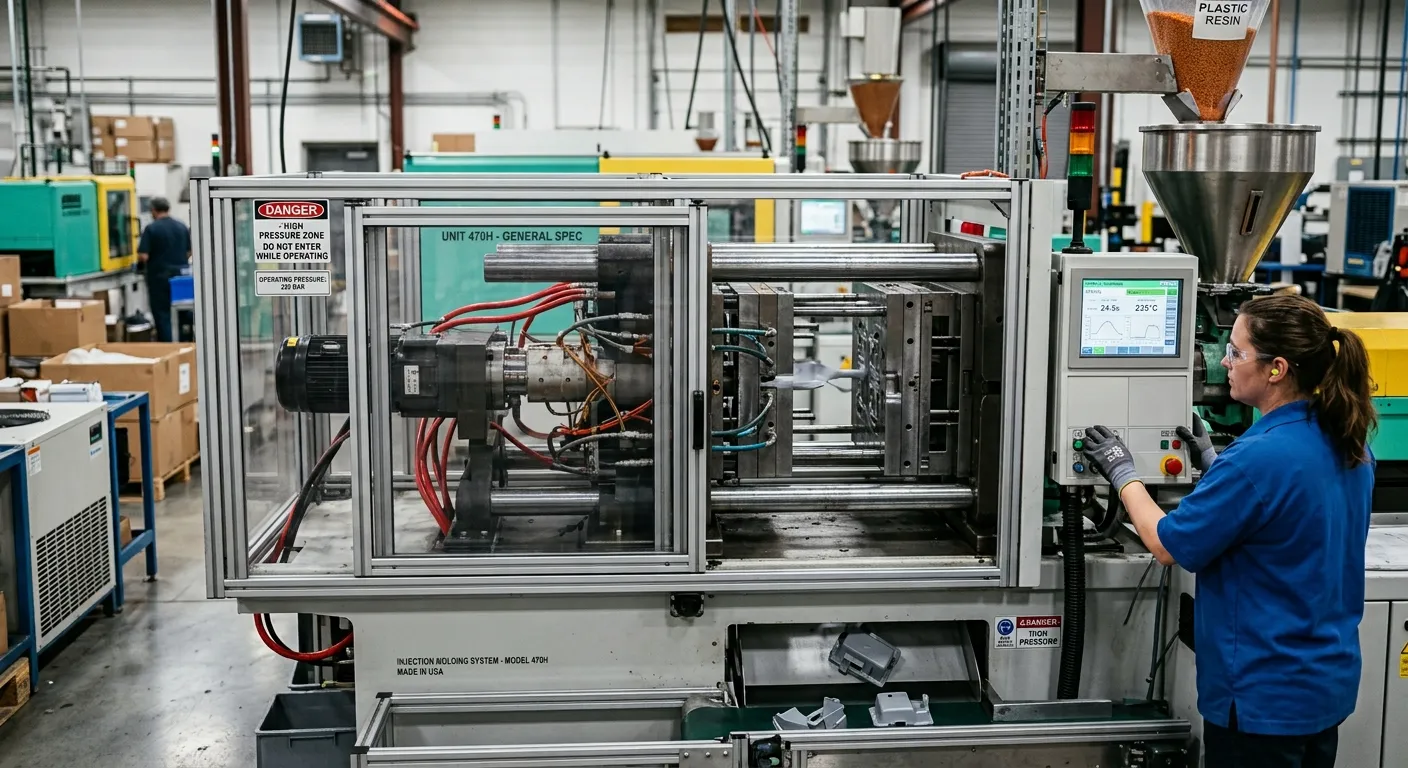
The most common mistake in injection molding is not a design error or a material choice. It is committing USD 20,000 to USD 80,000 in tooling before the design is ready for it, then discovering the part needs a wall thickness change, a new gate location, or an undercut that the mold cannot accommodate. The rework costs more than the original mold. The delay costs more than both.
Injection mold cost is one of the most misunderstood numbers in manufacturing. Engineers routinely receive quotes ranging from USD 1,500 to USD 100,000 for what they describe as “an injection mold” and cannot explain the gap. The gap is real, and it is entirely logical once you understand the four variables that drive every tooling quote: mold type, steel grade, cavity count, and part complexity.
This guide breaks down every cost component in an injection mold, shows real 2026 price ranges for each mold category, explains the steel grade decisions that account for 30 to 40 percent of total tooling cost, and gives you the DFM strategies that routinely cut tooling budgets by 15 to 30 percent before a single piece of steel is touched.
| Resposta rápidaInjection mold cost in 2026 ranges from USD 1,500 to USD 8,000 for aluminum prototype tooling (Class 105, 2 to 4 week lead time) to USD 15,000 to USD 120,000 or more for hardened steel production tooling (Class 101 to 103, 6 to 12 week lead time). The four primary cost drivers are mold type (prototype vs. production), steel grade (P20 vs. H13 vs. S136), cavity count (single vs. multi-cavity), and part complexity (number of side actions, surface finish specification, and overall geometry). DFM optimization before tooling begins typically reduces cost by 15 to 30 percent. |
What Are the Main Types of Injection Molds and What Does Each Cost?
Injection molds are not a single category. They span a wide range of tool classes, each built to a different specification, life expectancy, and price point. The SPI (Society of the Plastics Industry) mold classification system, now maintained by the Plastics Industry Association, provides the standard framework most manufacturers and buyers use when quoting and specifying tooling.
| Mold Class | Steel Type | Shot Life (cycles) | Typical Cost Range | Prazo de entrega | Melhor aplicativo |
|---|---|---|---|---|---|
| Class 105 (Prototype) | Aluminum or soft steel | Up to 500 shots | USD 1,500 to USD 8,000 | 2 to 4 weeks | Design validation, first article, pre-production samples |
| Class 104 (Low Volume) | Mild steel or aluminum | Up to 100,000 shots | USD 5,000 to USD 20,000 | 4 to 6 weeks | Low-volume production under 100,000 units total |
| Class 103 (Medium Volume) | P20 pre-hardened steel | Up to 500,000 shots | USD 10,000 to USD 40,000 | 5 to 8 weeks | Medium production runs, non-abrasive resins |
| Class 102 (High Volume) | H13 hardened steel | Up to 1,000,000 shots | USD 20,000 to USD 80,000 | 6 to 10 weeks | High-volume production, glass-filled or abrasive resins |
| Class 101 (Ultra High Volume) | H13 or S136 hardened steel | 1,000,000+ shots | USD 40,000 to USD 200,000+ | 8 to 16 weeks | Consumer products, automotive, multi-cavity high-speed production |
These ranges reflect 2026 pricing from China-based toolmakers, which typically run 40 to 60 percent below equivalent North American or European tooling quotes for the same steel grade and specification [1]. The price differential does not reflect a quality difference when the steel grade, machining tolerances, and validation scope are equivalent. It reflects lower labor rates and higher machine utilization in Chinese tooling facilities.
How Do the Four Primary Cost Drivers Determine Your Tooling Quote?
Every injection mold quote resolves to four variables. Understanding each one gives you the ability to read a quote critically, challenge assumptions, and identify where DFM changes can reduce cost before the purchase order is placed.
Cost Driver 1: Mold Type (Prototype vs. Bridge vs. Production)
The single largest cost decision is whether you need a prototype tool, a bridge tool, or a full production tool. These are not points on a spectrum. They are engineering decisions with fundamentally different economics.
A prototype mold (Class 105) in aluminum or soft steel validates geometry, fit, and function before production tooling is committed. It costs USD 1,500 to USD 8,000, delivers first parts in 2 to 4 weeks, and produces up to 500 good shots. It is not a production tool. Use it when the design has not been validated in the actual production resin, when wall thickness or gate location may still change, or when a T1 trial run is needed before a USD 30,000 steel investment.
A bridge tool (soft P20 or semi-hardened steel) produces 10,000 to 50,000 shots and costs USD 5,000 to USD 20,000. It bridges the gap between prototype validation and production tooling investment, often used for market testing, pilot production, or pre-launch supply while production tooling is being built in parallel.
A production tool (P20, H13, or S136 hardened steel) is built for the full program life. Its cost reflects the engineering hours, steel quality, cooling design, surface finish, validation trials, and modification cycle required to deliver consistent quality across hundreds of thousands or millions of shots. Do not use prototype tooling economics to evaluate production tooling quotes. They are different products.
Cost Driver 2: Steel Grade (P20 vs. H13 vs. S136)
Steel grade accounts for 30 to 40 percent of total tooling cost and is the single most over-specified and under-specified cost driver in injection mold procurement. The decision must be based on three factors in this order: production volume, resin chemistry, and surface finish requirement.
| Steel Grade | Hardness (HRC) | Shot Life | Relative Cost vs. P20 | Melhor para | Avoid When |
|---|---|---|---|---|---|
| P20 (pre-hardened) | 28 to 34 | 300,000 to 500,000 shots | Baseline (1.0x) | Non-abrasive resins (ABS, PP, PE), medium volumes | Glass-filled resins, PVC, high-gloss optical parts |
| H13 (heat-treated) | 48 to 52 | 1,000,000+ shots | 1.25x to 1.40x | Abrasive resins (GF nylon, PPS, PEI), high-volume production | Programs under 300,000 shots where P20 suffices |
| S136 (stainless) | 48 to 52 | 500,000 to 1,000,000+ shots | 1.60x to 1.90x | Corrosive resins (PVC, POM, FR-ABS), medical/optical mirror finish | General commercial parts with non-corrosive resins |
| NAK80 (pre-hardened) | 37 to 43 | 100,000 to 300,000 shots | 1.10x to 1.25x | High-polish consumer parts, medium volume, non-abrasive resins | High-volume or abrasive resin applications |
| Aluminum (7075) | N/A | Up to 500 to 10,000 shots | 0.30x to 0.50x | Prototype and bridge tooling only | Any production program over 10,000 shots |
The most common steel selection error is specifying P20 for a glass-filled resin. Glass fibers erode P20 within 10,000 to 20,000 shots, creating surface defects and dimensional drift that require cavity regrind or replacement. The cost of a P20-to-H13 upgrade at quote stage is USD 3,000 to USD 8,000. The cost of a cavity rebuild at production is USD 15,000 to USD 40,000 plus program downtime [2].
Cost Driver 3: Cavity Count
Cavity count has a non-linear effect on tooling cost and a highly linear effect on per-part cost. A 4-cavity mold does not cost four times a 1-cavity mold, but it does produce four parts per cycle, cutting per-part machine time and resin handling cost by approximately 75 percent at equivalent cycle time.
- Single-cavity mold: baseline tooling cost, highest per-part cost. Correct choice when volume is under 50,000 units, part geometry is complex, or design changes are still likely.
- 2-cavity mold: adds 40 to 60 percent to single-cavity tooling cost. Cuts per-part machine cost by approximately 50 percent. Break-even vs. single-cavity typically occurs between 20,000 and 50,000 units.
- 4-cavity mold: adds 100 to 150 percent to single-cavity base cost. Per-part machine cost drops to 25 percent of single-cavity equivalent. Requires higher clamp tonnage press and consistent resin supply.
- 8-cavity and above: reserved for consumer products and automotive parts at production volumes above 500,000 units per year. Tooling cost increases of 200 to 400 percent over single-cavity, but per-part economics at volume justify the investment within the first production run.
- Family mold: multiple different part geometries in one mold. Lower tooling cost than separate tools for each part, but creates scheduling and balance challenges if cycle times differ between cavities. Suitable only when all parts in the family run simultaneously in the same resin.
Cost Driver 4: Part Complexity
Part complexity covers three sub-variables: the number of side actions and lifters required for undercuts, the surface finish specification, and overall geometry depth and feature density. Each adds cost in a predictable, quantifiable way.
- Side actions (slides): each side action required for an undercut adds USD 800 to USD 2,500 to tooling cost depending on size and stroke. A part with three undercuts in three different directions requires three side actions, adding USD 2,400 to USD 7,500 to the base mold price.
- Surface finish specification: SPI C1/C2 matte finish requires no special polishing. SPI B1 semi-gloss requires hand polishing, adding USD 500 to USD 1,500. SPI A1 mirror finish requires diamond polishing of S136 or H13 steel, adding USD 2,000 to USD 6,000 and extending lead time by 1 to 2 weeks.
- Wall thickness uniformity: non-uniform walls require more sophisticated cooling design, increasing engineering hours by 20 to 40 percent. Sections thicker than 4mm require conformal cooling channels machined by EDM, adding USD 1,500 to USD 4,000 per thick section.
- Hot runner vs. cold runner system: a cold runner system adds material waste (the runner scrap) but no tooling cost above the mold base. A hot runner system eliminates runner waste and speeds cycle time but adds USD 2,000 to USD 15,000 to tooling cost depending on the number of drops and manifold complexity.
What Do Real Injection Mold Quotes Look Like in 2026?
Abstract price ranges help with budgeting. Real quote examples help with evaluating whether a specific quote is reasonable. The four examples below are based on actual tooling inquiries from 2025 to 2026, with identifying details removed.
| Part Type | Aço | Cavities | Side Actions | Acabamento da superfície | Final Tooling Cost | Prazo de entrega |
|---|---|---|---|---|---|---|
| Consumer electronics housing, ABS, 120g | P20 | 1 | 2 slides | SPI B1 semi-gloss | USD 6,800 | 4.5 weeks |
| Medical device housing, PC, 45g | H13 | 4 | 0 | SPI A1 mirror | USD 28,000 | 8 weeks |
| Automotive interior trim, PP+GF20, 280g | H13 | 2 | 4 slides, 1 lifter | SPI C1 matte | USD 22,500 | 7 weeks |
| Consumer packaging cap, HDPE, 8g | P20 | 8 | 0 | SPI B2 satin | USD 18,000 | 6 weeks |
The medical device example shows how steel grade, cavity count, and surface finish interact. The switch from P20 to H13 added approximately USD 3,500. Four cavities versus one added approximately USD 11,000. The SPI A1 mirror polish in S136-compatible steel added approximately USD 4,500. The base single-cavity P20 mold with standard B2 finish would have cost approximately USD 8,000. The specification requirements tripled the tooling cost to USD 28,000, and every dollar of that increase was justified by the production volume, material, and regulatory requirements of the application.
How Can DFM Review Reduce Injection Mold Cost Before Steel Is Cut?
DFM (Design for Manufacturability) review is the highest-return activity in injection mold cost reduction. Every change made to a part design before the mold is cut costs nothing except engineering time. Every equivalent change after the mold is cut costs steel rework, potential new components, and program delay. The numbers from industry experience are consistent: DFM optimization reduces tooling cost by 15 to 30 percent on average, with individual cases saving 40 percent or more on complex geometries.
The five DFM actions with the highest tooling cost impact are listed below, in order of average savings potential.
- Undercut elimination: each undercut eliminated removes one side action from the mold. If a tab, hook, or snap feature can be redesigned to pull straight out of the mold without interference, the side action cost of USD 800 to USD 2,500 is eliminated entirely. Even partial undercut reduction, converting a full side action to a simple lifter, saves USD 400 to USD 800 per feature.
- Wall thickness uniformity: designing uniform wall thickness of 2 to 3mm eliminates thick sections that require complex cooling design. Parts with walls ranging from 1mm to 6mm in the same tool require conformal cooling that adds USD 1,500 to USD 4,000 per problem area. Uniform walls allow standard straight-drilled cooling channels at a fraction of the cost.
- Draft angle addition: adding 1 to 3 degrees of draft to all vertical walls eliminates ejection-related surface problems that require polish rework after T1 trials. Insufficient draft causes drag marks that must be polished out at USD 500 to USD 2,000 per problem area, often requiring steel removal that cannot be reversed.
- Gate location optimization: a gate location specified in a cosmetic area requires a hot runner drop or a tunnel gate machined into the cavity face, adding USD 500 to USD 3,000 in tooling complexity. Relocating the gate to a non-cosmetic face in DFM review costs nothing.
- Surface finish right-sizing: specifying SPI A1 mirror finish on a structural part that will be painted or hidden in assembly wastes USD 2,000 to USD 6,000 in polishing cost. Confirming the actual required finish grade in DFM review and matching the steel specification to the finish requirement is one of the most reliable cost reduction steps available.
How Does Tooling Cost Translate Into Per-Part Cost at Different Volumes?
Tooling cost is a fixed NRE (Non-Recurring Engineering) expense. Per-part cost is the sum of tooling amortization plus variable production cost (resin, machine time, labor, and secondary operations). Understanding how these interact tells you whether a higher tooling investment is justified by your production volume.
| Volume de produção | Tooling Strategy | Custo de ferramentas | Per-Part Variable Cost | Total Cost per Part (incl. tooling amort.) |
|---|---|---|---|---|
| 100 units | Aluminum prototype mold | USD 3,000 | USD 8.00 to USD 15.00 | USD 38.00 to USD 45.00 |
| 1,000 units | Class 104 soft steel mold | USD 8,000 | USD 3.00 to USD 6.00 | USD 11.00 to USD 14.00 |
| 10,000 units | Class 103 P20 mold | USD 15,000 | USD 1.00 to USD 3.00 | USD 2.50 to USD 4.50 |
| 50,000 units | Class 103 P20 mold (2-cavity) | USD 22,000 | USD 0.60 to USD 1.50 | USD 1.04 to USD 1.94 |
| 100,000 units | Class 102 H13 mold (4-cavity) | USD 40,000 | USD 0.35 to USD 1.00 | USD 0.75 to USD 1.40 |
| 500,000+ units | Class 101 H13 mold (8-cavity) | USD 80,000 to USD 120,000 | USD 0.20 to USD 0.60 | USD 0.36 to USD 0.84 |
The table illustrates why tooling class selection is a volume decision, not a quality decision. Running 100,000 units through a USD 3,000 aluminum prototype mold that lasts 500 shots costs far more in tool rebuilds than building the right production mold at the start. Conversely, investing USD 80,000 in a Class 101 8-cavity mold for a 1,000-unit program destroys the unit economics before the first shipment leaves the factory.
| Ready to Get an Accurate Injection Mold Quote?Upload your STEP or IGES file to Elite Mold Tech and receive a full tooling cost breakdown within 12 hours, including mold class recommendation, steel grade justification, cavity count analysis, and a free DFM review that identifies cost reduction opportunities before any steel is cut. All files are handled under NDA on request.Visit elitemoldtech.com to upload your part file and start your tooling review. |
Guias e fontes relacionadas da Elite Mold Tech
Guias relacionados: guia completo para a seleção de processos de fabricação, DFM rules for injection molding, serviços de moldagem por injeção de plástico.
Referências oficiais: Sociedade de Engenheiros de Plásticos (SPE), Normas da ASTM International para plásticos.
Solicite uma análise de DFM à Elite Mold Tech
Pronto para passar do desenho à peça? Envie seu arquivo CAD para a Elite Mold Tech e receba uma análise de DFM em até 12 horas, com recomendações sobre tolerâncias, materiais e custos da nossa equipe de engenharia antes de você se comprometer com a fabricação das ferramentas.
Perguntas frequentes
Why does the same injection mold quote vary so widely between suppliers?
A USD 3,000 quote and a USD 25,000 quote for “an injection mold” can both be entirely accurate descriptions of real tooling options for the same part. The gap reflects four fundamentally different specifications: mold class (prototype aluminum versus production hardened steel), cavity count (single versus multi-cavity), steel grade (soft P20 versus H13 or S136), and validation scope (no trials versus T1/T2 sampling, mold flow simulation, and dimensional report). A prototype mold built for 500 shots of design validation is not the same product as a production mold built for 500,000 shots of manufacturing consistency. When comparing quotes, verify the steel grade, shot life specification, number of cavities, included trials, and what happens when the mold needs modification. A cheap mold that requires a USD 15,000 cavity rebuild at shot 100,000 is not cheaper than a correctly specified production tool quoted at USD 22,000.
What is the difference between a hot runner and cold runner mold, and how does it affect cost?
In a cold runner mold, the molten resin flows through channels machined into the mold parting surface, solidifying into a runner that is ejected with each part and either discarded or reground. Cold runner tooling has no additional cost above the mold base and is the standard choice for parts where runner regrind is acceptable and cycle time is not the primary constraint. In a hot runner mold, the runner channels are heated to keep the resin molten between shots, eliminating runner waste entirely. The heated manifold and nozzle drops are a separate precision assembly that adds USD 2,000 to USD 15,000 to tooling cost depending on the number of drops. Hot runners justify their cost in three situations: when the resin is too expensive to regrind and waste, when the cycle time reduction from eliminating runner cooling time improves economics at high volume, or when gate vestige on a cosmetic surface must be eliminated by using a valve gate hot tip instead of a cold gate.
How many shots does an injection mold last, and what happens when it wears out?
Shot life depends primarily on steel grade, resin type, maintenance schedule, and part geometry. An aluminum Class 105 prototype mold in a non-abrasive resin lasts up to 500 shots before dimensional drift becomes unacceptable. A P20 Class 103 production mold in ABS or PP runs 300,000 to 500,000 shots with regular maintenance. An H13 Class 102 mold in the same resin exceeds 1,000,000 shots. Glass-filled resins cut these numbers by 50 to 70 percent due to abrasive fiber contact with the cavity surface. When a mold wears out, the options are cavity regrind (removing a thin layer of worn cavity surface and re-polishing, costing USD 3,000 to USD 15,000), cavity insert replacement (replacing just the worn cavity block while keeping the mold base, costing USD 8,000 to USD 30,000), or full mold replacement. Proper maintenance, including regular cleaning, lubrication, and dimensional inspection every 50,000 shots, extends mold life by 30 to 50 percent beyond the baseline estimate.
Should I build a prototype mold before committing to production tooling?
Yes, in most cases, and the logic is straightforward. A prototype mold costs USD 1,500 to USD 8,000 and reveals design problems in real molded parts before USD 20,000 to USD 80,000 in production tooling is committed. The issues it commonly catches include warping from non-uniform wall thickness that mold flow simulation did not fully predict, sink marks from gate location or thick sections that were not obvious from the CAD file, assembly interference between the molded part and mating components that was not apparent in the 3D model, and surface finish or texture effects that only reveal themselves in actual molded plastic. The prototype mold cost is almost always recovered by avoiding a single production mold modification, which typically costs USD 3,000 to USD 15,000 and adds 2 to 4 weeks to the program. The exception is a design with extensive prior mold flow simulation, DFM validation, and production experience with the same geometry. In that case, skipping prototype tooling is a reasonable risk decision, not a default assumption.
What DFM changes reduce injection mold cost the most?
The five changes with the highest tooling cost impact are undercut elimination, wall thickness uniformity, draft angle addition, gate location optimization, and surface finish right-sizing. Eliminating a single undercut saves the side action cost of USD 800 to USD 2,500 per feature. Uniform walls of 2 to 3mm eliminate complex cooling design that adds USD 1,500 to USD 4,000 per problem area. Adding 1 to 3 degrees of draft to all vertical walls prevents ejection drag marks that require post-T1 polish rework at USD 500 to USD 2,000 per area. Moving a gate from a cosmetic face to a non-cosmetic face saves USD 500 to USD 3,000 in hot runner or tunnel gate complexity. Confirming the actual needed SPI finish grade, rather than defaulting to A1 mirror on every part, saves USD 2,000 to USD 6,000 in polishing cost when B1 or C1 would serve the same function. A thorough DFM review at Elite Mold Tech identifies all five categories on most new tooling programs and typically reduces tooling cost by 15 to 30 percent.
What is bridge tooling and when should I use it instead of going straight to production tooling?
Bridge tooling is a middle-ground tool built in soft steel or semi-hardened aluminum, designed to produce 10,000 to 50,000 shots at lower tooling cost than a full production mold while the production design is finalized or while market demand is being established. Bridge tooling typically costs USD 5,000 to USD 20,000 and delivers parts in 3 to 6 weeks. It is the right choice when you need production-quality parts in the actual production resin before full steel tooling is committed, when your volume projection is uncertain and you are not yet confident the program justifies a USD 40,000 to USD 80,000 Class 101 mold, or when the production mold has a 10 to 16 week lead time and you have a launch commitment that requires parts in 6 to 8 weeks. Bridge tooling is not a permanent solution. It is a risk management tool that keeps programs moving while production tooling is being designed, quoted, and built in parallel.
Sobre o autor:
Alex Morgan é especialista em conteúdo técnico para fabricação de precisão, com foco em usinagem CNC, moldagem por injeção, fundição sob pressão, impressão 3D, fabricação de chapas metálicas e fabricação de moldes personalizados. Com mais de uma década de experiência em conteúdo de manufatura B2B e SEO, ele cria conteúdo tecnicamente preciso, voltado para engenheiros, desenvolvedores de produtos, equipes de compras e tomadores de decisão na área de manufatura. Seu trabalho ajuda fabricantes globais a comunicar com clareza capacidades complexas de produção, opções de materiais, tolerâncias, processos de usinagem e padrões de qualidade para clientes nos Estados Unidos, na Europa e na Ásia-Pacífico. Ele escreve para empresas do setor de manufatura onde conhecimento técnico, precisão e confiabilidade são fundamentais.