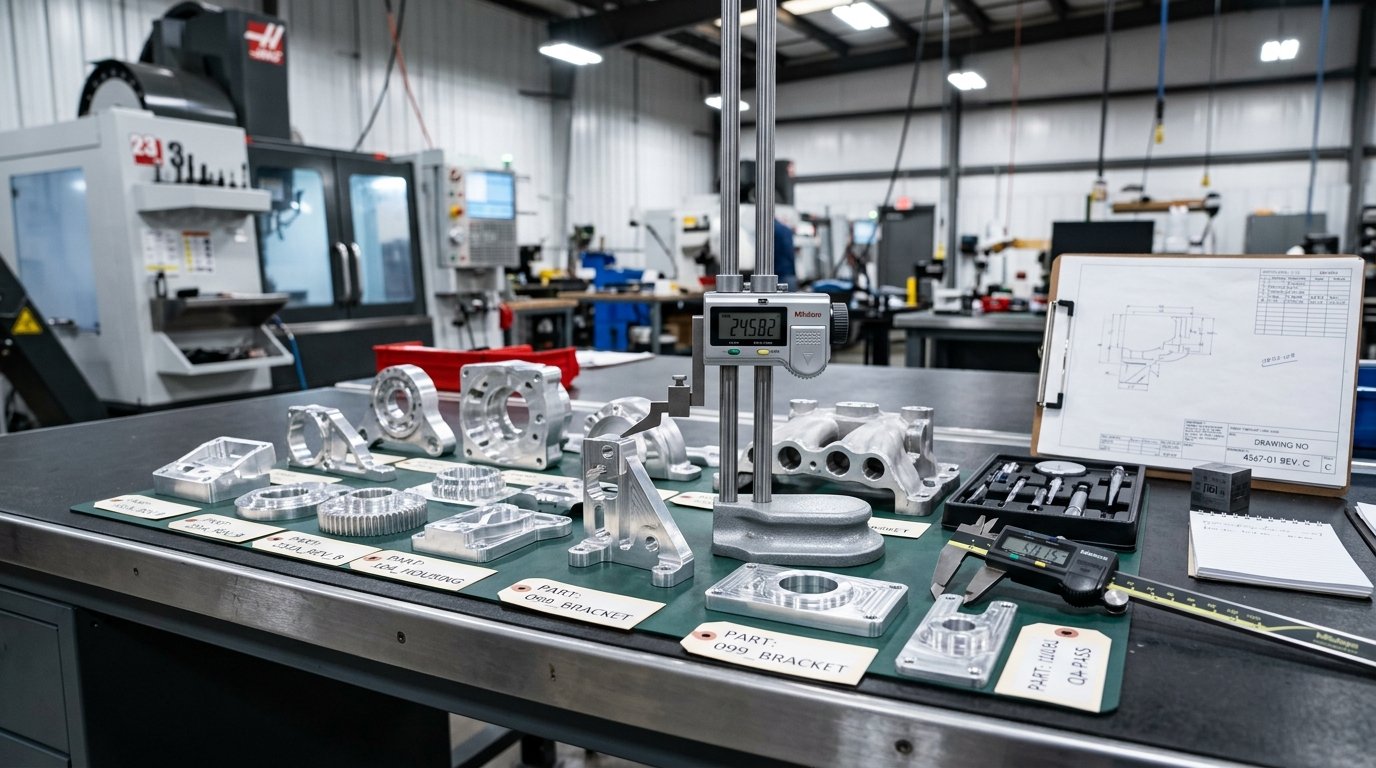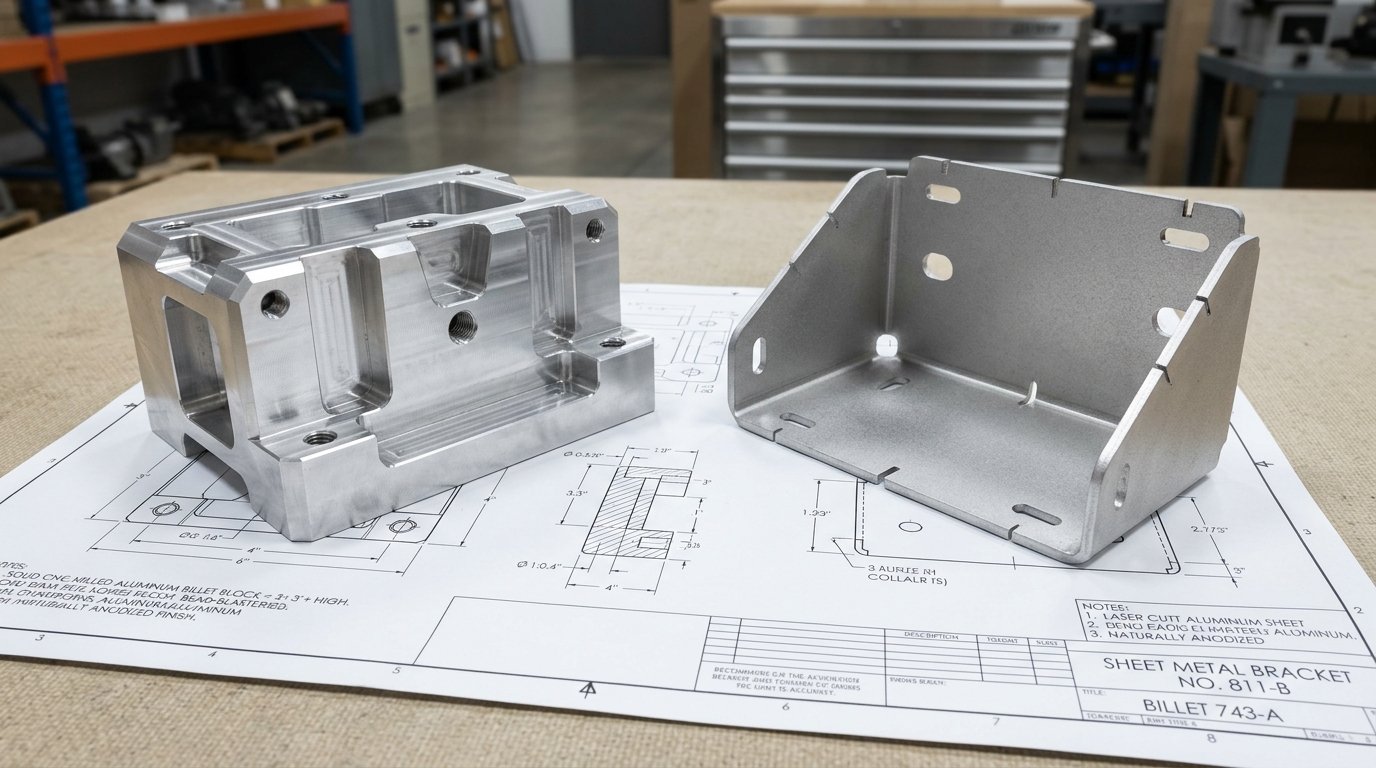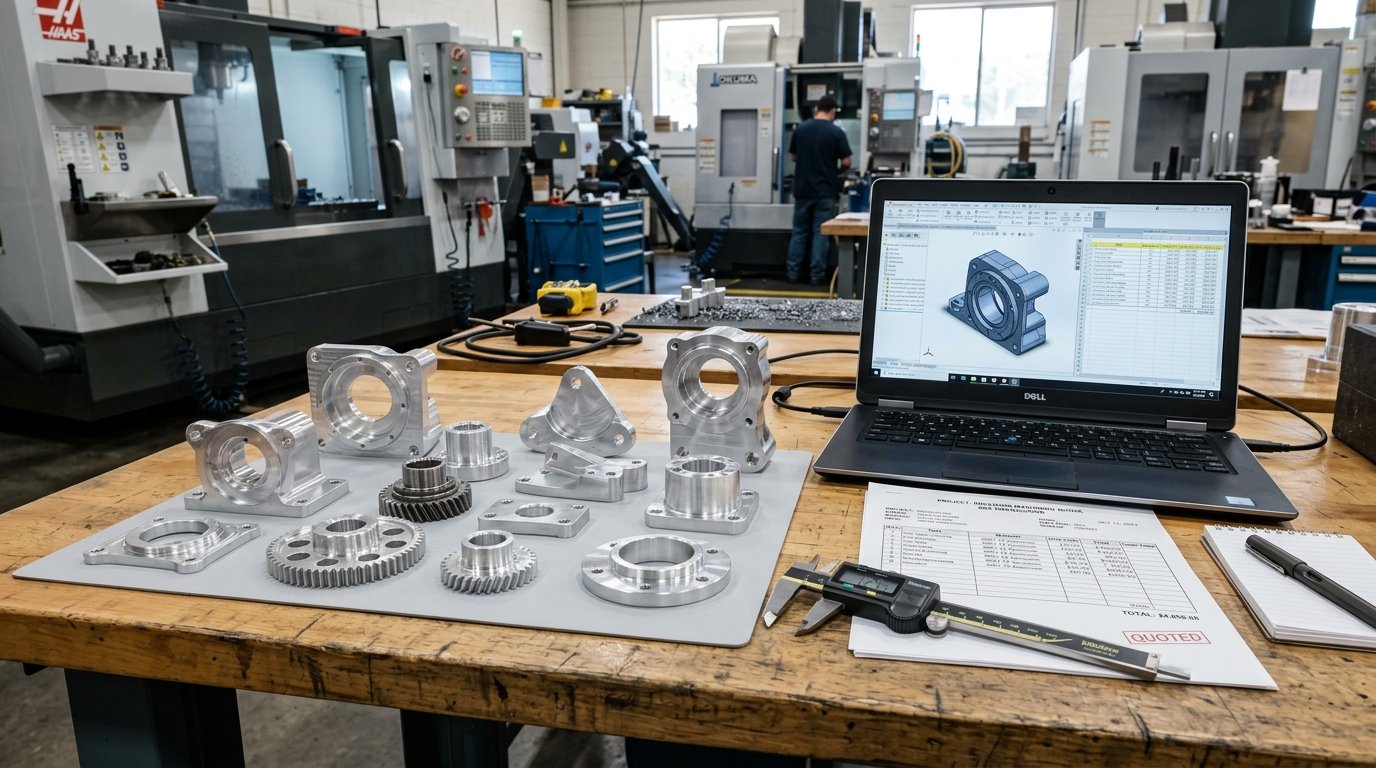
Aluminum CNC machining cost is mostly machine time and setup, not material. A simple 6061 bracket can cost over $100 as a single prototype and around $10 to $20 each at 100 pieces, because the one-off programming and fixturing cost is spread across the batch. Complexity, tolerances, alloy and finishing then decide where your part sits within that range.
The formula behind almost every quote:
Price per part = material + (machine rate × cycle time) + finishing + inspection + (setup and programming ÷ quantity)
The rest of this guide breaks down each term, then runs three worked examples so you can see how the numbers move with quantity.
What Makes Up the Cost of a Machined Aluminum Part?
Every CNC quote, from a small job shop or a large platform, is built from the same five pieces.
| Élément de coût | What it covers | How it behaves with quantity |
| Setup and programming | CAM programming, fixture design, first-part checks | Fixed per job, so it shrinks per part as quantity rises |
| Temps machine | Cutting time × shop hourly rate | Roughly constant per part |
| Matériau | Bar or plate stock, cut to size | Constant per part, small for aluminum |
| Finition | Anodizing, bead blasting, powder coat, plating | Lot charge plus a per-part rate |
| Inspection and paperwork | Measurements, CMM reports, certificates | Fixed for FAI, small per part after that |
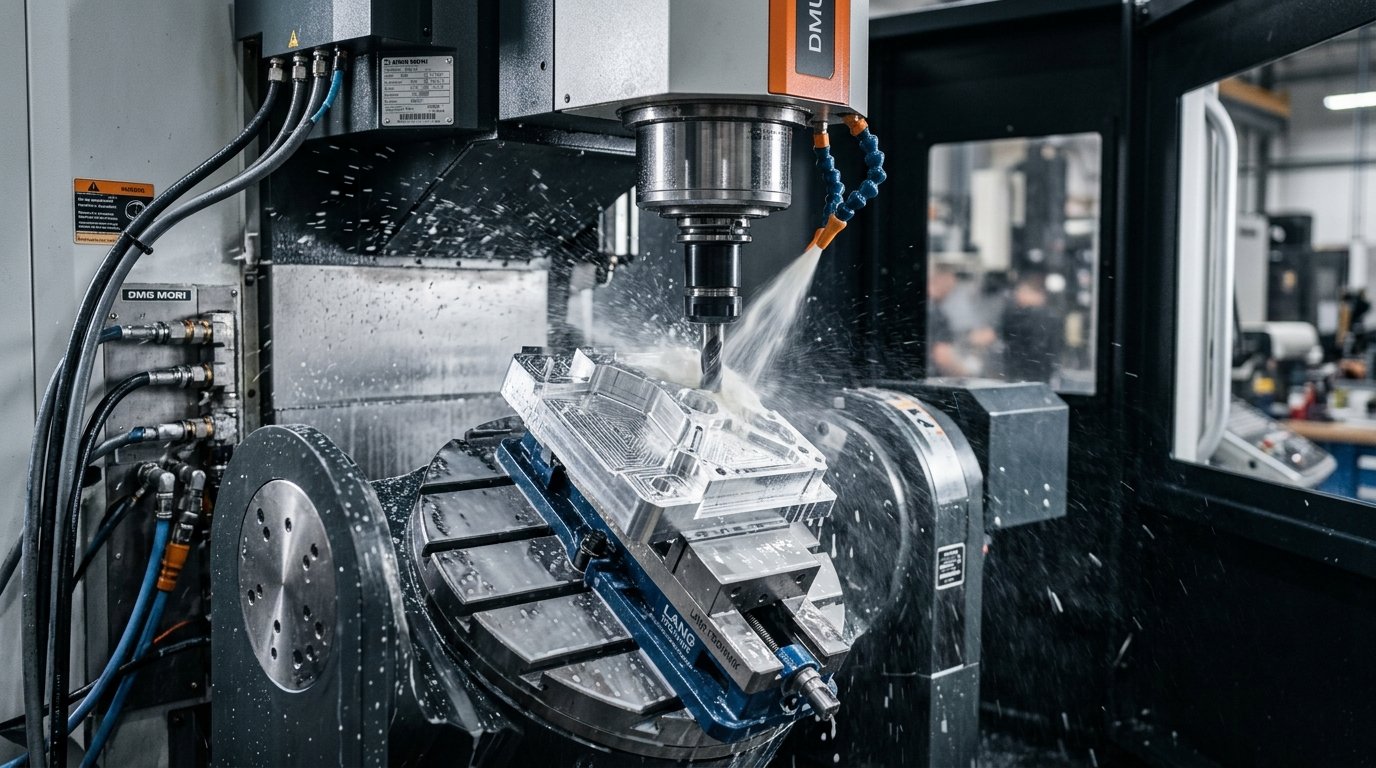
For aluminum, machine time and setup dominate. Aluminum cuts several times faster than steel or titanium, and the stock itself is inexpensive, so the material line is usually the smallest item on the quote. Cutting time and the programmer’s hours are what you are really paying for.
Machine Hourly Rates: Why Quotes Differ So Much
Shop rates are the single biggest reason two quotes for the same part look so different.
Published rate ranges vary widely between sources, and many sites contradict each other, so treat any number you read online as a rough guide only. What’s consistent across them:
- 3-axis milling is the cheapest hourly rate.
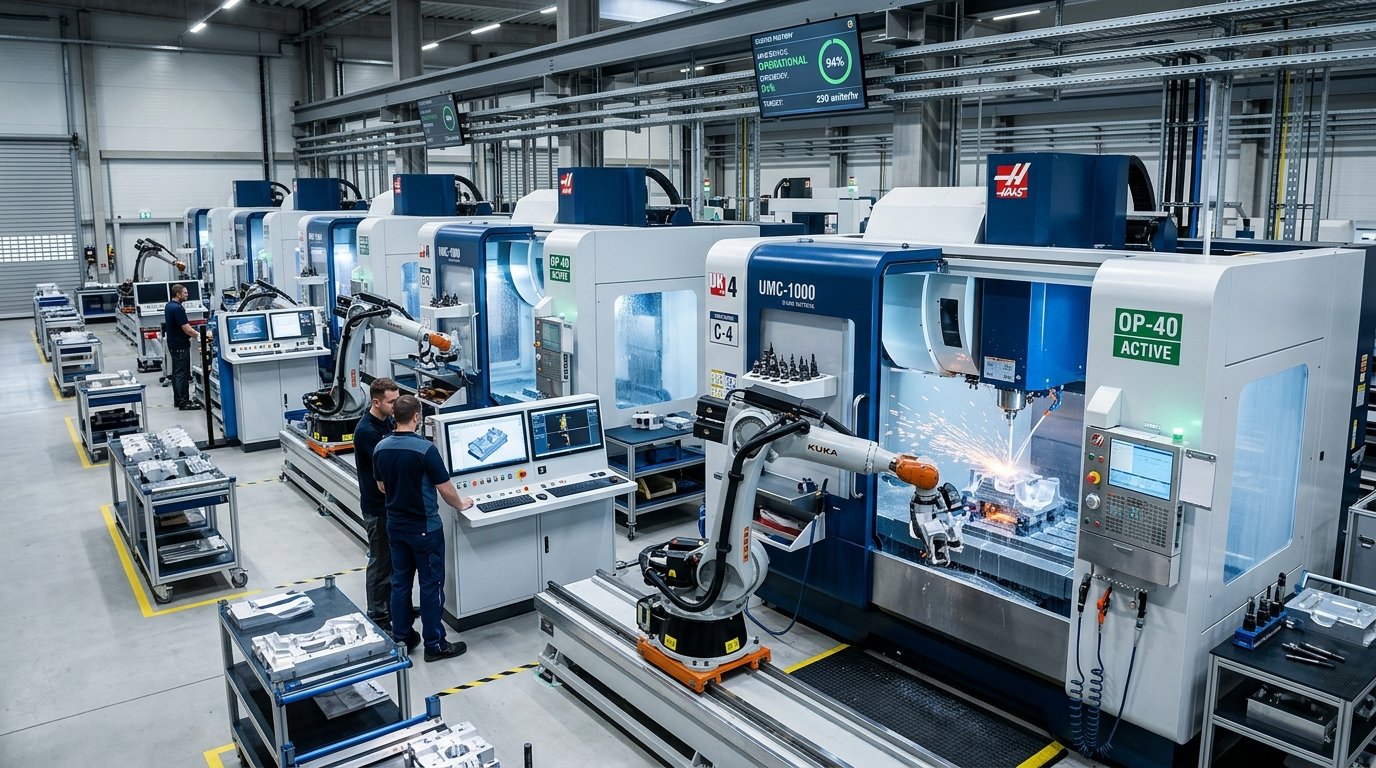
- 4-axis and 5-axis milling cost more per hour but can finish a part in fewer setups, so the total can end up lower.
- CNC turning is usually cheaper per hour than milling for round parts.
- Region matters. Shops in China generally charge lower hourly rates than shops in the US or Western Europe for comparable equipment.
- Shop type matters. A platform adds its margin on top of the partner shop’s rate. A factory-direct supplier doesn’t.
The best way to compare is not to ask for a supplier’s hourly rate at all. Ask for a quote on the same drawing at the same quantities and compare the totals.
How to Calculate Aluminum CNC Machining Cost: Three Worked Examples
The examples below use a simple, transparent model so you can see the arithmetic. They are illustrative, not quotes from any supplier. Every assumption is stated so you can swap in your own numbers.
Shared assumptions:
- 3-axis shop rate: $60 per hour
- 5-axis shop rate: $90 per hour
- 6061 stock: $10 per kg, including cutting to size
- 7075 stock: $14 per kg, including cutting to size
- Aluminum density: 2.7 g/cm³
Example A: Simple 6061-T6 mounting bracket
- Part: 80 × 40 × 6 mm plate bracket, four through holes, two tapped M4 holes, edges broken
- Stock: 85 × 45 × 10 mm block, about 0.10 kg
- Machining: one setup on a 3-axis mill, about 8 minutes per part
- One-off cost: $120 for programming and setup
- Finish: as machined, deburred
- Inspection: basic dimensional check, $0.50 per part
| Quantité | Price per part | Order total |
| 1 | $129.53 | $130 |
| 10 | $21.53 | $215 |
| 100 | $10.73 | $1,073 |
At one piece, setup is over 90% of the price. At 100 pieces, it’s about $1.20 of each part’s cost, and machine time takes over.
Example B: 6061-T6 electronics housing with black anodize
- Part: 120 × 80 × 30 mm pocketed housing, 2 mm walls, PCB bosses, connector cutouts
- Stock: 125 × 85 × 35 mm block, about 1.0 kg
- Machining: two setups on a 3-axis mill, about 35 minutes per part
- One-off cost: $300 for programming, two fixtures and first-part checks
- Finish: Type II black anodize, $80 lot charge plus $4 per part
- Inspection: $2 per part for critical dimensions
| Quantité | Price per part | Order total |
| 1 | $431.04 | $431 |
| 10 | $89.04 | $890 |
| 100 | $54.84 | $5,484 |
Notice that most of the block is machined away. About 1.0 kg of stock becomes a part weighing only a fraction of that. Those chips are cheap. The 35 minutes spent cutting them are not.
Example C: 7075-T6 robot joint with tight tolerances
- Part: 100 × 100 × 60 mm joint housing with a bearing bore held to ±0.02 mm and features on five faces
- Stock: 100 × 100 × 60 mm block, about 1.6 kg
- Machining: 5-axis, about 50 minutes per part
- One-off cost: $450 for 5-axis programming and fixturing, plus $150 for a first-article inspection report
- Finish: Type III hard anodize with the bearing bore masked, $80 lot charge plus $6 per part
- Inspection: CMM check of critical features, $6 per part
| Quantité | Price per part | Order total |
| 1 | $789.68 | $790 |
| 10 | $177.68 | $1,777 |
| 100 | $116.48 | $11,648 |
Here the stronger alloy, the 5-axis rate and the tight bore all push the floor up. Even at 100 pieces, the part costs about ten times Example A, because each one takes longer to cut and to check.
What the three examples show
- Quantity has the biggest effect at the low end. Going from 1 to 10 pieces cut the per-part price by 77 to 83% in all three examples. Going from 10 to 100 cut it by a further 34 to 50%.
- Cycle time sets the floor. Once setup is spread out, the price can’t drop below material plus machine time plus finishing.
- Tight tolerances cost twice: once in slower machining and again in inspection.
Run the same model with your own supplier’s numbers and you’ll get a realistic budget before you request formal quotes.
Which Design Features Increase CNC Price per Part?
Most avoidable cost is designed in. These features add the most machine time on aluminum parts:
- Deep pockets with small corner radii. A 3 mm radius at the bottom of a 30 mm deep pocket forces a long, thin cutter that has to run slowly. Larger radii let the shop use a bigger, faster tool.
- Thin walls. Walls under about 1 mm vibrate during cutting and need light passes. Our guide to Usinage CNC de parois minces explains the practical limits.
- Features on many faces. Each new orientation can mean a new setup or a 5-axis machine.
- Many different hole sizes. Every size means another tool change. Standardize where you can.
- Tight tolerances everywhere. Applying ±0.01 mm to every dimension, when only two features need it, adds machining and inspection time to all of them.
- Fine surface finish specs on non-functional faces. A low Ra value on a hidden surface costs as much as on a visible one.
- Text and logos engraved in small fonts. Small engraving cutters are slow.
How Much Do Tolerances Add to the Cost?
There’s no universal percentage, but the mechanism is easy to understand.
At a general tolerance such as ISO 2768-m, defined in the ISO 2768-1 standard, a shop can machine at normal speeds and check a sample of parts. Tighter tolerances add:
- Slower finishing passes to reduce tool deflection
- More careful work holding to stop the part moving
- Temperature control, because aluminum expands noticeably with heat
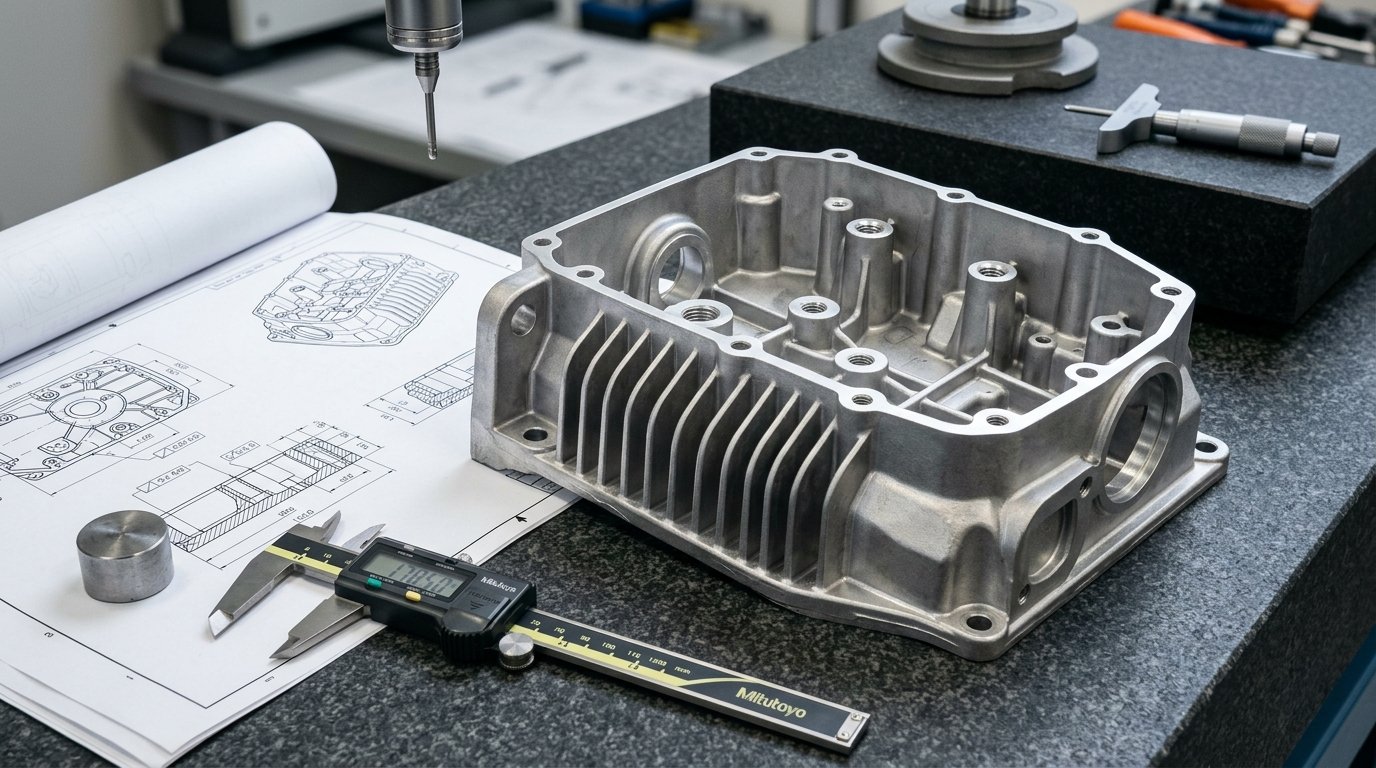
- More inspection, often on a CMM, sometimes every part instead of a sample
The practical approach: use a general tolerance in the title block, and call out tight tolerances only on the features that need them, such as bearing bores, dowel holes and sealing faces. That one habit often makes a bigger difference to price than switching suppliers.
6061 vs 7075: Does the Alloy Change the Price?
Yes, but less than most buyers expect.
6061-T6 is the most common machining alloy, registered under the Aluminum Association alloy designation system. It’s widely stocked, cuts cleanly and is the cheaper option per kilogram.
7075-T6 stock costs more, and it can be slightly harder on tooling. For a small part, the difference in material cost is often a few dollars. For a large block that is mostly machined away, it adds up.
Other grades affect cost through availability. MIC-6 cast plate is stable and flat, which can save machining on large plates. 2024 and 7050 are used for aerospace parts and may have longer stock lead times. Check our guide to Matériaux d'usinage CNC for other options.
Our view: don’t choose 7075 to be safe. If 6061 meets the strength requirement, it’s cheaper to buy, easier to anodize evenly and easier to source for reorders.
How Finishing Affects the Price
Finishing is usually priced as a lot charge for setting up the line, plus a per-part rate based on size and masking. That’s why finishing hits small orders hardest.
| Finition | Cost effect | Notes |
| Tel qu'usiné | Aucun | Tool marks visible |
| Grenaillage de billes | Low per part | Hides tool marks, often done before anodizing |
| Type II anodize, clear or dyed | Lot charge plus low per-part rate | Color can vary between batches and alloys |
| Type III hard anodize | Higher than Type II | Thicker coating; bores and threads often need masking |
| Revêtement en poudre | Lot charge plus per-part rate | Adds noticeable thickness on mating faces |
| Chromate conversion | Faible | Conductive; used for grounding points |
Masking is the hidden cost. Every bore, thread and contact face that must stay bare is masked by hand. If a finish only needs to cover cosmetic faces, say so on the drawing.
How Does Quantity Change Price per Part?
Look at the three examples again. The pattern always holds:
- 1 to 10 pieces: the per-part price drops sharply because setup is shared.
- 10 to 100 pieces: it keeps falling, but more slowly.
- Beyond a few hundred: the price flattens toward the material plus machine time floor. Further savings come from process changes: dedicated fixtures, multiple parts per setup, bar-fed turning or a different manufacturing method.
For some parts, very high volumes justify a different process entirely. Aluminum die casting or extrusion followed by light machining can be much cheaper per part once tooling is paid off. That’s a conversation worth having when quantities climb into the thousands.
Domestic vs Overseas Machining: Comparing the Real Cost
Overseas quotes, particularly from China, are often lower per part. But the line price isn’t the cost you pay.
To compare fairly, calculate landed cost per part:
- Quoted part price
- Plus freight, which for air express on small orders can be significant per part
- Plus import duties at the current rate for your country and part type
- Plus customs brokerage and any fees
- Plus your own time on inspection and communication
On a one-off prototype, freight can erase the saving. On 100 or more parts, the overseas option usually still comes out ahead, as long as quality is consistent. Duty rates on machined parts have changed several times in recent years, so check the current rate with your customs broker rather than relying on an old calculation.
Common Quoting Mistakes That Inflate Price
Most inflated quotes we see trace back to the RFQ, not the shop. Watch for these:
- No 2D drawing. Without one, suppliers either quote conservatively or quote the tightest interpretation.
- No quantity breaks. Ask for 1, 10, 50 and 100 pieces in one go. The curve tells you more than a single price.
- Unclear finish spec. “Anodized black” leaves the type and masking open. State the type and which surfaces can stay bare.
- Material over-specified. 7075 or 2024 where 6061 would do.
- Certifications requested by default. Full FAI and material certs on a five-piece fit-check prototype add cost that doesn’t buy you anything.
- One supplier only. Even if you have a preferred shop, a second quote calibrates the price.
What Should a CNC Quote Include?
Two quotes with different totals are only comparable if they include the same things. Before comparing, check that each quote states:
- Material: alloy and temper, for example 6061-T6, not just “aluminum”
- Quantity breaks: price per part at each quantity you asked for
- Tolerances: whether the shop will hold your drawing as written, or has assumed a general tolerance
- Finish: type, color and masking included in the price
- Inspection: what report comes with the parts, and whether first-article inspection is extra
- Lead time: working days from order, and whether it is ex-works or delivered
- Shipping and packaging: included, extra, or your responsibility
- Validity: how long the price holds, since aluminum stock prices move
If one quote is much cheaper, the gap is usually explained by one of these lines rather than by a better shop. A low price that assumed a looser tolerance or excluded anodizing isn’t a lower price. It’s a different part.
A practical habit: send every supplier the same RFQ package, with the same drawing revision, quantities and finish spec. Then put the quotes side by side in a simple spreadsheet, line by line.
Hidden Costs Buyers Often Miss
Some costs don’t appear on the first quote but turn up later:
Design revisions. Every change after programming means reprogramming, and sometimes a new fixture. Freeze the critical features before ordering a batch.
Re-quoting and requalification. Switching suppliers to save a few dollars per part means paying setup and first-article inspection again. On a short run, that can cancel the saving.
Rejected parts. A cheaper supplier with a higher reject rate costs you assembly delays and inspection time. Track the true cost per good part, not per delivered part.
Expediting. Rush fees are common and can be large. Planning orders two weeks earlier often saves more than any negotiation.
Freight on small orders. Air shipping a handful of parts internationally can cost more than the parts themselves. Combine orders where possible.
None of these show up in a cost-per-part formula, but all of them show up in your project budget.
How to Reduce the Cost of Machined Aluminum Parts
Applying a few of these usually saves more than negotiating on price:
- Increase internal corner radii to at least one-third of pocket depth where possible.
- Keep walls at 1.5 mm or thicker unless weight really demands less.
- Design for as few setups as possible, ideally features on one or two faces.
- Standardize hole sizes and thread sizes.
- Apply tight tolerances only where they matter.
- Order in sensible batches. If you’ll need 50 parts over six months, ordering 50 at once often costs less than five orders of 10.
- Ask for DFM feedback before ordering. A good supplier will suggest changes that save time without changing function.
Elite Mold Tech’s engineers review every drawing before quoting through our Service d'usinage CNC, and we’ll point out where a radius or tolerance change would lower your price.
Questions fréquemment posées
How much does it cost to CNC machine an aluminum part?
It depends on size, complexity and quantity. A simple aluminum bracket can cost over $100 as a single prototype and fall to roughly $10 to $20 each at 100 pieces. Complex housings and tight-tolerance parts cost more because machine time and inspection rise. Quote at several quantities to see the full curve.
Why is a single CNC prototype so expensive?
A single part carries all of the one-off cost: CAM programming, fixture setup and first-part checks. Those costs are the same whether you order one part or a hundred. Ordering even 5 or 10 pieces spreads that fixed cost and usually lowers the price per part dramatically.
Is 7075 aluminum more expensive to machine than 6061?
7075 stock usually costs more than 6061, and it can wear tools slightly faster, so parts typically cost a little more. For small parts the difference is often modest. The bigger cost drivers remain machine time, setup and tolerances, so choose the alloy on strength needs, not habit.
How can I reduce CNC machining cost for aluminum parts?
Use larger internal corner radii, avoid walls under about 1 mm, reduce the number of setups, standardize hole sizes and apply tight tolerances only to critical features. Ordering in larger batches and asking your supplier for DFM feedback before machining also lower the price per part.
Is it cheaper to machine aluminum parts in China?
Hourly machining rates in China are usually lower, so part prices are often cheaper, especially at 50 pieces or more. Freight, import duties and longer transit narrow the gap on small, urgent orders. Compare the landed cost per part and check current duty rates before deciding.
Getting an Accurate Aluminum CNC Machining Cost for Your Part
The most reliable price is the one quoted against your own drawing at your real quantities. Use the formula and examples above to set a budget, tidy the drawing so nothing is left to interpretation, then ask for quotes at several quantity breaks.
Elite Mold Tech quotes aluminum parts from engineer-reviewed drawings, with finishing and inspection included in one price. Send us your files with your target quantities, and we’ll show you the price curve along with any design changes that would lower it.