A medical device company qualifies a CNC supplier based on an ISO 13485 certificate posted on the supplier’s website. Eighteen months later, during an FDA audit, the certificate is found to be scoped to “design and distribution” only, not machining. Every component that supplier ever produced now sits outside a validated quality system. The device recall and remediation cost exceeds seven figures. The supplier had the certificate. It simply did not cover the operation that mattered.
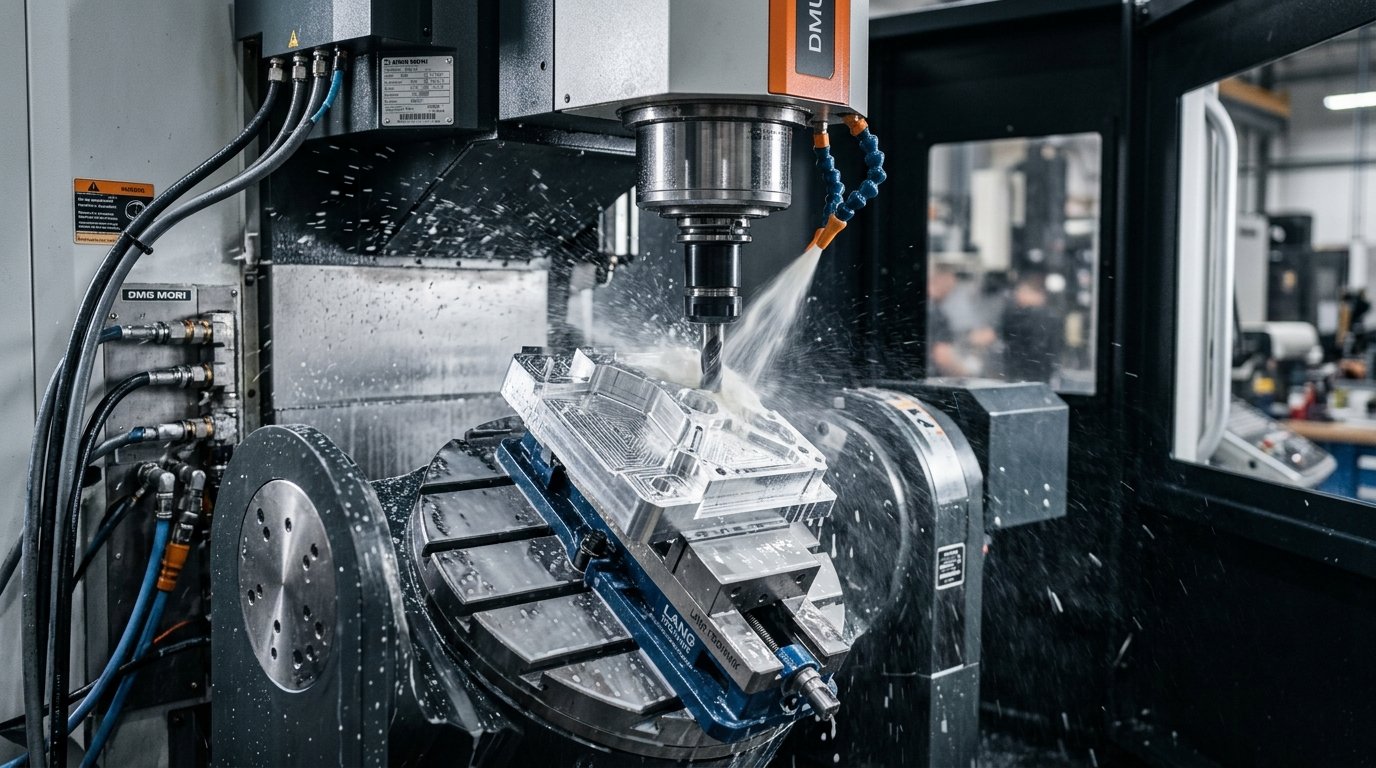
Medical device CNC machining is not a tighter-tolerance version of industrial machining. It is a different discipline governed by a different quality system, different material qualification requirements, and different documentation obligations that exist because the parts produced enter or contact the human body. Getting the tolerance right and getting the compliance right are two separate problems, and the second one is where most sourcing failures actually happen.
This guide covers what actually matters when sourcing medical device CNC machining in 2026: the ISO 13485 and FDA QMSR compliance landscape following the February 2026 regulatory transition, the biocompatible materials that qualify for patient contact, achievable tolerances by application, and the specific supplier verification steps that separate a genuinely qualified manufacturer from one with a certificate that does not cover the work being ordered.
| Quick AnswerMedical device CNC machining requires a supplier certified to ISO 13485:2016 with a certificate scope that explicitly covers CNC machining operations, not just design or assembly. As of February 2, 2026, the FDA replaced the Quality System Regulation (QSR) with the Quality Management System Regulation (QMSR), incorporating ISO 13485:2016 by reference into 21 CFR Part 820. Common biocompatible materials include Ti-6Al-4V ELI (Grade 23, ASTM F136) for implants, 316L stainless steel (ASTM F138) for surgical instruments and fluid-path parts, and PEEK for radiolucent housings and spinal components. Achievable tolerances range from 0.01mm for standard critical features to 0.005mm or tighter for implant-grade components using 5-axis machining with CMM verification. Full traceability, including mill certificates, first article inspection, and device master record documentation, is mandatory for every batch. |
What Changed in Medical Device Regulatory Compliance for 2026?
The single most consequential regulatory event affecting medical device CNC machining in 2026 is the FDA’s transition from the Quality System Regulation (QSR) to the Quality Management System Regulation (QMSR), effective February 2, 2026. This change amends 21 CFR Part 820 to incorporate ISO 13485:2016 by reference, meaning US medical device manufacturers and their component suppliers are now held to a quality system standard that harmonizes far more closely with the international standard already required in the EU, Canada, Australia, and most other major medical device markets.
For CNC machining suppliers previously qualified under the old QSR framework, this transition does not happen on its own. Suppliers qualified years ago under QSR may carry gaps in documentation that QMSR now requires explicitly, particularly around Device Master Record structure and risk management integration throughout the manufacturing process. Any supplier qualification conducted before mid-2026 should be revisited to confirm the supplier has completed a documented QMSR gap assessment or transition plan [1].
ISO 13485 Certificate Scope Is the Single Most Dangerous Blind Spot
ISO 13485 certification is not a single, uniform credential. Certificates are scoped to specific activities within a company’s operations, and a certificate can validly cover design, final assembly, or distribution while explicitly excluding machining operations. A supplier holding an ISO 13485 certificate scoped to “medical device assembly” that is machining your Class II component has a certificate that provides zero regulatory coverage for the actual operation producing your part.
Before qualifying any CNC supplier for medical device work, request the actual certificate document, not a logo or a claim of compliance, and read the scope statement specifically. Confirm the scope explicitly lists CNC machining, or machining of medical device components, rather than generic language that could be interpreted to cover only adjacent activities. This single verification step is the most consequential and most frequently skipped item in medical device supplier qualification.
Device Classification Determines the Compliance Burden
Medical devices are classified by the FDA and equivalent international bodies into risk-based categories that determine the regulatory burden on both the device manufacturer and their component suppliers. Class I devices (low risk, such as basic surgical instruments) carry the lightest regulatory requirements. Class II devices (moderate risk, including most diagnostic and many therapeutic devices) require more extensive design controls and often 510(k) premarket clearance. Class III devices (high risk, including most implants and life-sustaining devices) carry the most extensive requirements, typically including full Premarket Approval (PMA) and the most rigorous supplier traceability and validation expectations. A CNC supplier producing components for a Class III implant should expect to provide substantially more documentation, validation evidence, and traceability than one producing a Class I instrument housing, and should have direct prior experience at the classification level your device requires.
Which Materials Qualify for Medical Device CNC Machining?
Material selection in medical device manufacturing is governed by biocompatibility standards, not just mechanical performance. ISO 10993 evaluates biocompatibility based on the nature of body contact (surface, externally communicating, or implant) and contact duration (limited under 24 hours, prolonged up to 30 days, or permanent). The specific ASTM material specification a component must meet depends directly on this classification.
| Material | Governing Standard | Key Property | Typical Applications |
|---|---|---|---|
| Ti-6Al-4V ELI (Grade 23) | ASTM F136 | Superior fracture toughness vs Grade 5, osseointegration via TiO2 oxide layer, 860 MPa yield strength | Bone screws, spinal cages, hip stems, trauma plates, dental implants |
| CP Titanium (Grades 1-4) | ASTM F67 | Excellent biocompatibility, lower strength than alloyed titanium, highly corrosion resistant | Dental implants, pacemaker cases, low-load implant components |
| 316L Stainless Steel | ASTM F138 | Lower cost than titanium, good corrosion resistance, established surgical history | Surgical instruments, retractors, trocars, fluid-path parts, bone plates and screws |
| PEEK (medical grade) | ASTM F2026 | Radiolucent (no MRI/CT artifact), elastic modulus close to cortical bone, reduces stress shielding | Spinal fusion cages, total disc replacement, cranial implants, structural components |
| Cobalt-Chrome Alloys | ASTM F75 / F799 | High strength and wear resistance, used where titanium wear rate is insufficient | Hip and knee joint articulating surfaces, dental prosthetics |
| Medical PC / PC-ABS | ISO 10993-5 / -10 tested grades | UL94 V-0 flame rating available, tested for cytotoxicity and sensitization | Device housings, patient-adjacent enclosures, drug delivery pen casings |
The distinction between standard and implant-grade titanium is not a marketing designation. Ti-6Al-4V ELI (Extra Low Interstitials, Grade 23) limits oxygen content to 0.13 percent maximum compared to 0.20 percent in standard aerospace-grade Ti-6Al-4V (Grade 5). This tighter interstitial control produces measurably superior fracture toughness and ductility, and Grade 23 typically costs 25 to 40 percent more than Grade 5 as a direct result of the additional refining and testing required to meet ASTM F136 specifications. Specifying standard Grade 5 titanium on an implant application to save on material cost is a direct regulatory and clinical risk, not a minor specification substitution [2].
What Tolerances and Surface Finishes Does Medical Device Machining Require?
Medical device CNC machining tolerances tolerance requirements are driven by function, not by industry convention alone. A fluid-path bore controlling drug delivery dosage has a different tolerance driver than a cosmetic housing surface, even though both may appear on the same device.
| Application Type | Typical Tolerance | Typical Surface Finish (Ra) | Verification Method |
|---|---|---|---|
| Implant-grade structural components | 0.005 to 0.01mm | 0.4 to 1.6 µm, mirror-polished on articulating surfaces | 5-axis CNC with CMM inspection at ±0.002mm |
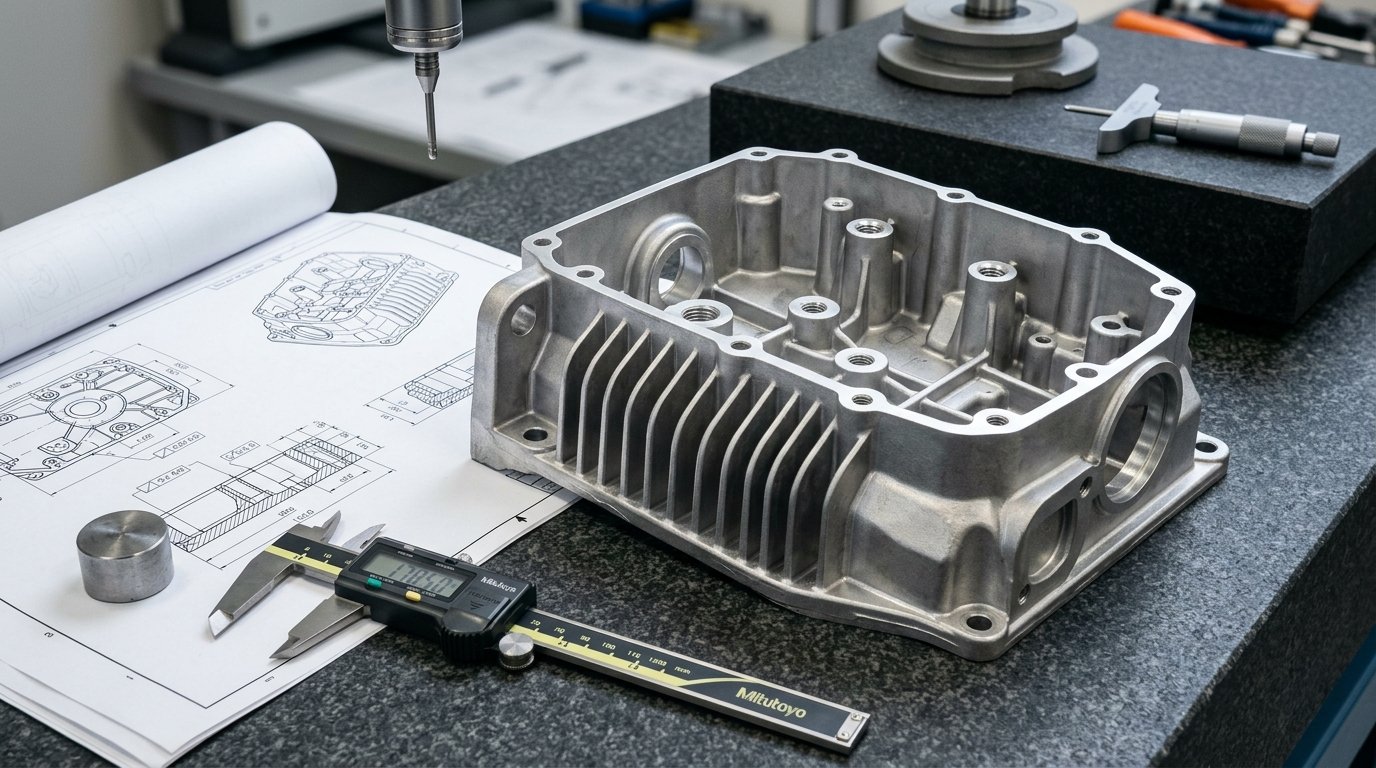
| Surgical instrument critical features | 0.01 to 0.02mm | 0.8 to 1.6 µm | CMM inspection with documented FAI report |
| Fluid-path / dosing components (e.g. syringe bore) | 0.025mm on critical bore dimensions | 0.4 to 0.8 µm (smooth for flow consistency) | 100% CMM inspection on critical dimensions |
| Device housings, non-critical structural | 0.05 to 0.1mm (ISO 2768-m acceptable) | 1.6 to 3.2 µm | Sample CMM inspection, general tolerance per drawing |
| Orthopedic articulating surfaces | 0.005mm on form, mirror finish required | Below 0.05 µm (mirror polish) | CMM plus profilometer surface verification |
Over-specification is a common and costly error in medical device drawings. Specifying 0.001mm tolerances on a non-critical housing feature because “tighter is better” drives up cycle time, scrap rate, and per-part cost without any functional or regulatory benefit. A properly executed DFM review assigns tolerance based on the actual functional requirement of each feature, tightening only where a documented functional or regulatory reason exists.
How Should You Qualify a CNC Supplier for Medical Device Work?
Supplier qualification for medical device components requires verification across five distinct categories, and skipping any one of them is a common root cause of later compliance failures. Choose a CNC machining manufacturer in China.
- Quality management system and certifications: verify the ISO 13485 certificate directly, confirm its scope explicitly covers CNC machining, check the expiry date, and for US market devices, confirm the supplier’s FDA registration is current under the QMSR framework rather than the legacy QSR.
- Technical capability and equipment: confirm the supplier operates 5-axis machining centers appropriate to your tolerance requirement, and request CMM calibration records showing traceability to national standards (NIST or equivalent) at a calibration interval appropriate to your measurement uncertainty needs.
- Material expertise and traceability: confirm the supplier sources biocompatible materials from ISO 13485 certified raw material suppliers, and request a sample mill certificate showing full chemical and mechanical compliance with the relevant ASTM specification (F136, F138, F2026, or equivalent).
- Regulatory compliance and audit history: ask for evidence of prior FDA, MDR, TGA, or PMDA regulatory audit experience at the device classification level relevant to your program, and confirm the supplier maintains a CAPA (Corrective and Preventive Action) system with documented history.
- Cleanroom and contamination control: for components requiring cleanroom manufacturing or packaging, verify the supplier operates certified cleanroom space appropriate to your device classification, with documented environmental monitoring records.
| Sourcing Medical Device Components That Actually Need to Comply? Elite Mold Tech provides ISO 13485-certified CNC machining with a certificate scope that explicitly covers our machining operations, full material traceability, biocompatibility documentation, and CMM-verified first article inspection on every batch. Upload your STEP file to receive a quote with material recommendation, tolerance analysis, and a copy of our certification scope statement within 12 hours. All uploads are secure and NDA protection is available on request.Visit elitemoldtech.com to start your medical device component sourcing review. |
Related Elite Mold Tech Guides and Sources
Related guides: complete manufacturing process selector guide, CNC machining materials guide, medical device manufacturing.
Authoritative references: ISO 13485 medical device QMS standard, US FDA medical devices.
Get a DFM Review from Elite Mold Tech
Ready to move from drawing to part? Upload your CAD file to Elite Mold Tech and receive a DFM review within 12 hours, with tolerance, material, and cost feedback from our engineering team before you commit to tooling.
Frequently Asked Questions
What is the difference between ISO 9001 and ISO 13485 for CNC machining suppliers?
ISO 9001 is a general quality management standard applicable to any industry, focused primarily on customer satisfaction and continuous improvement without industry-specific requirements. ISO 13485 is built specifically for medical device supply chains and adds requirements that ISO 9001 does not carry: documented risk management integrated throughout product realization, Device Master Record and Design History File structure, contamination control appropriate to the device classification, and sterile barrier and packaging considerations where applicable. A CNC supplier holding only ISO 9001 certification, however well-run their general operations are, has not been audited against the specific traceability, risk management, and regulatory documentation requirements that medical device supply chains require. For any component that will contact a patient or enter a regulated medical device supply chain, ISO 13485 certification with a scope covering the actual manufacturing operation is not optional, regardless of how capable the supplier appears on general technical merit.
How does the FDA QMSR transition in 2026 affect suppliers I already qualified under the old QSR?
The FDA Quality Management System Regulation, effective February 2, 2026, amends 21 CFR Part 820 to incorporate ISO 13485:2016 by reference, replacing the previous Quality System Regulation framework. Suppliers qualified under the legacy QSR framework are not automatically compliant with QMSR requirements, because QMSR incorporates specific ISO 13485 provisions around risk management and documentation structure that QSR did not mandate in the same form. Any medical device program using a supplier qualified before this transition should request the supplier’s QMSR gap assessment or transition documentation, confirming they have specifically evaluated and closed any gaps between their prior QSR-era quality system and the new QMSR requirements. Treating an existing QSR-era supplier qualification as automatically sufficient under QMSR without this verification step creates undocumented regulatory risk that may not surface until an FDA audit occurs.
Why does Ti-6Al-4V ELI (Grade 23) cost more than standard Grade 5 titanium, and is the difference actually necessary?
Grade 23 (ELI, Extra Low Interstitials) limits oxygen content to a maximum of 0.13 percent compared to 0.20 percent in standard Grade 5, along with tighter controls on nitrogen, carbon, and iron content. This tighter chemistry requires additional refining steps during vacuum arc remelting and additional testing to verify compliance with ASTM F136, driving Grade 23 material cost 25 to 40 percent above equivalent Grade 5 stock. The difference is not a marketing distinction: Grade 23’s reduced interstitial content produces measurably superior fracture toughness and ductility, properties that matter directly for a component that will remain permanently implanted in the human body under cyclic mechanical load for years or decades. Standard Grade 5, while entirely appropriate for aerospace and industrial applications, does not carry the specific biocompatibility and fatigue performance validation that ASTM F136 requires for surgical implant use. Substituting Grade 5 for Grade 23 on an implant application to reduce material cost is a regulatory and clinical risk, not a reasonable value engineering decision.
What documentation should I expect to receive with every batch of medical device CNC machined parts?
A properly qualified medical device CNC supplier should provide, as standard practice rather than special request, a material certificate (mill cert) confirming the raw material batch meets its specified ASTM standard with full chemical and mechanical test results, a First Article Inspection report for new or revised parts mapping every critical dimension against the drawing, a dimensional inspection report for production batches showing CMM-verified measurements against drawing tolerances, and where applicable, biocompatibility test documentation per ISO 10993 for the specific material and contact classification of your device. For Class II and Class III device components, full batch traceability linking the raw material lot through every processing step to the finished part serial or lot number should be available and retrievable on request, forming part of the Device History Record that supports your own regulatory submission and any future FDA or notified body audit.
Can a CNC machining supplier claim ISO 13485 compliance without actual certification?
Yes, and this is one of the most common and dangerous misrepresentations in medical device component sourcing. A supplier can accurately state that their quality system “follows ISO 13485 principles” or is “compliant with ISO 13485 requirements” without holding an actual third-party audited certificate from an accredited certification body. This distinction matters enormously for regulatory purposes: only an actual, current, appropriately scoped certificate from an accredited registrar provides the documented, auditable evidence that most medical device OEMs and regulatory bodies require when evaluating your supply chain during an FDA inspection or notified body audit. Always request the actual certificate document, verify the certifying body appears in recognized accreditation databases, confirm the certificate has not expired, and read the scope statement specifically to confirm it covers the operation you are sourcing, not just company operations in general.
What is the difference between medical device Class I, II, and III, and why does it matter for my CNC supplier?
Device classification is a risk-based framework used by the FDA and equivalent international regulatory bodies to determine the regulatory burden appropriate to a device’s risk profile. Class I devices present the lowest risk (basic surgical instruments, some non-invasive equipment) and carry the lightest regulatory controls, often exempt from premarket submission requirements. Class II devices present moderate risk (most diagnostic equipment, many therapeutic devices) and typically require 510(k) premarket clearance along with more extensive design controls. Class III devices present the highest risk, typically including implants and life-sustaining equipment, and generally require full Premarket Approval (PMA), the most extensive design history documentation, and the most rigorous supplier validation and traceability requirements. The classification of your device directly determines how much documentation, validation evidence, and audit history you should expect and require from your CNC machining supplier. A supplier with strong experience producing Class I instrument components may not have the documentation infrastructure or regulatory audit history appropriate for a Class III implant program, even if their technical machining capability is otherwise adequate.
About the Author:
Alex Morgan specializes in technical content for precision manufacturing, with a focus on CNC machining, injection molding, die casting, 3D printing, sheet metal fabrication, and custom mold manufacturing. With more than a decade of experience in B2B manufacturing content and SEO, he creates technically accurate content designed for engineers, product developers, procurement teams, and manufacturing decision-makers. His work helps global manufacturers clearly communicate complex production capabilities, material options, tolerances, tooling processes, and quality standards to customers across the US, Europe, and Asia-Pacific. He writes for manufacturing companies where technical expertise, precision, and reliability matter.