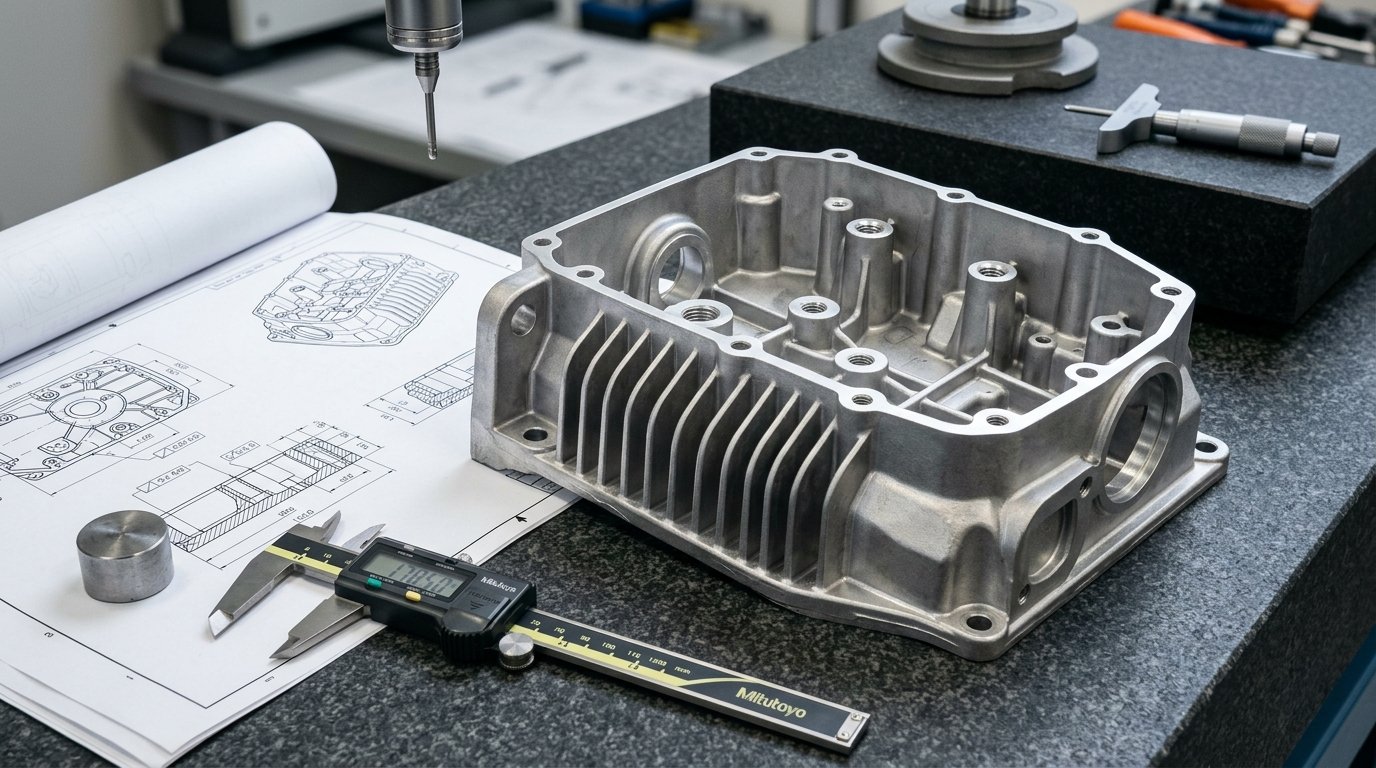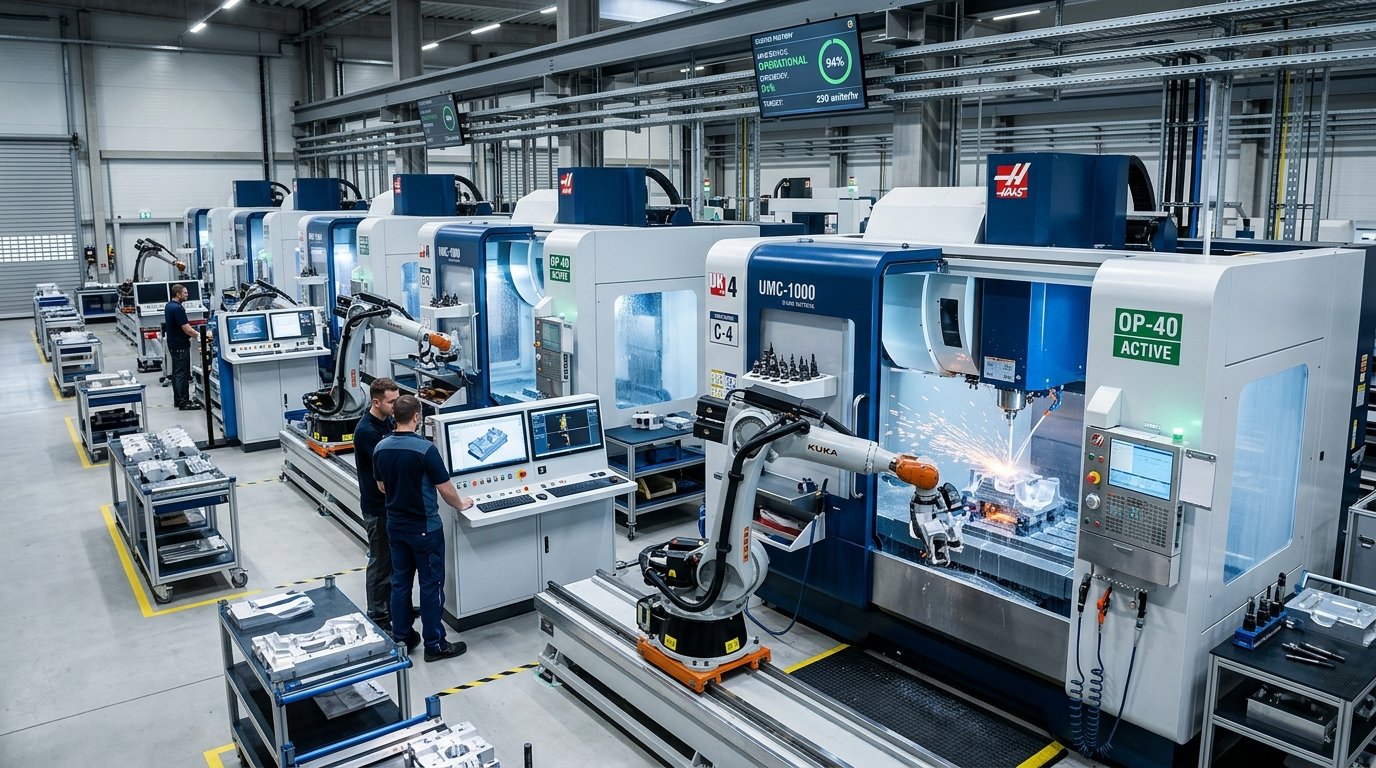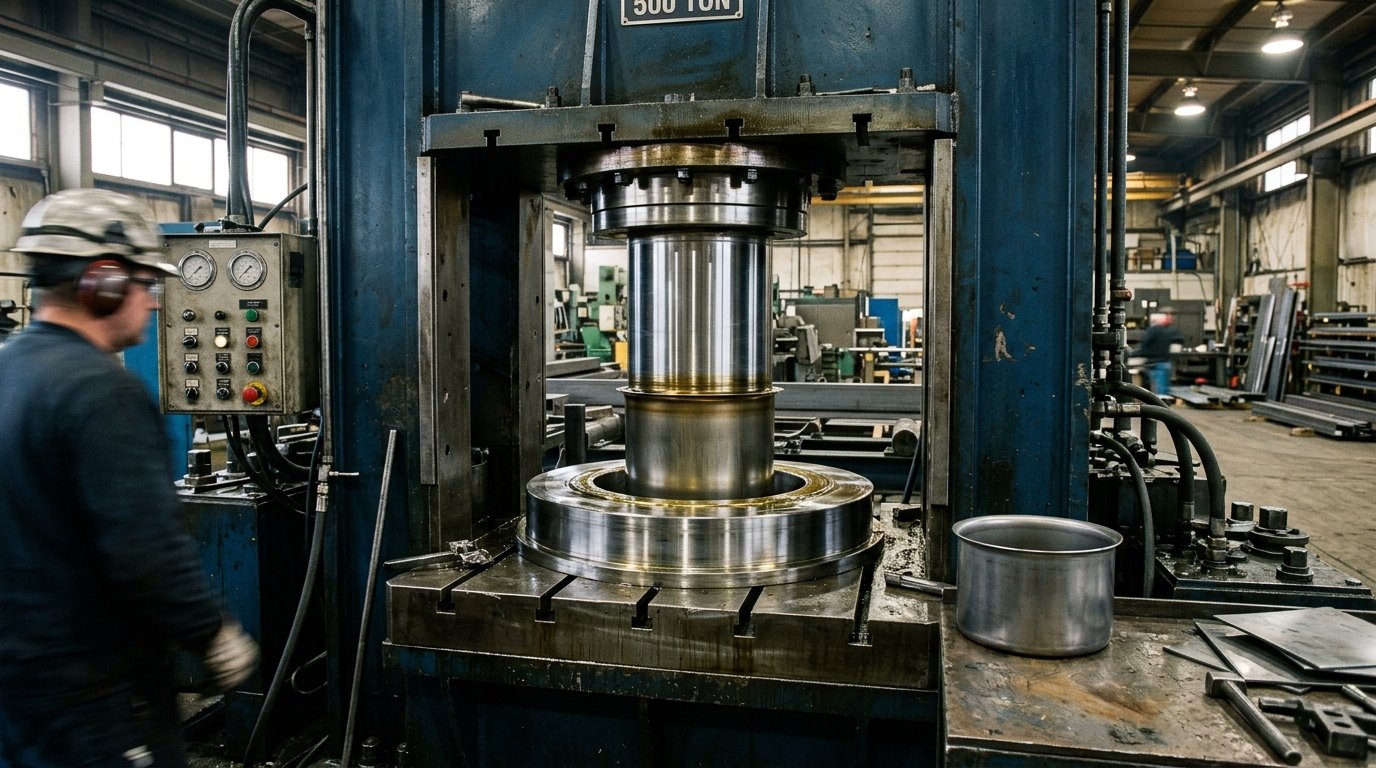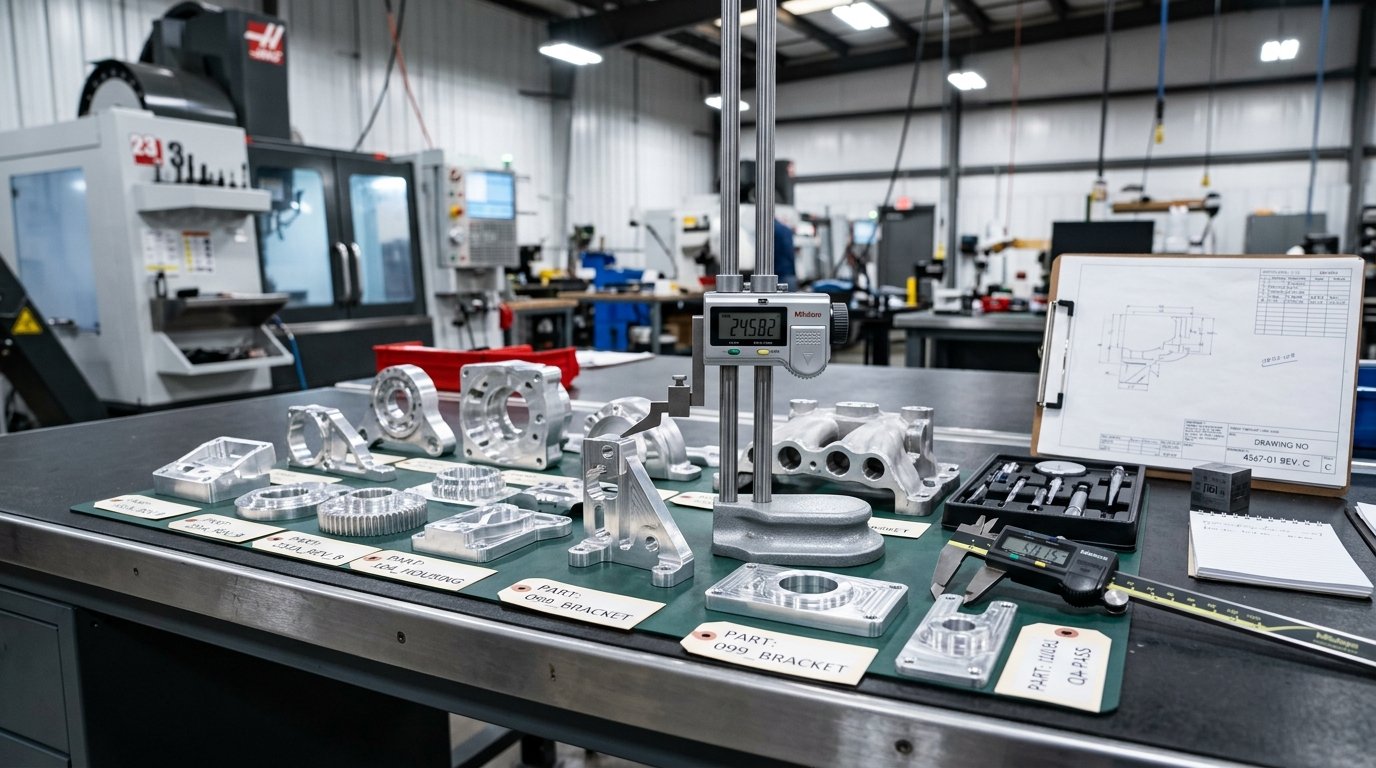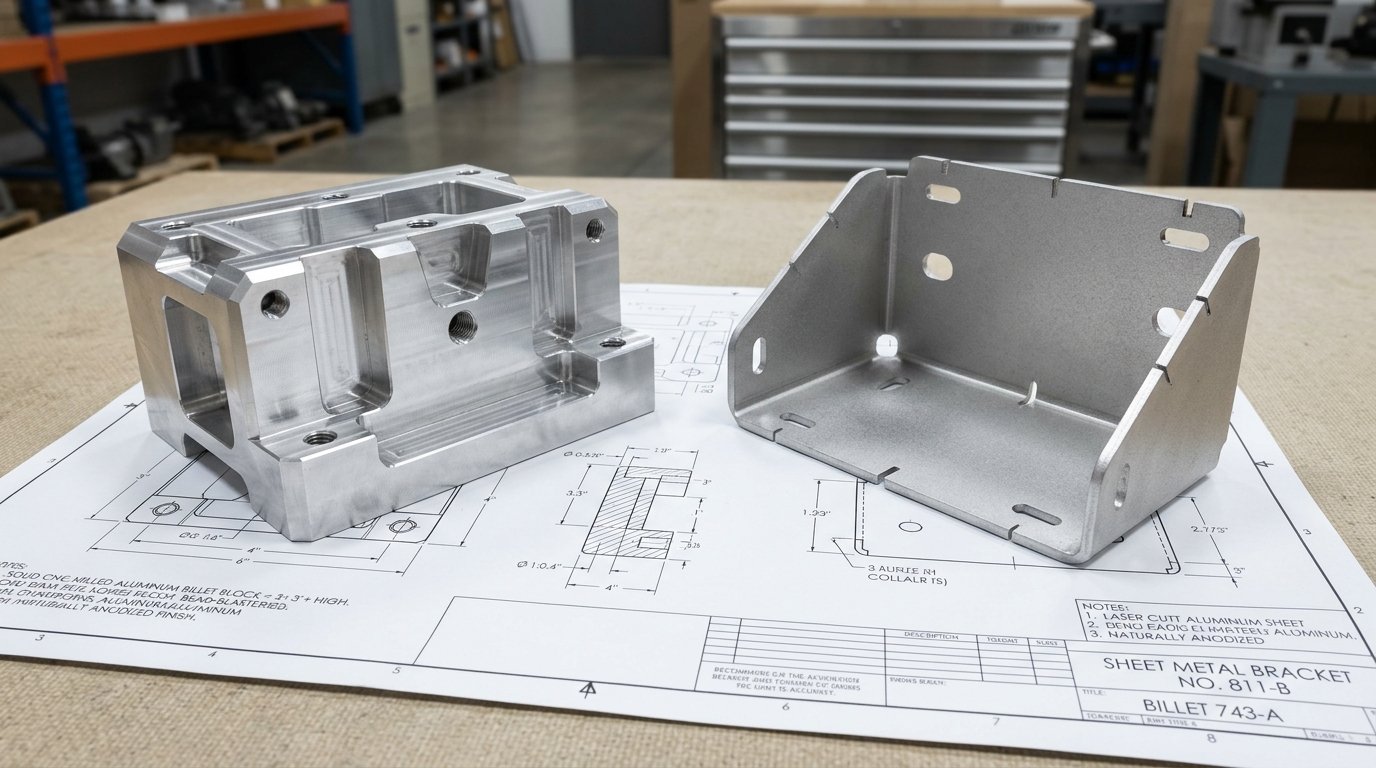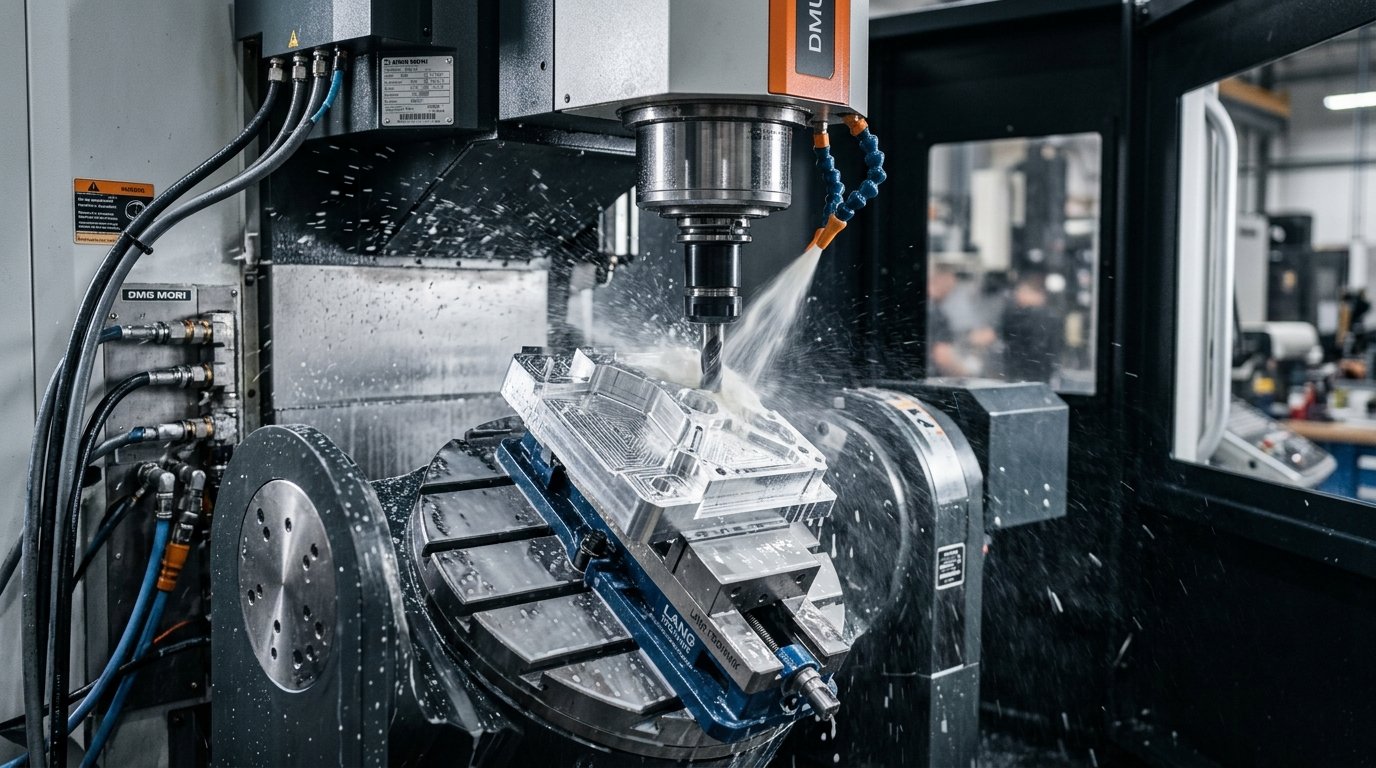
The seven aluminum CNC machining services worth shortlisting for prototypes and low-volume runs are Elite Mold Tech, Protolabs, Xometry, Fictiv, Protolabs Network (formerly Hubs), RapidDirect and JLCCNC. They split into two camps. Some own their factories, and others route your order to a partner network. That split affects price, consistency and who you talk to when a part comes back wrong.
Quick answer: For one-off prototypes in 6061 that you need within days, an instant-quote platform is usually fastest. For 50 to 1,000 parts that must match drawing to drawing, a factory-direct shop with in-house finishing is usually the better value. Compare tolerances, certifications and the inspection report before you compare unit price.
How We Compared These Aluminum Machining Suppliers
Every supplier below was checked against its own published CNC page in October 2026. We looked at six things:
- Business model: owns machines, runs a network, or both
- Lead time: the fastest stated turnaround and the typical one
- Tolerances: the default when no drawing is supplied, and the tightest stated
- Aluminum grades: at minimum 6061 and 7075
- Certifications: ISO 9001 as the floor; AS9100, ISO 13485 or IATF 16949 for regulated work
- Order size: whether single parts are accepted and where pricing starts to improve
Published figures change. Treat every number below as a starting point and confirm it on the quote.
Factory-Direct vs Platform: Which Model Fits a Prototype?
This is the decision that matters more than any single brand.
A factory-direct supplier machines, finishes and inspects parts under one roof. You usually deal with the engineers who program the job. Prices tend to be lower on repeat orders because there’s no marketplace margin, and the same machine and fixture can run your second batch.
A platform (also called a manufacturing marketplace) takes your CAD file, prices it with software and sends the job to a partner shop. You get instant quotes and huge capacity. The trade-off is that batch one and batch two may come from different shops.
Our view: platforms win on speed for the first 1 to 10 parts. Factory-direct wins once you need repeatability, anodizing color matching or a supplier who will still remember your part in six months.
The 7 Aluminum CNC Machining Services Compared
| Supplier | Model | Fastest stated lead time | Default tolerance (no drawing) | Aluminum grades listed | Certifications listed |
| Elite Mold Tech | Factory-direct | Quoted per part | Per drawing, confirmed at quote | 6061, 7075 and other common grades | Confirm on quote |
| Protolabs | In-house factories | 1 day | ±0.005 in. (±0.127 mm) | 6061-T651, 7075-T651, 2024-T351 | ISO 9001:2015, AS9100D, ITAR |
| Xometry | Marketplace (5,000+ suppliers) | 3–4 days expedited | ±0.005 in. metals | 6061, 5052, 2024, 6063, 7050, 7075, MIC-6 | ISO 9001:2015, ISO 13485, IATF 16949, AS9100D |
| Fictiv | Managed partner network | 1 day | ISO 2768 Medium | 6061-T6, 7075-T6, 3003, 7050, 2024, 5052, 6063, MIC6 | ISO 9001:2015, ISO 13485 |
| Protolabs Network (Hubs) | Distributed network | 5 business days | ISO standard tolerances | 6061-T6, 7075-T6, 5083, 2024-T351, MIC6 | AS9100, ISO 13485 (network partners) |
| RapidDirect | Factory-owned, China | 1 day (simple parts) | ISO 2768-m | 6061, 2024, 5052, 5083, 6063, 6082, 7075 | ISO 9001, ISO 13485, IATF 16949 |
| JLCCNC | Factory-owned | 3 days | ±0.05 mm | 6061, 7075 | ISO 9001:2015 |
Source: each supplier’s own CNC machining page, checked October 2026. Verify before ordering.
1. Elite Mold Tech: factory-direct prototypes and short runs
Elite Mold Tech machines aluminum in-house alongside injection molding, sheet metal and finishing. That matters for low-volume work, because a bracket, a molded cover and a sheet metal chassis can come from one supplier and fit together on the first try.
Its CNC machining service covers milling, turning and multi-axis work. Quotes are prepared by engineers rather than an algorithm, so tolerances, finish and lead time are confirmed against your drawing before you pay.
Best for: 10 to 1,000 aluminum parts that need consistent finishing, mixed processes or assembly. Watch for: quotes take longer than an instant engine. Send a STEP file and PDF drawing together to speed it up.
2. Protolabs: fastest in-house turnaround
Protolabs runs its own factories and states that parts can ship in as fast as one day. Its automated quote includes design-for-manufacturability (DFM) feedback, meaning software flags features that can’t be machined as drawn.
Best for: urgent prototypes with simple geometry. Watch for: premium pricing, and a narrower menu of finishes than full-service shops.
3. Xometry: the widest process range
Xometry is a marketplace with more than 5,000 vetted suppliers and an instant quoting engine. Standard lead time is 3 to 7 business days. Its certification list is long, including AS9100D and ISO 13485.
Best for: teams that want one portal for CNC, sheet metal and 3D printing. Watch for: you don’t choose the shop, so finish shade and edge quality can vary between reorders.
4. Fictiv: managed production for larger programs
Fictiv combines its own software with vetted partner factories. It states no minimum order quantity and a 95.4% on-time, in-full delivery rate on its CNC page.
Best for: hardware teams scaling from prototype into structured production with traceability. Watch for: complex parts may move from instant quote to manual review, which adds days.
5. Protolabs Network (formerly Hubs): budget network pricing
Hubs now runs as Protolabs Network. It routes jobs to partner shops in China, the USA and India and quotes 1 to 1,000 units. Stated lead time starts at five business days.
Best for: cost-sensitive prototypes where a slightly longer wait is fine. Watch for: it’s a different service from Protolabs’ own factories, with different tolerances and lead times. Check which one your quote is from.
6. RapidDirect: China factory with instant quotes
RapidDirect owns facilities in Shenzhen, Dongguan and Foshan. It lists the broadest aluminum menu here, including 6082 and 5083, and follows ISO 2768-m as its general tolerance.
Best for: low-volume runs where unit cost matters and an online quote is preferred. Watch for: shipping time from China is added to machining time. Ask for the door-to-door date.
7. JLCCNC: low-cost simple parts
JLCCNC states parts in as fast as three days, a general tolerance of ±0.05 mm and a maximum part size of 1100 × 600 × 500 mm. Its aluminum menu is limited to 6061 and 7075.
Best for: simple prototype brackets and plates on a tight budget. Watch for: limited alloy choice and fewer certifications for regulated industries.
What Does Aluminum Prototype Machining Cost?
There’s no fair per-part price without a drawing, and anyone quoting one blind is guessing. Cost is driven by:
- Setup and programming. This is fixed per job, so a single part carries all of it. At 50 parts it is spread thin.
- Machine time. Deep pockets, thin walls and small internal radii slow cutting.
- Tolerances. Every dimension tighter than the default adds inspection time.
- Alloy. 7075 bar stock costs more than 6061 and is slightly harder on tools.
- Finishing. Anodizing, bead blasting or powder coating adds a separate step and often 2 to 5 days.
The practical takeaway: get quotes at 1, 10 and 50 pieces. The price curve tells you where low-volume CNC machining starts to make sense for your part.
6061 vs 7075 Aluminum: Which Grade Should You Order?
Choose 6061-T6 for most prototypes. It machines cleanly, anodizes well, welds, and is the cheapest common grade.
Choose 7075-T6 when strength-to-weight is the requirement, such as drone arms, robotics joints or aerospace brackets. It doesn’t weld well and its anodized color can look slightly different from 6061.
It depends on the load case. If your prototype will be tested against the production part, machine it in the production alloy, even if that costs more. Our guide to CNC machining materials covers other grades.
Which Finish Should Aluminum Prototypes Get?
Finish is where low-volume aluminum orders most often slip, because it is usually a second process and sometimes a second company. Ask early whether finishing happens in-house.
| Finish | What it does | Typical use | Watch out for |
| As-machined | Tool marks visible, Ra about 3.2 µm | Fit checks, internal brackets | Scratches easily, no corrosion barrier |
| Bead blasted | Uniform matte texture | Cosmetic prototypes | Hides tool marks but not deep scratches |
| Type II anodize | Thin colored oxide layer | Consumer products, enclosures | Color varies between alloys and batches |
| Type III hard anodize | Thick, wear-resistant oxide | Sliding parts, tooling, robotics | Changes dimensions; bores need masking |
| Powder coating | Thick painted layer | Outdoor housings | Adds 50–100 µm; threads need plugging |
| Chromate conversion | Conductive corrosion layer | Electronics grounding points | Limited cosmetic appeal |
Anodize specifications are set by MIL-A-8625 in the US, which defines Type II and Type III. If a supplier can’t tell you which type and class they apply, ask before ordering.
Color matching deserves its own note. Black anodize on 6061 and black anodize on 7075 rarely look identical. If two parts sit side by side in the final product, machine both from the same alloy and anodize them in the same batch.
From Prototype to Low-Volume Production: When to Switch Suppliers
Many teams keep using the prototype supplier long after it stops being the cheapest option. That’s understandable. It is also expensive.
Watch for three signals. Your design has been frozen for two revisions. You are ordering more than 50 pieces at a time. Your parts now need the same anodize shade, the same inspection report and the same packaging on every delivery. At that point a supplier that keeps your fixtures, programs and first-article data on file usually beats an instant quote by a clear margin.
The switch carries risk. A new shop has to re-program and re-fixture the part, and the first batch should be treated as a new first article. Budget one extra week the first time, and compare dimensions against the old parts before releasing the new batch to assembly.
What Commonly Goes Wrong With Low-Volume Aluminum Orders
Most delays we see come from the drawing, not the machine.
- No tolerance block. Without one, the shop applies its default, often ISO 2768-m. The ISO 2768-1 standard defines those classes, and they may be looser than you assumed.
- Thread callouts missing. A hole drawn at 4.2 mm is not an M5 thread unless the drawing says so.
- Anodizing not accounted for. Type III hard anodize builds roughly 50% outward and 50% inward. Bores and press fits need masking or an adjusted size.
- Thin walls. Walls under about 1 mm in aluminum chatter and distort. See our notes on machining thin walls.
- Sharp internal corners. A cutter is round. Specify a radius, or expect one.
Fix these before you request quotes and most suppliers can return accurate pricing in one round.
How to Choose a CNC Machining Supplier for Your Project
Ask every shortlisted supplier the same five questions:
- Who machines the part, your factory or a partner?
- Is the quoted lead time door to door or ex-works?
- Which inspection report comes with the parts: first-article, CMM or a basic check?
- Is a quality system certified to ISO 9001 in place at the site that makes my parts?
- Will the same machine and fixture run my next batch?
The answers separate a cheap quote from a dependable supplier.
Two more points rarely appear on comparison lists. First, intellectual property. If your part is unreleased, sign an NDA before sending files, and ask whether a marketplace shares your CAD with several shops during bidding. A factory-direct supplier shares it with fewer people by design.
Second, communication. A good supplier sends DFM questions before cutting metal, not after. If the only contact is a ticket system, small problems like a missing thread callout can cost you a week. Overseas factories in a different time zone can still respond overnight, which often means your questions are answered by the time you start work.
One honest caveat: no supplier on this list is the best at everything. Instant platforms are faster at the first quote. Factory-direct shops are usually better at the tenth reorder. Pick the one that matches where your project is today, and re-check the decision when volumes change. For regulated industries, add the sector certificate, such as AS9100 for aerospace parts.
Frequently Asked Questions
What is the best aluminum alloy for CNC prototypes?
6061-T6 suits most prototypes. It machines quickly, anodizes evenly, can be welded and costs less than 7075. Move to 7075-T6 only when the part needs higher strength, and machine test prototypes in the same alloy as production so your results transfer.
How fast can aluminum parts be CNC machined?
Simple aluminum parts can ship in one to three days from the fastest services. Most projects take 5 to 10 business days, and anodizing or other finishes add a few more. Overseas factories also add shipping time, so ask whether the quoted lead time includes delivery.
Is there a minimum order quantity for CNC machining?
Most of the services compared here accept single parts, and several state no minimum order quantity. Unit price falls as quantity rises because setup and programming costs are shared across more parts. Quoting at 1, 10 and 50 pieces shows where the savings start.
Is it cheaper to machine aluminum in China?
Machining rates in China are often lower, especially for 50 parts or more. Shipping, duties and longer transit can close the gap on very small or urgent orders. Compare the landed cost per part, not the unit price, and confirm current import duties for your country.
What tolerances can aluminum CNC machining hold?
Without a drawing, most suppliers apply about ±0.005 in. (±0.127 mm) or ISO 2768-m. With a drawing, many shops hold ±0.025 mm or tighter on critical features. Tighter tolerances add machining and inspection time, so apply them only where the function needs them.
Choosing Among Aluminum CNC Machining Services
The right supplier depends on what you are buying. If you need two parts by Friday, use an instant-quote platform. If you need 200 parts that match the first article and come back anodized in the same shade, a factory-direct partner is the safer bet.
Elite Mold Tech machines, finishes and assembles aluminum parts in-house, from single prototypes to short production runs. Send your drawing for a quote and our engineers will confirm tolerances, finish and lead time before you commit.