The best Fictiv alternatives for aluminum CNC machining fall into two groups. Factory-direct manufacturers such as Elite Mold Tech, RapidDirect and 3ERP machine parts in their own plants. Platforms such as Xometry, Protolabs Network and Jiga route your order to partner shops. Which one fits depends on whether you value instant quoting and capacity, or repeatable parts and a lower price on reorders.
Short answer: If you like Fictiv’s portal but want a lower price on 50+ aluminum parts, a factory-direct supplier is usually the better move. If you want another platform with a wide process menu, Xometry is the closest like-for-like swap. If speed on a single prototype is everything, Protolabs’ own factories are the fastest option on paper.
What Fictiv Does Well, and Why Buyers Look Elsewhere
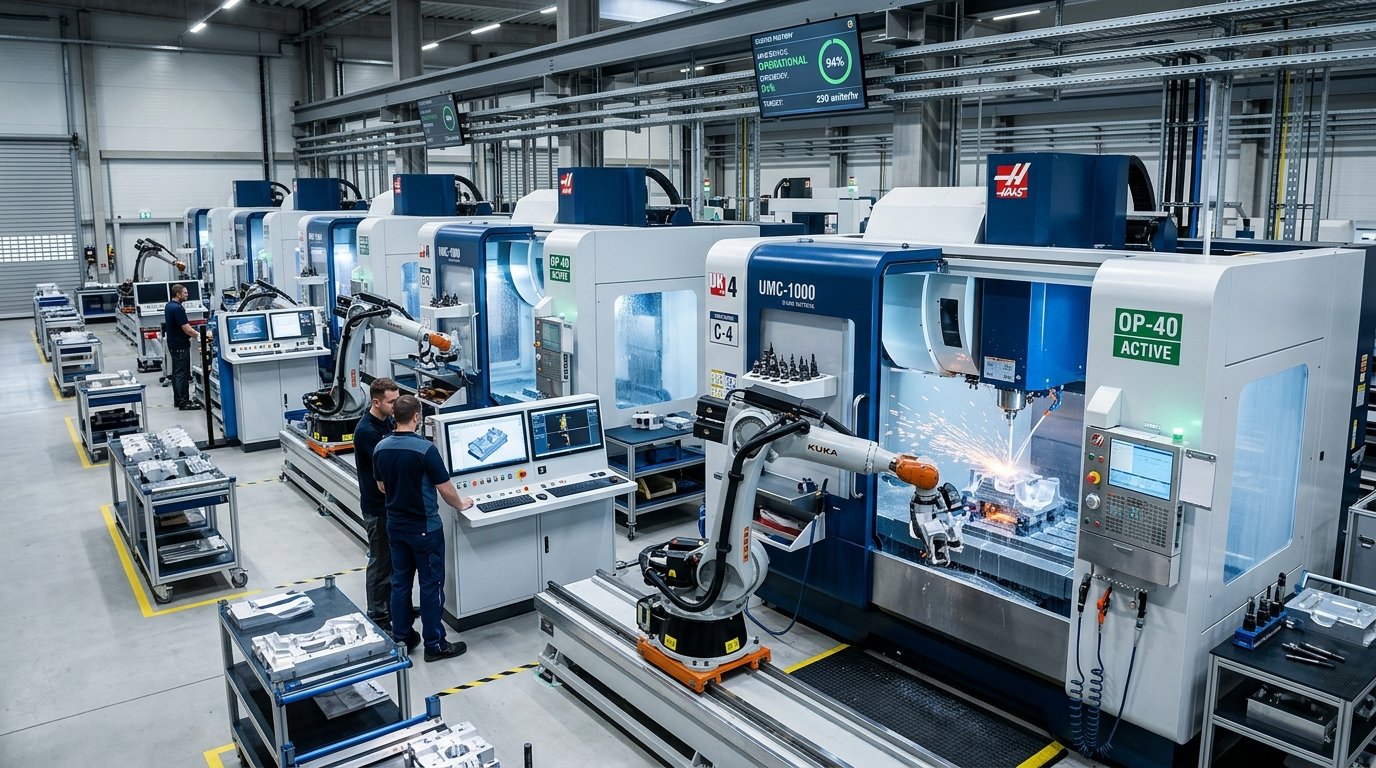
Fictiv was founded in 2013 and is now part of MISUMI. It doesn’t own factories. Instead, it runs a managed network of partner plants in the US, Mexico, India and China, coordinated by its own software and program teams.
That model has real strengths. On its CNC page Fictiv states parts in as fast as one day, no minimum order quantity, and a 95.4% on-time, in-full delivery rate. It lists 6061-T6, 7075-T6, 7050, 2024, 5052, 6063, 3003 and MIC6 aluminum. For a hardware team juggling ten suppliers, that consolidation saves time.
Buyers start searching for alternatives for three common reasons:
- Price on repeat orders. A managed network carries coordination costs. On a 200-piece reorder of a simple 6061 bracket, that overhead shows up in the unit price.
- Quote speed on complex parts. Instant quotes can fall back to manual review when geometry or tolerances get unusual, which adds days.
- Who actually makes the part. You don’t pick the shop. For cosmetic anodized parts, a change of shop between batches can mean a change of shade.
None of these make Fictiv a bad choice. They make it a specific choice, one that suits some projects better than others.
Factory-Direct vs Platform Sourcing: The Real Difference
Before comparing brands, decide which model you need. This one decision does more for your cost and quality than any logo on a quote.
| Factory-direct manufacturer | Sourcing platform or marketplace | |
| Who machines the part | The supplier’s own plant | A partner shop chosen by the platform |
| Quote method | Engineer review, sometimes instant | Algorithm, with manual fallback |
| Price on first prototype | Similar or slightly higher | Often competitive |
| Price on reorders of 50–1,000 | Usually lower, no network margin | Margin stays in every order |
| Batch-to-batch consistency | Same machines, fixtures and programs | May change shop between orders |
| Process range | Limited to what the plant owns | Very wide |
| Single point of contact | Project engineer at the factory | Platform account or support team |
Our position: platforms are the better tool for exploration, when you are testing five designs and want prices in minutes. Factory-direct is the better tool for execution, once the design is frozen and you need the same part, finish and inspection report every time.
There’s a middle ground too. Some teams quote prototypes on a platform and move the frozen design to a factory-direct supplier for the first production run. That works well, as long as you plan for a fresh first-article inspection at the switch.
6 Fictiv Alternatives Compared for Aluminum Parts
| Supplier | Model | Fastest stated lead time | Aluminum grades listed | Certifications listed |
| Elite Mold Tech | Factory-direct | Quoted per drawing | 6061, 7075 and other common grades | Confirmed on quote |
| Xometry | Marketplace, 5,000+ suppliers | 3–4 days expedited | 6061, 5052, 2024, 6063, 7050, 7075, MIC-6 | ISO 9001:2015, ISO 13485, IATF 16949, AS9100D |
| Protolabs | In-house factories | 1 day | 6061-T651, 7075-T651, 2024-T351 | ISO 9001:2015, AS9100D, ITAR |
| Protolabs Network (Hubs) | Distributed network | 5 business days | 6061-T6, 7075-T6, 5083, 2024-T351, MIC6 | AS9100, ISO 13485 (partners) |
| RapidDirect | Factory-owned, China | 1 day, 5 days typical | 6061, 2024, 5052, 5083, 6063, 6082, 7075 | ISO 9001, ISO 13485, IATF 16949 |
| 3ERP | Factory-owned, China, US office | 3 days, 7 days typical | 7075-T651, 6061-T6, 6082-T651, 6060, 5052 | ISO 9001:2015 |
Figures from each supplier’s own website, checked October 2026. Confirm on your quote.
Jiga is covered separately below because it doesn’t publish lead times or a material list in the same way.
Elite Mold Tech: factory-direct with in-house finishing
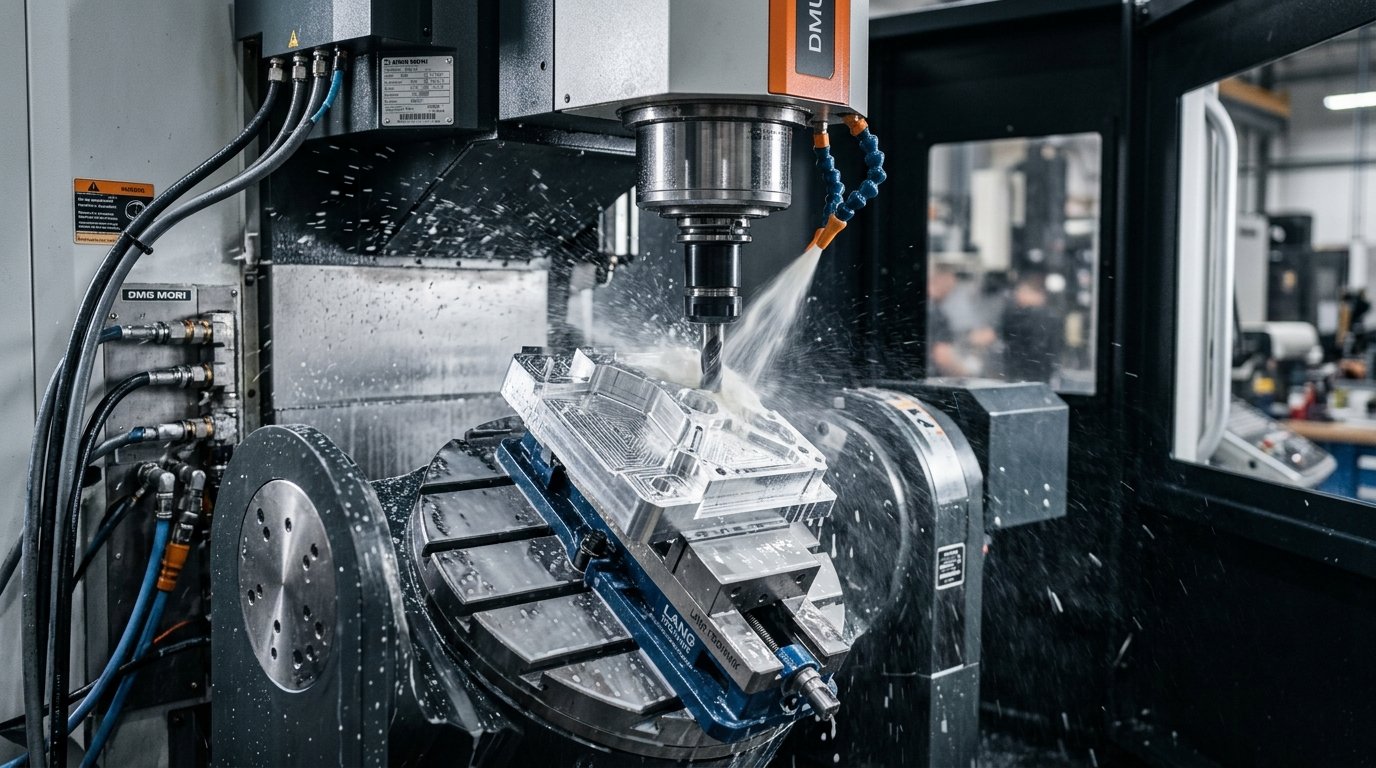
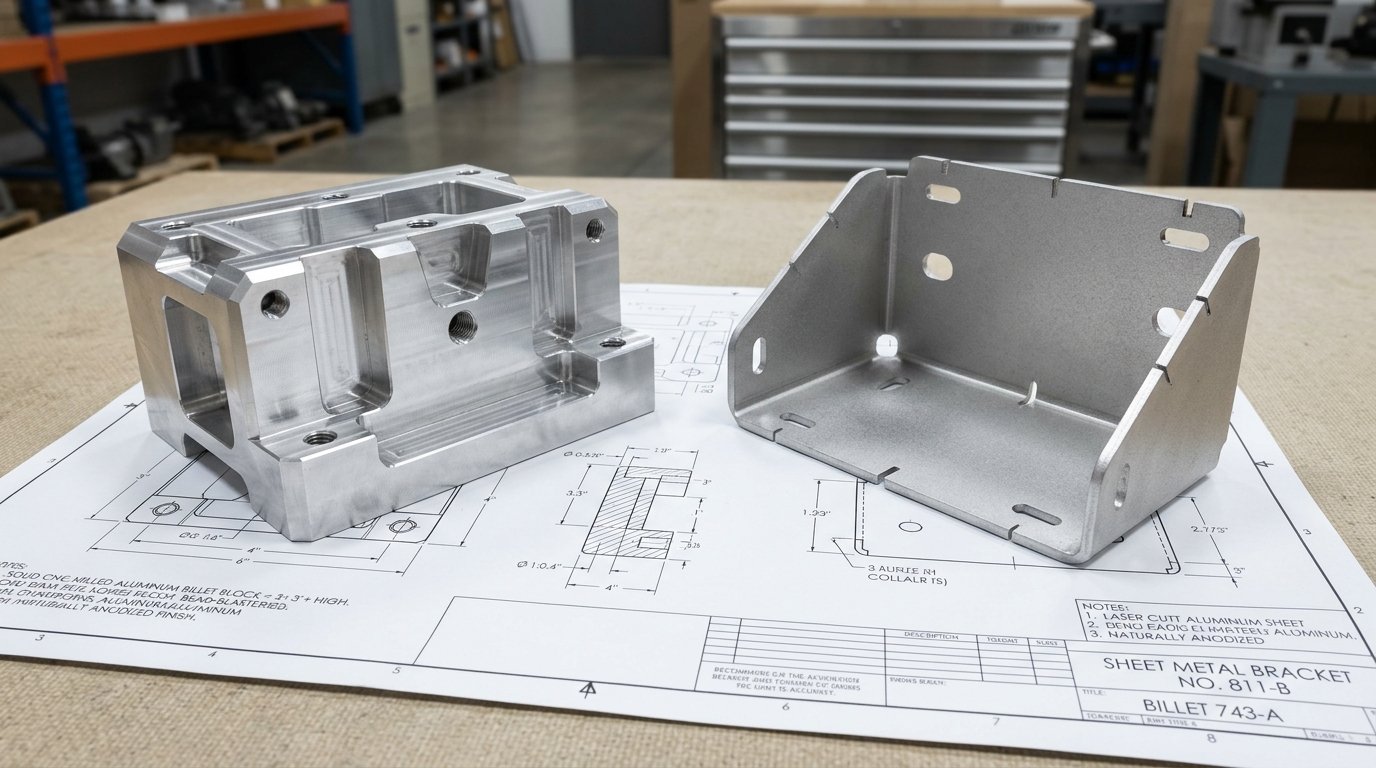
Elite Mold Tech machines aluminum in its own facility and handles CNC milling, turning, sheet metal and injection molding under one roof. For a product that combines a machined aluminum housing with a molded cover, one supplier means one tolerance stack-up conversation instead of two.
Quotes are prepared by engineers who review the drawing before pricing. That takes longer than an instant engine, but tolerances, finish and lead time are agreed up front, so fewer surprises turn up at inspection.
Pick it if: you are past the first prototype and need 10 to 1,000 aluminum parts with consistent anodizing. Skip it if: you need a price within five minutes for a design you haven’t finished yet.
Xometry: the closest platform-to-platform swap
Xometry works much like Fictiv: upload CAD, get an instant quote, and a vetted partner shop makes the part. Its network is the largest here, at more than 5,000 suppliers, and its certification list covers aerospace, medical and automotive.
Pick it if: you want Fictiv’s convenience with a wider range of processes. Skip it if: your main complaint about Fictiv is not knowing which shop makes your parts. The same applies here.
Protolabs: speed from its own factories
Protolabs runs its own automated plants and states CNC parts can ship in as fast as one day. Without a drawing, it holds ±0.005 in. (±0.127 mm).
Pick it if: you need one or two simple aluminum parts this week and budget is secondary. Skip it if: you need unusual finishes, or the price on 100+ parts matters.
Protolabs Network (formerly Hubs): lower-cost network option
Protolabs Network is a separate service from Protolabs’ factories. It routes jobs to partners in China, the USA and India, quotes 1 to 1,000 units and states lead times from five business days.
Pick it if: you are cost-sensitive and can wait about a week. Skip it if: you need the same shop on every reorder.
RapidDirect: factory-owned with instant quotes
RapidDirect owns plants in Shenzhen, Dongguan and Foshan and combines that with an online quoting tool. It lists the widest aluminum menu here, including 6082 and 5083.
Pick it if: you want instant quotes but prefer a supplier that owns its machines. Skip it if: you need parts in the US within 48 hours. Air freight from China adds days.
3ERP: hands-on low-volume runs
3ERP machines in Zhongshan, China, and has a US office in Missouri. It lists ±0.01 mm achievable tolerance, a typical seven-day lead time and low-volume production from 100 units upward.
Pick it if: you want engineer contact on small batches and are happy to quote by email. Skip it if: you need medical or aerospace certificates beyond ISO 9001.
Jiga: a platform built around direct supplier contact
Jiga sits between a marketplace and a managed service. It matches your RFQ to vetted shops, but you talk to the supplier directly and can audit them. Its network includes AS9100D, ISO 9001:2015, ITAR and NADCAP-qualified suppliers.
Pick it if: you like a platform but want to know and keep your machine shop. Skip it if: you want a single instant price with no supplier conversation.
How Much Can You Save by Switching From a Platform?
This is the question behind most searches, and the honest answer is that it varies by part. No supplier, Fictiv included, publishes a price list for custom parts, so any blanket percentage is a guess.
What you can do is run the comparison yourself. Here’s a method we see buyers use successfully:
- Pick one representative aluminum part, such as a 6061 bracket with four tapped holes and a Type II black anodize.
- Quote it at 1, 10, 100 and 500 pieces on Fictiv and on two alternatives, one platform and one factory-direct.
- Add shipping, duties and your inspection time to get the landed cost per part.
- Plot the four quantity points for each supplier.
At one piece, the curves usually sit close together, because setup cost dominates everywhere. The gap, if there is one, opens at 100 to 500 pieces, where a factory-direct supplier isn’t carrying a network margin. That’s where switching usually pays off.
Check current import duties for your country before comparing China-made and US-made quotes. Tariff rates on machined parts have changed several times in recent years and can erase a price advantage overnight.
What Changes When You Move a Part Off a Platform
Switching suppliers sounds simple. In practice, a few details cause most of the trouble.
The drawing. Platforms often accept a 3D model only and apply a default tolerance. A factory-direct shop will ask for a 2D drawing with tolerances, thread callouts and finish notes. If you never made one, now’s the time. The ISO 2768-1 general tolerance standard is a sensible default to state on it.
The finish spec. “Black anodize” isn’t a specification. State the type and class, for example Type II, Class 2 (dyed) under MIL-A-8625, and give a color reference or a sample part to match.
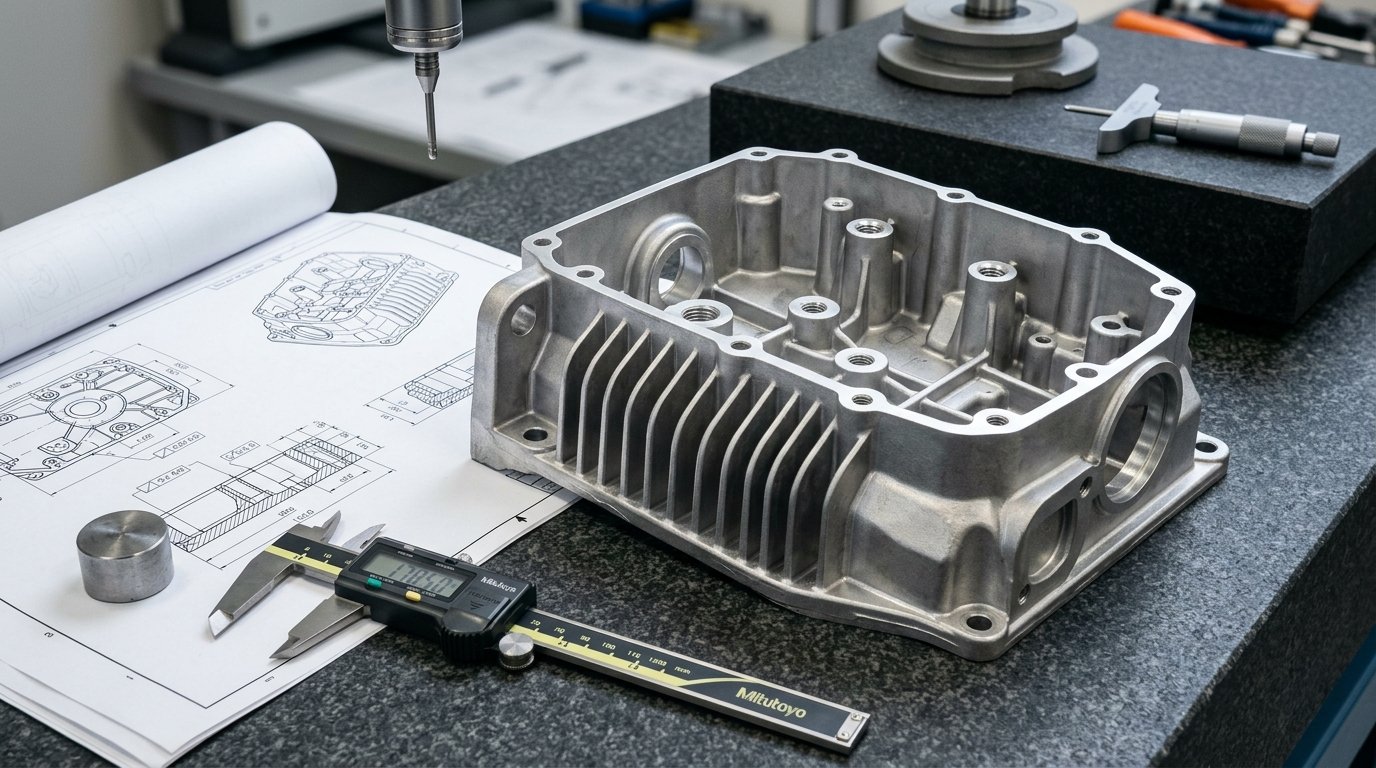
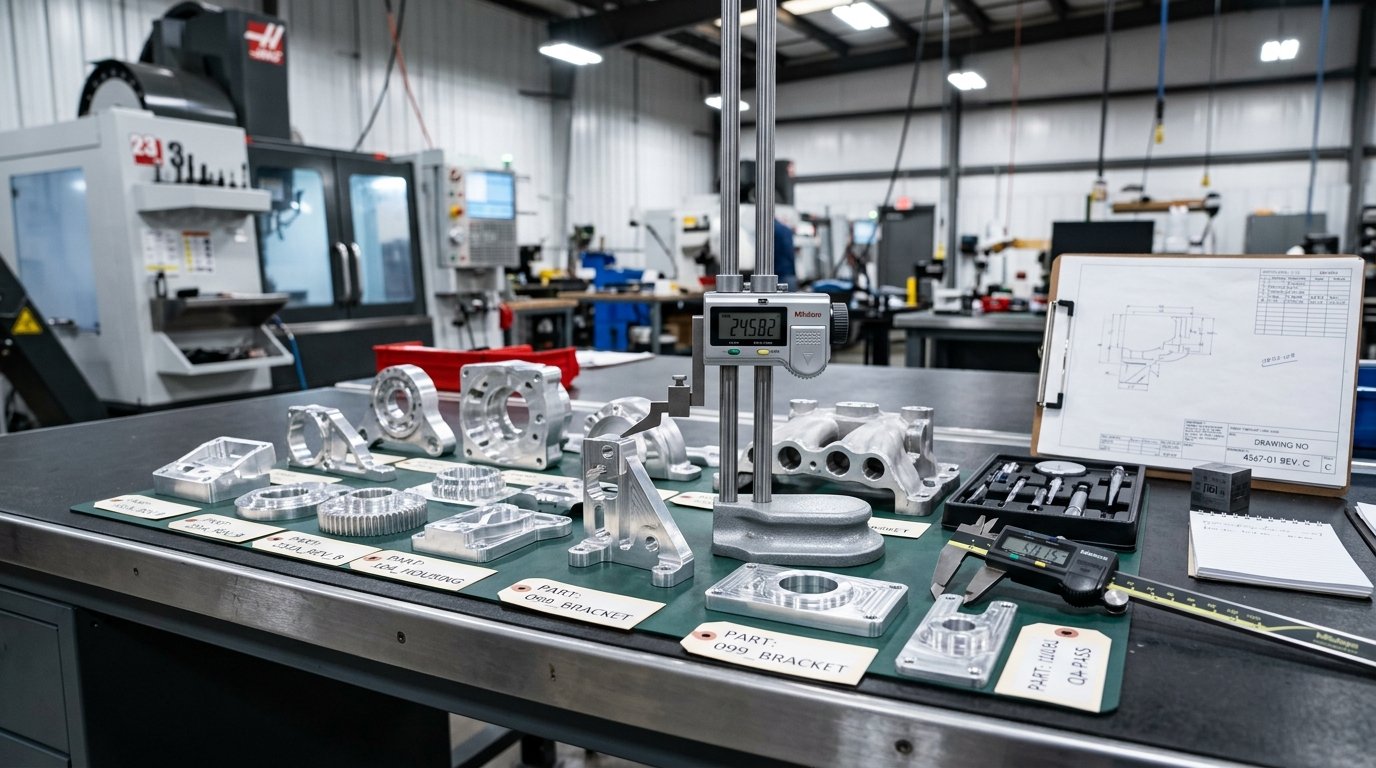
First-article inspection. Treat the first batch from any new supplier as a new first article, even if the drawing hasn’t changed. Measure critical features against the old parts before releasing anything to assembly.
Lead time. Budget an extra week for the first order. Programming and fixturing are one-off work, and your second order will be faster.
Most problems at this stage trace back to an incomplete drawing, not to the new machine shop. Our guide to CNC machining thin walls covers one of the features that most often needs a drawing note.
Aluminum-Specific Checks Platforms Often Miss
Aluminum looks like the easy material, and in many ways it is. It cuts fast, it’s light and 6061 is cheap. But three aluminum details catch buyers out when parts come from a network rather than one plant.
Anodize shade. The same black dye on 6061 and 7075 gives different results, and two anodizing lines rarely match exactly. If reorders go to a different shop, the color can drift. A factory that anodizes in-house, on the same line, keeps that drift small.
Temper. A drawing that says “6061” without “T6” or “T651” leaves the choice to the shop. T651 bar is stress-relieved, which matters for thin plates that would otherwise warp after machining. Write the temper on the drawing.
Dimensional change from hard anodize. Type III hard anodize grows into and out of the surface. On a 25 µm coating, a bore can shrink by around 25 µm in diameter. Platforms that send anodizing to a third party may not adjust the machined size unless you tell them to.
None of this is exotic. It just needs one supplier who owns the whole process, or a drawing detailed enough that it doesn’t matter who does.
Lead Time Reality: Quoted Days vs Delivered Days
A “1-day” or “3-day” lead time on a website rarely means the part is on your bench that fast. Read the small print for three things.
First, the clock usually starts after you approve the quote and pay, not when you upload the file. If the quote goes to manual review, add that time too.
Second, finishing is often extra. Anodizing, bead blasting and powder coating are separate operations. Many shops batch them, which can add 2 to 5 working days.
Third, shipping. A quoted lead time is often ex-works, meaning the day the parts leave the factory. From a plant in southern China, air express to the US or Europe adds several more days, plus customs clearance.
| Stage | What to ask the supplier |
| Quote to order | Is this an instant price, or will an engineer review it? |
| Machining | Do the stated days include programming and fixturing? |
| Finishing | Is anodizing done in-house or sent out? |
| Inspection | Which report comes with the parts, and does it add time? |
| Shipping | Is the date ex-works or delivered to my door? |
Ask for a delivered date in writing. It’s the only number that matters to your build schedule, and it’s the one most often left vague.
Quality Documents to Request From Any Supplier
Whichever alternative you pick, the paperwork tells you more about a supplier than its homepage does. For aluminum parts, ask for these:
- Material certificate (mill cert): confirms the alloy and temper, for example 6061-T6, from the bar stock supplier.
- First-article inspection (FAI) report: every dimension on the drawing measured on the first part. Ask for it on any new part number.
- Dimensional report: measurements of critical features on a sample of each batch.
- Certificate of conformance (CoC): the supplier’s signed statement that the parts meet the drawing.
- Finish certificate: anodize type, class and thickness where your application depends on it.
Also check that the supplier’s quality certificate covers the factory that makes your part. An ISO 9001 certificate held by a sales office or a platform says little about the machine shop it routes your order to. This is one of the easiest things to verify and one of the most often skipped.
A note on cost: full CMM reports and FAI documentation take time to produce, and some suppliers charge for them. That’s reasonable. For a 10-piece prototype order you may not need full FAI, but for a production run going into assembly, it’s money well spent.
Which Fictiv Alternative Fits Your Project?
Match the alternative to the stage you are at:
- Concept and early prototypes (1–5 parts, changing weekly): Xometry or Protolabs. Speed and quote convenience matter most.
- Validation builds (10–50 parts, design nearly frozen): Protolabs Network, Jiga or a factory-direct supplier. Start asking for inspection reports.
- Pilot and low-volume production (50–1,000 parts): factory-direct suppliers such as Elite Mold Tech, RapidDirect or 3ERP. Consistency and unit price now matter most.
- Regulated parts: filter by certificate first. AS9100 for aerospace, ISO 13485 for medical devices, and check that the certificate covers the site that machines your part, not just the head office.
For a wider look at prototype suppliers, our comparison of aluminum CNC machining services for prototypes covers seven options side by side.
Frequently Asked Questions
Who are Fictiv’s main competitors?
Fictiv’s main competitors for CNC machining are Xometry, Protolabs and its Protolabs Network service, Jiga, and factory-direct manufacturers such as RapidDirect, 3ERP and Elite Mold Tech. Platforms compete on quoting and capacity, while factory-direct suppliers compete on unit price and consistency across reorders.
Does Fictiv own its own factories?
No. Fictiv describes itself as a digital supply chain company that uses a global partner network rather than owning factories. It has teams and centers in the United States, Mexico, India and China that coordinate production and quality with those partner plants.
Is Xometry cheaper than Fictiv?
Neither is consistently cheaper. Both price parts algorithmically, and results vary by geometry, alloy, tolerance and quantity. The only reliable test is quoting the same part, with the same drawing and finish, on both platforms at several quantities and comparing landed cost.
Is factory-direct CNC machining cheaper than a platform?
For repeat orders of 50 parts or more, factory-direct is often cheaper because there’s no network margin and fixtures are reused. For a single prototype the difference is usually small. Shipping, duties and inspection time should be included before deciding which option is cheaper overall.
How do I protect my design when switching suppliers?
Sign a mutual NDA before sending CAD files, and ask how many companies will see your drawing during quoting. Factory-direct suppliers usually share files with fewer people. Keep revision-controlled drawings, and mark unreleased designs as confidential on every sheet of the drawing package.
Choosing Between Fictiv Alternatives: Our Recommendation
It comes down to one question: are you still exploring the design, or are you buying the same part again? For exploration, another platform keeps your speed. For repeat aluminum parts, a factory-direct manufacturer usually gives you a better unit price, the same finish shade on every batch and an engineer who knows your part.
Elite Mold Tech machines, anodizes and inspects aluminum parts in-house, from prototype batches to short production runs. Send us your drawing and we’ll quote the quantities you are considering so you can compare the curve yourself.