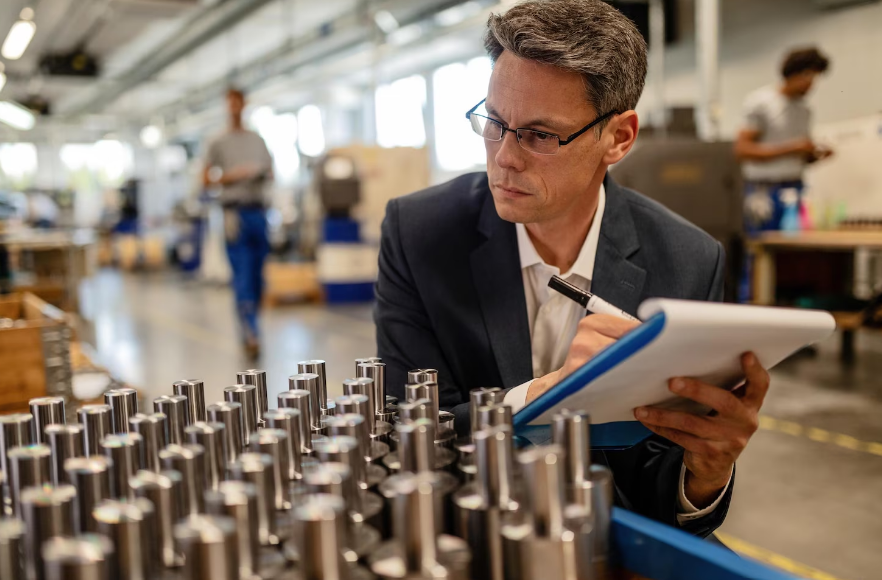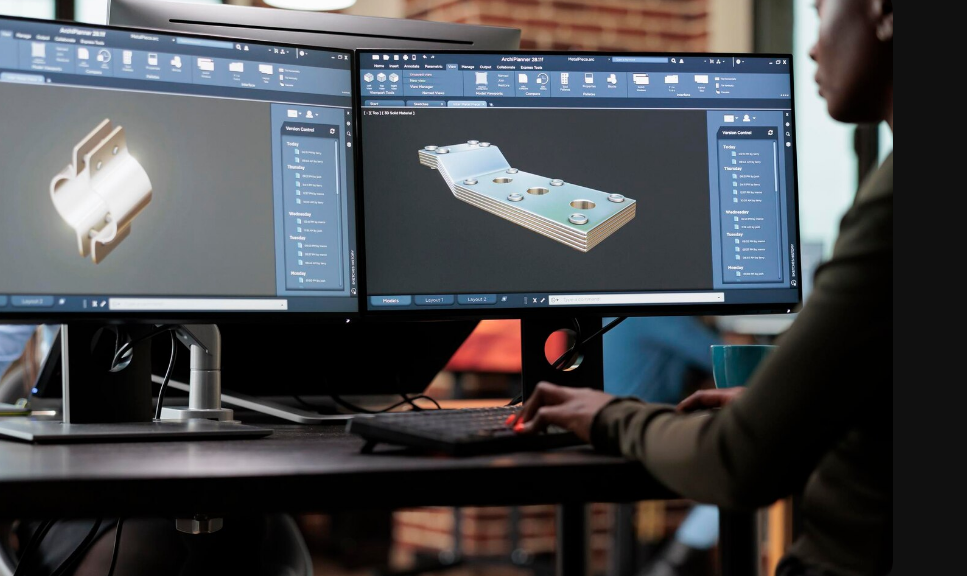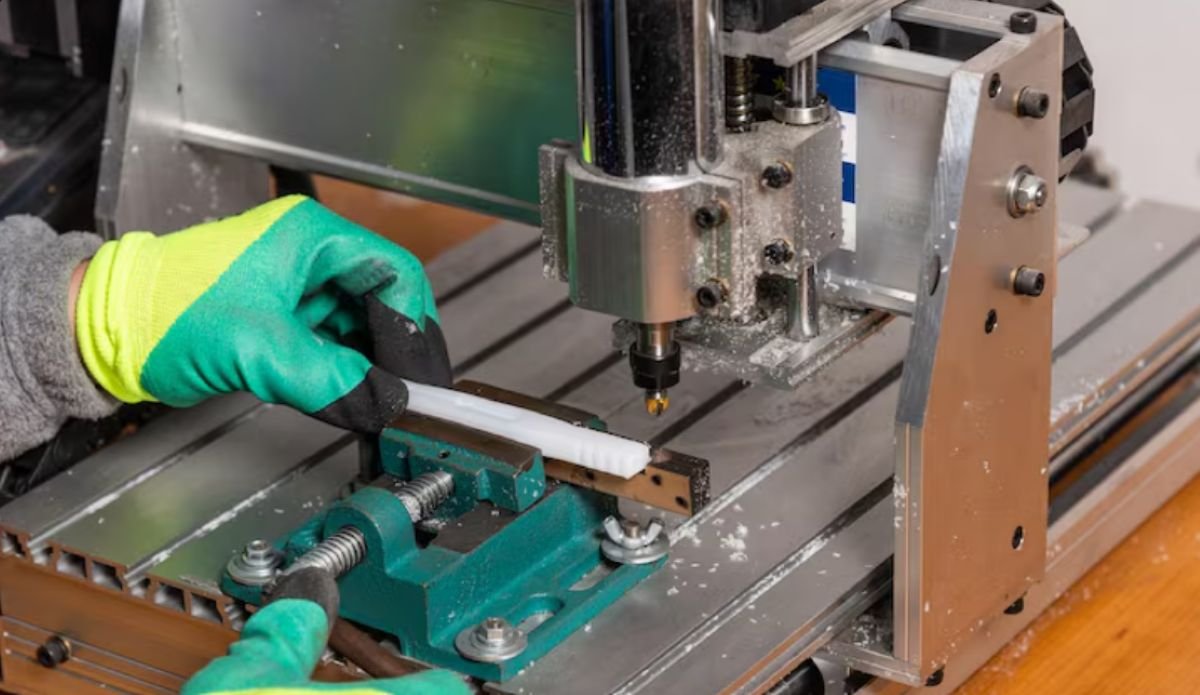
An injection mold is a machined assembly before it is a production tool. Every surface a molded part will ever have begins as a cutter path in steel, and the decisions made during machining determine how much the tool flashes, how fast it cycles, how long polishing takes and how many parts it produces before maintenance.
This guide walks through how a mold is actually built: the machining sequence from steel block to fitted tool, what gets machined besides the cavity, which tool steels behave how under a cutter, the tolerances and finishes involved, and how to think about sourcing mold making domestically or offshore.
What CNC machining does in mold making
CNC machining produces nearly every functional surface in a mold. That includes the cavity and core that form the part, the mold base pockets and interfaces that hold them, the cooling channels that control temperature, the ejector holes that release the part, and the shutoff surfaces where the two halves meet. Electrical discharge machining handles the small remainder that a cutter physically cannot reach, and manual benching brings surfaces to their final finish.
The machining sequence from block to finished tool
- Block preparation. The tool steel block is squared and datums are established. Everything downstream references this origin, so an error here propagates through the whole build.
- Roughing. Bulk material is removed with adaptive or high feed strategies, leaving a uniform stock allowance. Uniformity matters more than raw speed, because inconsistent stock causes varying tool deflection in the passes that follow.
- Semi finishing. The allowance is brought down evenly and corners are prepared with rest machining, so the finishing pass meets consistent engagement rather than alternating between heavy and light cuts.
- Heat treatment, where the steel requires it. Hardening and stress relief introduce dimensional movement that subsequent operations must correct, which is why the sequence has to anticipate it.
- Hard milling. Finishing passes taken in hardened material using short rigid tooling. This is where surface quality is won or lost, and it directly determines how many hours polishing will take.
- Electrical discharge machining. Sharp internal corners, narrow deep ribs and detail below the smallest practical cutter are burned rather than milled.
- Benching and polishing. Manual work to reach the specified surface grade, remove tool witness marks and blend transitions between machined regions.
- Fitting and spotting. Cavity and core are matched, shutoffs are verified, and the tool is assembled with the ejection and cooling systems before first shots.
Where EDM is still required, and where hard milling has replaced it
Improvements in hard milling have moved a substantial amount of work away from electrical discharge machining, because milling is faster on open geometry and does not require an electrode to be manufactured first. But milling is limited by cutter geometry and reach in ways EDM is not.
| Característica | Suited to hard milling | Suited to EDM |
| Open contoured surfaces | Yes, faster and no electrode required | Rarely justified |
| Deep cores with accessible walls | Yes, when tool tilt allows a short rigid cutter | Only where reach genuinely fails |
| Sharp internal corners | No, a milled corner always carries the cutter radius | Yes, this is what EDM exists for |
| Narrow deep ribs | Limited by tool diameter and deflection | Yes, particularly below practical cutter sizes |
| Surface texture detail | Limitado | Yes, texture and fine detail suit EDM |
| Very high hardness steel | Depends on hardness and tooling | Yes, EDM is unaffected by material hardness |
The two processes are complementary rather than competing. A well planned tool mills everything that can be milled efficiently and reserves EDM for what milling physically cannot produce, which keeps electrode making off the critical path wherever possible.
What gets machined besides the cavity
Cavity and core machining receives most of the attention, but a mold contains a great deal of machined detail that determines whether the tool actually works in production.
- Mold base pockets and interfaces. The cavity and core inserts sit in machined pockets whose accuracy controls alignment between the two halves.
- Cooling channels. Drilled and machined passages positioned at a controlled distance from the cavity surface. Their layout drives cooling uniformity, which in turn drives cycle time and warpage.
- Ejector pin holes. Positioned and sized so pins run freely without allowing flash, which is a tighter fit requirement than most people expect.
- Slides, lifters and cam mechanisms. Required wherever a feature is undercut and cannot release in the direction the mold opens, and each one is a machined assembly in its own right.
- Shutoff surfaces. Where cavity and core meet to close off a feature. Shutoff quality decides whether the tool flashes on every shot.
- Runner and gate geometry. Machined into the plates or inserts, and sized to the resin’s flow behavior rather than to a standard.
- Venting. Shallow machined relief that lets trapped air escape as the cavity fills. Insufficient venting causes burn marks and short shots.
- Water fittings, guide pin bores, return pins and the mounting features that let the tool bolt into a press.
Cooling and venting are where machining decisions show up most directly in production economics. A tool with well placed cooling cycles faster on every shot for its entire life, and cycle time is the dominant cost per part in production molding. Many of the issues covered in our article on molding defects traced to tooling originate in cooling layout, venting or shutoff machining rather than at the press.
Tool steels and how each machines
| Acero | Typical use | Machining implication |
| Pre hardened P20 and variants | Medium life production tooling for non abrasive resins | Machined and put into service without hardening, which removes distortion and shortens the schedule |
| H13 | Higher hardness and thermal fatigue resistance | Machined soft then hardened, so the sequence must anticipate movement and correct it in hard milling |
| Stainless mold steels | Corrosion resistance for aggressive resins or humid storage | Tougher on tooling and generally slower to machine than P20 |
| High hardness tool steels | Long running tools and abrasive filled resins | More of the finishing work shifts toward EDM and grinding as hardness climbs |
| Aluminum tooling | Prototype, bridge and low volume tools | Machines far faster and cheaper, at the cost of tool life and pressure capability |
Aluminum tooling deserves a note because it changes the economics of early production entirely. Aluminum machines several times faster than tool steel, which shortens tooling lead time substantially and reduces cost, while still producing thousands of shots. That is the basis of quick turn tooling and molding, and it is the right route when the design is not yet frozen or the volume does not justify hardened steel.
Tolerances and surface finish in mold machining
Mold tolerances work differently from part tolerances. What matters is not only how accurately a surface is cut but how the two halves meet, because shutoff quality determines flash and parting line appearance on every part the tool ever produces.
- Cavity surfaces are machined to part geometry with an allowance where polishing will follow, because polishing removes material and a surface polished without allowance ends up undersized.
- Shutoff surfaces carry the tightest control in the tool. A shutoff that does not meet cleanly flashes on every shot, and correcting it in hardened steel is difficult work.
- Guide and alignment features are machined to the mold base specification rather than the part specification, since their job is repeatable registration between halves.
- Cooling channel position is a dimensional requirement, because the distance from channel to cavity surface determines cooling uniformity.
- Surface texture grade should be agreed before machining starts, since it determines how much stock the finishing pass must leave for benching.
- Ejector pin fits are a clearance specification, tight enough to prevent flash and loose enough for free movement across the tool’s temperature range.
The polishing allowance is the item most often mishandled. Too little and a polished surface falls out of tolerance. Too much and the toolroom spends additional manual hours, which is the most expensive time in the whole build. Agreeing the finish grade at the outset lets the machining stage leave the correct amount rather than a guess.
Why the axis configuration matters on tooling
Mold work is machined on 3-axis, 3+2 indexed and simultaneous 5-axis equipment, and the choice affects both what is possible and what it costs.
- 3-axis machining handles the majority of prismatic mold base work, straightforward cavities and plate machining, and it is the most economical option where geometry allows.
- Indexed 3+2 machining positions the block at a fixed angle and then cuts with three axis motion, which suits angled faces and features that cannot be reached from a single orientation.
- Simultaneous 5-axis machining moves all axes during cutting, which is required for compound curved surfaces and valuable wherever tool reach is the constraint.
- Tool reach is the recurring issue in tooling. Tilting the tool axis lets a shorter, more rigid cutter reach into a deep core, which cuts faster, chatters less and leaves a better finish than a long tool reaching straight down.
That last point is why deep cores are machined on multi axis equipment even when the surfaces themselves are not curved. The benefit is rigidity and finish rather than geometric necessity, and it translates directly into fewer polishing hours.
Mold making lead times and what compresses them
Tooling lead time is driven by the machining sequence, the amount of EDM required and the manual finishing at the end. Three things shorten it more than anything else.
- Freeze the part design before steel is cut. Late revisions after hard milling are the most expensive change in the process, because correction in hardened material often means welding and re machining.
- Agree the surface finish grade at the start, so machining leaves the right allowance and benching is not extended by guesswork.
- Choose the tooling material honestly against volume. An aluminum tool for a design still under validation is faster and cheaper than a hardened steel tool that will need modification.
A design for manufacturing review before tooling starts pays for itself repeatedly here. Undercuts that force slides, corner radii smaller than any practical cutter, and wall sections that will need extensive cooling attention are all cheaper to address in CAD than in steel. For designs still being validated, our prototype and low volume tooling route allows the geometry to be proven before production tooling is committed.
Sourcing mold making in the USA versus offshore
| Consideration | Domestic mold making | Offshore mold making |
| Tooling cost | Higher, reflecting domestic labor and overhead | Substantially lower on comparable capability |
| Lead time | Shorter transit, though shop loading still governs | Longer overall once transit is included |
| Design collaboration | Same time zone, easier in person review | Requires disciplined documentation and scheduled communication |
| Engineering changes | Faster to implement and verify | Slower round trip, so front loading the design matters more |
| Restricted or regulated work | Required where export control or program rules apply | Not available for restricted work |
| Best fit | Fast iteration, restricted programs, tools needing frequent modification | Stable designs, cost sensitive programs, higher cavity count tooling |
The decision is rarely all or nothing. A common structure is to prototype and validate quickly, then build production tooling where the economics are best once the design is stable. What makes offshore tooling work is documentation discipline: a complete data package, an agreed finish specification, defined inspection requirements and a clear engineering change process.
Elite Mold Tech builds and runs tooling in house, combining precision CNC machining services with moldeo por inyección de plástico so cavity machining, EDM, fitting and molding are managed as one process rather than coordinated across vendors. Send a part model and target volume to Elite Mold Tech for a tooling plan that states the machining approach, EDM scope and finish grade rather than a single lead time figure.
Frequently asked questions
Q: How long does it take to machine an injection mold?
A: It depends on size, cavity count and how much EDM and benching the geometry requires. Aluminum prototype tooling is considerably faster than hardened steel production tooling, which is why bridge tooling exists as a distinct route.
Q: Does hard milling eliminate the need for EDM in mold making?
A: No, Hard milling has reduced EDM scope on open geometry, but sharp internal corners, narrow deep ribs and detail below practical cutter sizes still require it. Most tools use both processes in combination.
Q: What tool steel should an injection mold use?
A: Pre hardened grades such as P20 suit medium life tooling and avoid heat treatment distortion. Harder grades and stainless mold steels suit longer runs, abrasive filled resins or corrosive conditions, at the cost of a longer machining sequence.
Q: Can an aluminum mold be used for production?
A: For lower volumes, yes. Aluminum tooling produces thousands of shots and is much faster and cheaper to machine, which makes it well suited to bridge production and designs that are not yet fully frozen.
Q: What causes the most expensive delays in mold making?
A: Part design changes after hard milling. Correcting hardened steel often requires welding and re machining, which is slow and carries risk. Freezing the design before steel is cut is the single most effective schedule protection available.
Q: How long does it take to machine an injection mold?
A: It depends on size, cavity count and how much EDM and benching the geometry requires. Aluminum prototype tooling is considerably faster than hardened steel production tooling, which is why bridge tooling exists as a distinct route.
Q: Does hard milling eliminate the need for EDM in mold making?
A: No. Hard milling has reduced EDM scope on open geometry, but sharp internal corners, narrow deep ribs and detail below practical cutter sizes still require it. Most tools use both processes in combination.
Q: What tool steel should an injection mold use?
A: Pre hardened grades such as P20 suit medium life tooling and avoid heat treatment distortion. Harder grades and stainless mold steels suit longer runs, abrasive filled resins or corrosive conditions, at the cost of a longer machining sequence.
Q: Can an aluminum mold be used for production?
A: For lower volumes, yes. Aluminum tooling produces thousands of shots and is much faster and cheaper to machine, which makes it well suited to bridge production and designs that are not yet fully frozen.
Q: What causes the most expensive delays in mold making?
A: Part design changes after hard milling. Correcting hardened steel often requires welding and re machining, which is slow and carries risk. Freezing the design before steel is cut is the single most effective schedule protection available.