By Phil Huang, Elite Mold Tech. Updated October 31, 2026.
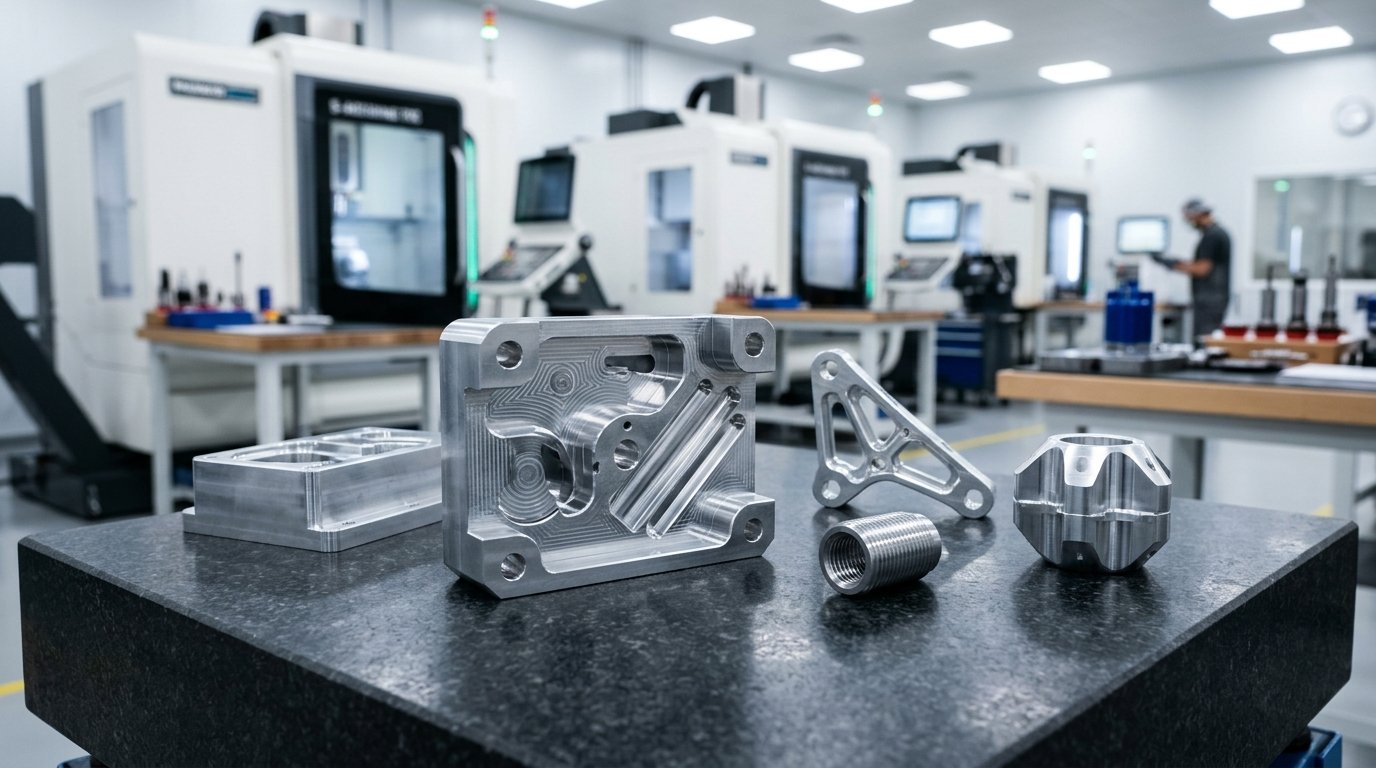
For most parts, 6061-T6 is the right choice in aluminum alloy CNC machining. It cuts cleanly, holds tolerance, anodizes well, and costs less than the stronger grades. Pick 7075-T6 when strength matters more than cost. Pick 5052 or 5083 when the part sees water or salt. Pick 6063 when the finish matters most. This guide explains how to match each alloy to your part, so your quote and your lead time stay on track.
Elite Mold Tech stocks ten aluminum grades at its Dongguan factory. We use them for prototypes and production runs. Below, you will find real strength numbers, a simple selection process, and the points that change price and tolerance.
Key takeaways
- 6061-T6 is the default grade. Its yield strength is 276 MPa, and it machines faster than 7075.
- 7075-T6 is about 80% stronger in yield (503 MPa), but it wears tools faster and cannot be welded well.
- 5052 and 5083 resist corrosion best. 6063 gives the most even anodized color.
- Alloy choice changes tool wear, cycle time, and finish. It does not change the standard tolerance of ±0.005 in (±0.127 mm).
- Send your drawing, quantity, and finish. We recommend an alloy with your quote.
What is the best aluminum alloy for CNC machining?
6061-T6 is the best all-around aluminum alloy for CNC machining. It balances strength, machinability, weldability, corrosion resistance, and price. Most aluminum alloy parts CNC machining projects, such as brackets, housings, fixtures, and enclosures, start here. Choose another grade only when a specific need, such as strength or salt resistance, requires it.
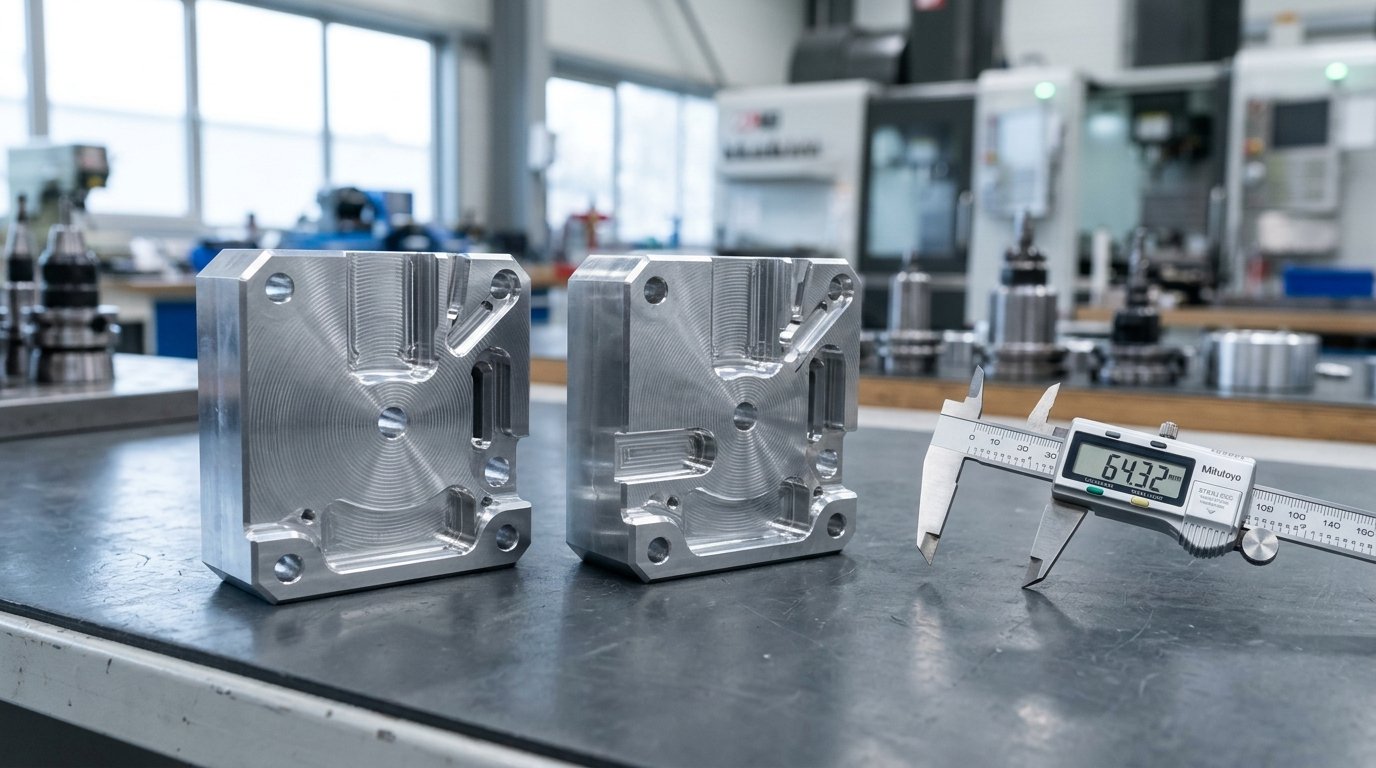
6061 contains magnesium and silicon. It forms short, manageable chips and leaves a clean surface. Our spec sheet lists its yield strength at 276 MPa, its hardness at 95 HB, and its density at 2.70 g/cm³ (Elite Mold Tech aluminum CNC page, 2026). That density is about one third of steel. A 6061 part is light, stiff enough for most frames, and easy to finish.
If your drawing says only “aluminum,” we quote 6061-T6. That is a safe starting point for aluminum CNC machining of general parts.
How do aluminum alloy series differ?
Aluminum alloys are grouped by their main added metal. The first digit of the four-digit code shows the series. Copper defines 2xxx, magnesium defines 5xxx, magnesium plus silicon defines 6xxx, and zinc defines 7xxx. Each series has a different mix of strength, corrosion resistance, and machinability (Aluminum Association designation system).
Series | Main added metal | Example grades | What it does well |
2xxx | Cuivre | 2024 | High strength, good fatigue life, weaker corrosion resistance |
5xxx | Magnésium | 5052, 5083 | Corrosion resistance in water and salt air |
6xxx | Magnesium and silicon | 6061, 6063, 6082 | Balanced strength, easy machining, good anodizing |
7xxx | Zinc | 7075 | Highest strength of the common grades |
Most shops machine the 6xxx grades daily. The 2xxx and 7xxx grades come up when a part must carry a heavy load at low weight. The 5xxx grades come up when a part sits outdoors or near the sea. The Aluminum Association maintains the registry of these designations.
Which aluminum alloys does Elite Mold Tech machine, and how strong are they?
We stock ten aluminum grades: 6061, 6061-T6, 6063, 6082, 5052, 5083, 2024, 7075, 7075-T6, and ADC12 (A380). Yield strength runs from 160 MPa for ADC12 to 503 MPa for 7075. The table below shows the numbers from our own spec sheet, so you can compare grades side by side.
Alloy | Yield strength (MPa) | Fatigue strength (MPa) | Best fit |
5052 | 193 | 115 | Sheet-like parts, marine trim, enclosures |
6063 | 214 | 65 | Parts that need an even anodized look |
6082 | 260 | Not listed | Structural parts where 6061 is not quite strong enough |
5083 | 275 | 125 | Marine and outdoor parts |
6061 / 6061-T6 | 276 | 96 | General purpose, the default choice |
2024 | 325 | 140 | Aircraft-style structures with repeated stress |
7075 / 7075-T6 | 503 | 160 | Highest strength parts at low weight |
ADC12 (A380) | 160 | Not listed | Cast housings that get machined afterward |
Source: Elite Mold Tech aluminum CNC machining page (2026). Values are typical for the listed temper. Ask us for the mill certificate of your lot.
ADC12 is different from the rest. It is a die-casting alloy, so it starts as a cast shape and gets machined only on the critical faces. If your part is cut from solid plate or bar, you want one of the wrought grades instead.
Need a grade that is not on this list? We source other aluminum alloys on request. Our aluminum material page lists the grades we hold now.
How do you choose the right aluminum alloy for your part?
Choose an aluminum alloy by working from the load on the part to the finish you need. Start with strength, then check the environment, the finish, and the budget. Each step removes grades from the list until one or two remain. This takes about ten minutes with a drawing in hand.
- Set the load. If the part carries light loads, 6061 is enough. If it sees high stress or impact, look at 7075 or 2024.
- Check the environment. Water, salt, or outdoor use points to 5052 or 5083. Dry indoor use opens the field.
- Pick the finish. Cosmetic anodizing favors 6063 and 6061. Hard coat on a high-strength part works on 7075, but color can shift.
- Check the process. If you plan to weld, avoid 7075. Choose 6061 or 5052.
- Set the budget. Rank the grades that still fit by cost. Start with 6061 and move up only if a test or a calculation says you must.
Our engineers run this same check on every drawing. You can also review our machining capabilities to see the equipment behind these limits.
What do temper codes like T6 and T651 mean?
The temper code tells you how the metal was heat treated or hardened. T6 means solution heat treated and artificially aged, which gives 6061 and 7075 their rated strength. T651 adds a stretching step that relieves internal stress, so the plate stays flatter after machining. Choose T651 for large flat parts.
Stress matters because machining removes metal. A plate with locked-in stress can bow after you cut a deep pocket. A stress-relieved temper keeps the part closer to the drawing. Ask our team to confirm the temper on your quote, and review our l'assurance qualité steps for material certificates.
How does aluminum alloy CNC machining change cost and tolerance by grade?
Alloy choice changes cost mainly through tool wear and cycle time, not through the tolerance we can hold. Harder grades such as 7075 wear cutters faster and need slower feeds. Raw stock price also differs. The standard tolerance is the same for all grades: ±0.005 in (±0.127 mm), following ISO 2768-mK.
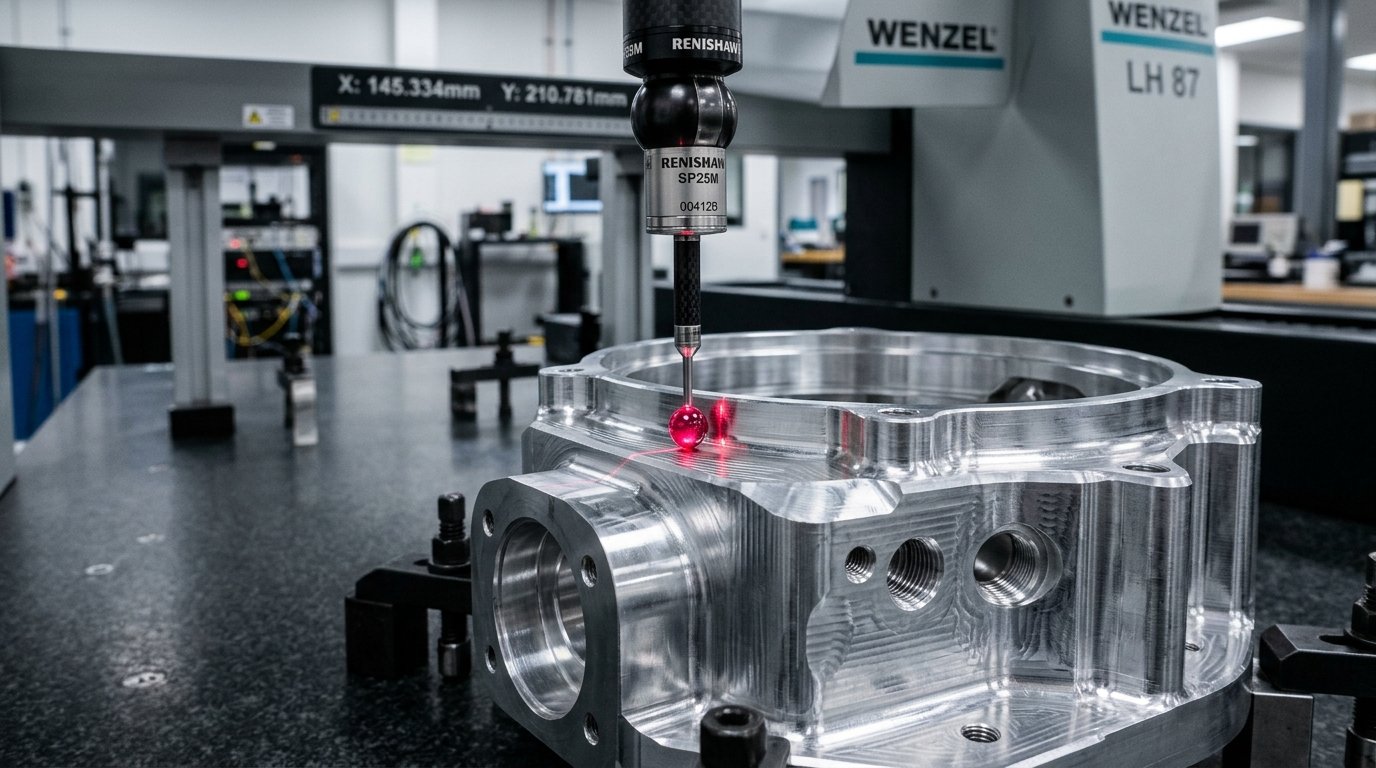
Tighter limits are possible. We can hold down to ±0.001 in (±0.025 mm) on request when you send a 2D drawing with GD&T. Typical hole tolerance is ±0.002 in (±0.05 mm). Minimum wall thickness is 0.75 mm, and flatness is within 0.002 in per 6 in (Elite Mold Tech capability table, 2026). The ISO 2768-1 standard defines the general tolerance classes behind these numbers.
Two tips keep precision machining of aluminum alloys affordable. First, call out tight limits only on mating faces. Second, let non-critical dimensions fall back to the general tolerance. Each tight limit adds inspection time and can add a second setup.
Facteur | 6061-T6 | 7075-T6 |
Limite d'élasticité | 276 MPa | 503 MPa |
Usure des outils | Faible | Plus élevé |
Soudage | Bon | Poor, not recommended |
Standard tolerance | ±0.005 in | ±0.005 in |
Relative stock cost | Plus bas | Plus élevé |
Which finishes work with each alloy?
Most aluminum alloys take Type II anodizing, which adds 5 to 25 μm per surface and comes in black, red, blue, gold, or clear (Elite Mold Tech, 2026). 6063 and 6061 give the most even color. 7075 can look slightly different from lot to lot. Cast ADC12 does not anodize well and is usually painted or powder coated.
The as-machined surface is Ra 3.2 μm (125 μin). Bead blasting gives a matte texture, and polishing gives a gloss. You can see every option on our surface finish page. Tell us the finish when you pick the alloy, because anodizing adds thickness that changes fits on tight holes.
Which alloys fit which industries?
Match the industry to the load and the environment, then check the grade against your drawing. These pairings are guidance, not a rule, and your own spec comes first.
- Aerospace and defense: 7075 and 2024 for strength and fatigue life. Ask for material certificates.
- Robotics and automation: 6061 for arms, brackets, and frames. It is light and easy to rework.
- Consumer electronics: 6063 and 6061 for housings that will be anodized.
- Marine and new energy: 5052 and 5083 for corrosion resistance.
- Automotive prototypes: 6061 and 7075, depending on the test load.
Elite Mold Tech serves aerospace, automotive, automation, communication, consumer electronics, medical devices, robotics, mining, defense, and new energy customers.
Does 5-axis machining change the alloy you should choose?
Not directly. The alloy is chosen by the part’s job. But 5-axis work lets us cut complex shapes in fewer setups, which helps with harder grades such as 7075 and thin features in 6082. Fewer setups mean less handling and a lower chance of stress movement between operations.
For complex housings or curved structures, review our 5-axis CNC machining service. Custom aluminum alloy CNC machining of small batches follows the same selection steps. Bulk orders can switch to a lower-cost grade after the prototype passes testing. Many aluminum alloys CNC machining teams use this prototype-then-production path.
Send your drawing and get an alloy recommendation
You do not need to pick the alloy alone. Upload your 3D file and 2D drawing, tell us the quantity and finish, and our engineers will recommend a grade with your quote. We guarantee a response within 12 hours, and most orders take under 10 days.
Prêt à commencer ? Demande de devis or visit the Elite Mold Tech home page to see our other CNC machining services.
Foire aux questions
Q: What is the most machinable aluminum alloy?
A: Among the grades we stock, 6061 and 6063 machine cleanly and quickly. The grade 2011 is known as free-machining, but it is not on our standard list. For most parts, 6061-T6 gives the best mix of speed, finish, and strength at a fair price. Send your drawing and we will confirm the best grade.
Q: Is 7075 aluminum worth the extra cost?
A: Yes, if your part needs the strength. Its yield strength of 503 MPa is far above 6061 at 276 MPa. If your part is not highly stressed, the extra stock cost and tool wear are not worth it. Test a 6061 prototype first, then move to 7075 only if the test shows you need the added strength.
Q: Can you machine aluminum alloy to tight tolerance?
A: Yes. Standard tolerance is ±0.005 in (±0.127 mm), and we can hold down to ±0.001 in (±0.025 mm) on request. Send a 2D drawing with GD&T. Mark only the critical features, because each tight limit adds inspection time and can add a second setup to the job.
Q: Which aluminum alloy is best for anodizing?
A: 6063 and 6061 give the most even Type II anodized color. 7075 anodizes well but can show small color shifts between lots. Cast grades such as ADC12 do not anodize cleanly, so plan on paint or powder coating instead. Tell us the finish when you send the drawing.
Q: Which aluminum alloy resists corrosion best?
A: 5083 and 5052 resist corrosion best in water and salt air. They are common in marine parts and outdoor enclosures. 6061 is good for general use. 2024 and 7075 need protective finishes because they corrode more easily. Anodizing or paint adds that protection.
Q: What is the difference between 6061 and 6082?
A: Both are 6xxx grades. 6082 has a higher yield strength, 260 MPa in our listing, and is common in structural parts. 6061 is the more common grade, so it is usually easier to source. Ask us if your drawing calls for 6082, and we will confirm stock and lead time before you commit.
Sources
- Elite Mold Tech, Aluminum CNC Machining capability and material tables (2026): elitemoldtech.com/aluminum-cnc-machining
- The Aluminum Association, alloy and temper designation system: aluminum.org
- ISO 2768-1, General tolerances for linear and angular dimensions: iso.org