By Phil Huang, Elite Mold Tech. Updated October 31, 2026.
In the China vs USA CNC machining decision, the right answer depends on your part, your quantity, and your schedule. US shops win on speed for urgent, small, or regulated work. Chinese shops often win on price for prototypes and production runs, if you verify quality and plan for shipping and duties. This guide gives you a fair comparison and a checklist to decide.
We are a China-based shop, so we state our bias up front. We also list the cases where a US supplier is the better choice, because a wrong match costs you more than a lost quote costs us.
Key takeaways
- Choose a US shop for same-week delivery, regulated or defense parts, and work that needs on-site audits.
- Choose a China shop for cost-sensitive prototypes and batches, when you can plan for transit time and import duties.
- Duties and shipping change often. Get a landed-cost quote, not just an ex-works price.
- Quality depends on the shop, not the country. Ask for inspection reports and material certificates.
- Protect your design with an NDA and a clear process before you send files.
Is it cheaper to machine in China or the USA?
Machining in China is often lower in base price, but the real comparison is landed cost. Landed cost adds shipping, import duties, broker fees, and the cost of any delay or rework. A low ex-works quote can shrink once those items are added, so compare totals, not unit prices.
We do not publish a percentage saving, because it moves with the part, the order size, the alloy, and the current duty rules. Ask every shop, in either country, for the same package: the alloy, the tolerance, the finish, the quantity, and the delivery terms. Our guide to aluminum CNC machining cost explains what sets the price on any quote.
Use this landed-cost checklist when you compare:
- Ex-works or delivered price per part.
- Air or sea freight, and who pays it.
- Import duty and brokerage fees for your product code.
- Cost of a delay if parts arrive late.
- Cost of rework or a replacement shipment if a lot fails.
How do lead times compare?
US shops usually deliver faster on small urgent orders because there is no ocean or air transit. China shops add transit time but often finish production quickly. Elite Mold Tech states that most orders take under 10 days to produce, plus shipping time to your dock (Elite Mold Tech, 2026).
The real lead time is production time plus transit plus customs. Plan for all three. For an urgent prototype due next week, a local US shop is the safer pick. For a planned production run, add transit to your schedule and the difference shrinks.
How do China and USA CNC machining compare side by side?
The table below compares the points that decide most projects. It states the direction of each difference, not exact numbers, because figures change by part and by year.
Fator | USA shop | China shop |
Base price | Usually higher | Usually lower |
Delivery speed on urgent small orders | Faster, no international transit | Slower, adds transit and customs |
Import duties and customs | None for domestic supply | Applies. Rules change often |
Comunicação | Same time zone, same language | Time-zone gap. Quality varies by shop |
On-site audit and visits | Fácil | Costly or remote |
Capacity for larger runs | Limited, often priced high | Large and flexible |
Regulated or defense work | Often required to stay domestic | Usually not allowed |
Source: Elite Mold Tech, general industry practice (2026). Directions only; no figures claimed.
Is quality different in China and the USA?
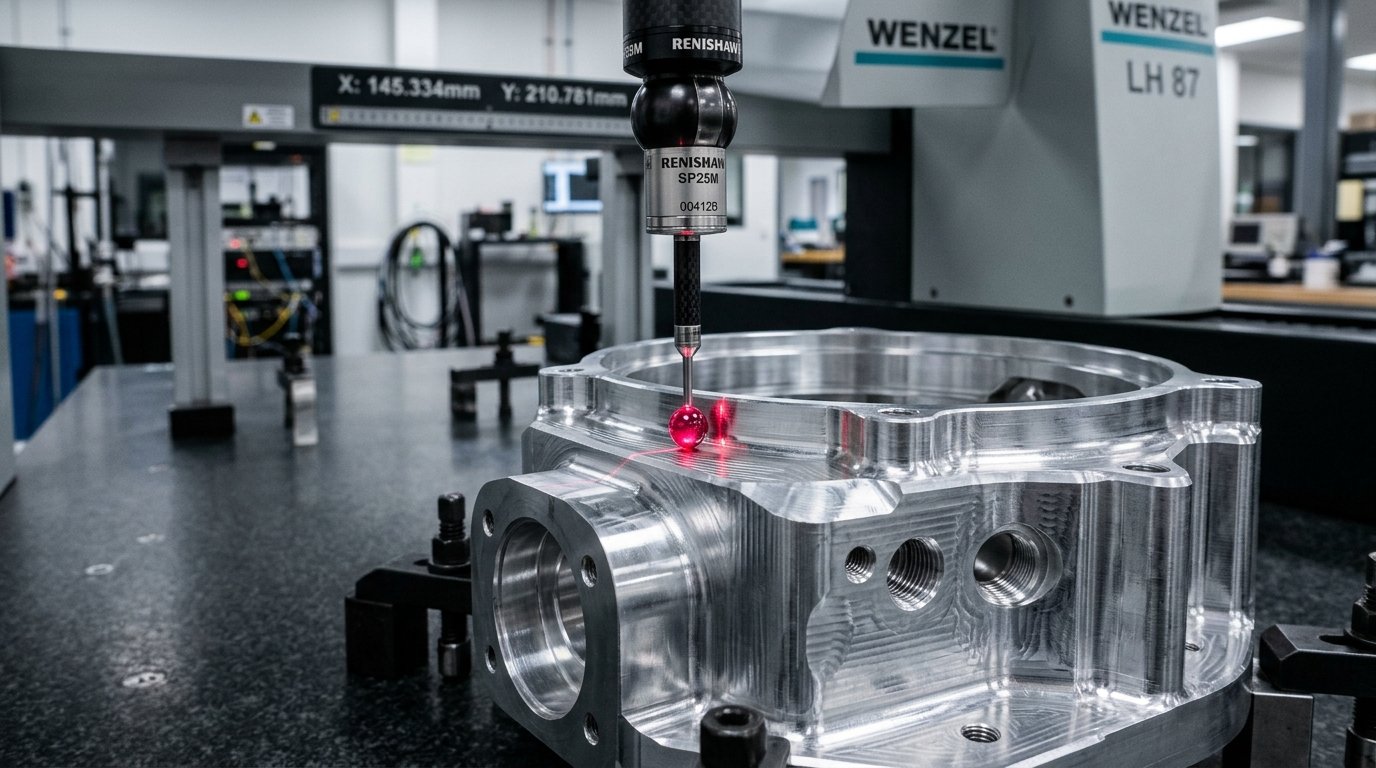
Quality is set by the shop, not by the country. Good shops in both countries hold tight tolerances on aluminum, use calibrated inspection tools, and give you reports. Weak shops exist in both. What changes is how easily you can verify the shop from far away, so you need to ask for proof.
Ask any supplier for these items before you place an order:
- Material certificates that match your alloy and temper.
- Inspection reports against your drawing for critical features.
- A sample or first article before the full run.
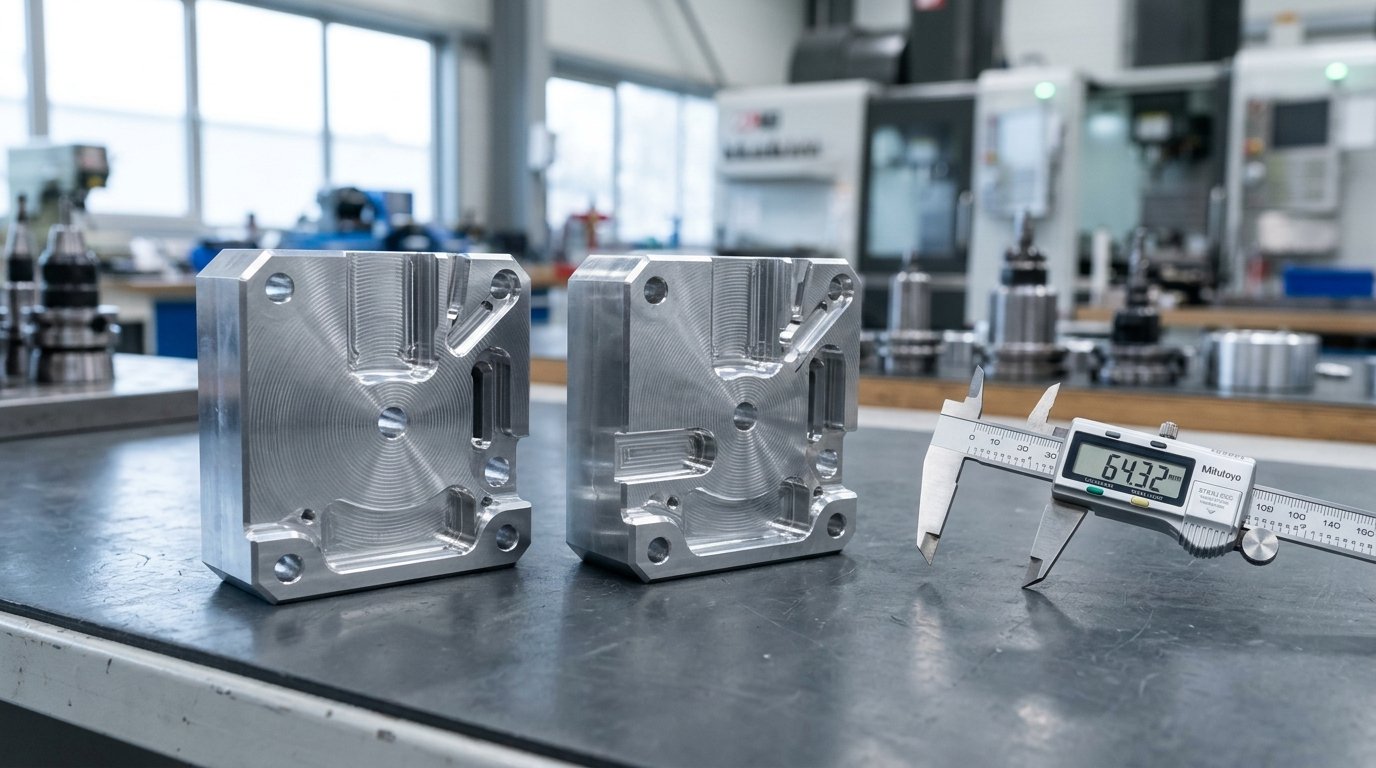
- Tolerance capability stated in writing. Ours is ±0.005 in standard and ±0.001 in on request (Elite Mold Tech, 2026).
- A named engineer who answers your questions.
Read how we check parts on our garantia de qualidade page, and see the shop on our instalações page.
What about tariffs, duties and trade rules?
Parts imported from China can carry import duties, and the rules have changed many times in recent years. Duty depends on the product classification and on current US trade policy. Because the numbers move, check the current rate for your part code with a customs broker before you commit to a large order.
Two practical steps reduce surprises:
- Ask your broker for the duty on your harmonized code today, not last year.
- Ask your supplier to quote on delivered terms so the duty and freight appear in one number.
The US Trade Representative publishes the official trade actions on its website at ustr.gov. Use it, or a broker, for any rate you rely on. We do not state a duty rate here, because a stale number is worse than none.
How do you protect your design when machining overseas?
Protect your design with an NDA, a clear file process, and a supplier who treats IP as a rule, not a favor. Send only the files the shop needs, keep a signed record of what you shared, and ask how files are stored. Elite Mold Tech explains its approach on the Proteção IP page.
Also consider splitting sensitive assemblies across suppliers, so no single shop holds the full design. This is common practice for high-value products.
When should you choose a US shop?
Choose a US shop when speed, compliance, or direct oversight matter more than price. These are the clearest cases:
- You need parts in days, not weeks, and cannot absorb transit time.
- The part is regulated, defense-controlled, or requires domestic sourcing.
- You need frequent on-site visits or live design changes.
- The quantity is very small and the part is simple.
When should you choose aluminum CNC machining in China?
Choose aluminum CNC machining in China when price and capacity matter and you can plan ahead. Buyers who search for aluminum CNC machining China options usually want one thing: a clear landed price. China aluminum CNC machining suits prototypes in volume, batch production, and repeat orders where the design is stable. Elite Mold Tech machines ten aluminum grades, including 6061-T6 and 7075-T6, for US customers.
- You can plan for transit and customs in your schedule.
- You want lower unit prices on batches or repeat orders.
- You need flexible capacity as your volume grows.
- You have a drawing with clear tolerances and finish notes.
See the work we do on our aluminum CNC machining page. For a first order, start with prototipagem, then move to production once the sample passes.
How do you choose a supplier in five steps?
- Define the part. Prepare a 3D file and a 2D drawing with tolerances and finish.
- Request quotes from both regions. Use the same package and the same delivery terms.
- Compare landed cost and schedule. Include duty, freight, and transit time.
- Verify quality. Ask for certificates, reports, and a first article.
- Order a small lot first. Scale up once the sample meets the drawing.
This process works with any shop in any country. It removes the guesswork from the China vs USA CNC machining choice.
Get a delivered-price quote from Elite Mold Tech
Send us your files and tell us your delivery country. We will quote the part and explain our process, so you can compare it with a US quote on equal terms. We guarantee a response within 12 hours, and most orders take under 10 days.
Ready to compare? Solicite um orçamento or learn how an order works from file to delivery. You can also visit the Elite Mold Tech home page.
Perguntas frequentes
Q: Is CNC machining cheaper in China than in the USA?
A: Base prices are often lower in China, but compare landed cost. Add shipping, import duties, broker fees, and the cost of any delay. Ask both shops to quote the same alloy, tolerance, finish, and quantity so the totals are fair.
Q: How long does it take to get CNC parts from China?
A: Elite Mold Tech produces most orders in under 10 days. Add shipping time and customs clearance to that. Air freight is faster and costs more than sea freight. A US shop is faster for urgent small orders.
Q: Is Chinese CNC machining lower quality?
A: Not by default. Quality depends on the shop. Ask for material certificates, inspection reports, and a first article. Hold any supplier, in any country, to the same proof.
Q: Do I pay tariffs on CNC parts from China?
A: Imported parts can carry duties, and the rules change often. Check the current rate for your product code with a customs broker or the US Trade Representative site before you place a large order.
Q: How do I protect my drawings when ordering from China?
A: Sign an NDA, share only what the shop needs, and confirm how files are stored. For sensitive designs, consider splitting the assembly across suppliers. Elite Mold Tech describes its approach on its IP protection page.
Q: When should I use a US CNC shop instead?
A: Use a US shop for urgent small orders, regulated or defense-controlled parts, and projects that need frequent on-site visits. For planned batches where price matters, a China supplier is worth a quote.
Sources
- Elite Mold Tech, Aluminum CNC Machining and capability tables (2026): elitemoldtech.com/aluminum-cnc-machining
- Office of the US Trade Representative, trade actions on China: ustr.gov