What is die casting, how does the die casting process work, what materials are used in die casting, and what are the main characteristics of die-cast parts?
Die casting is a metal manufacturing process that uses high pressure to inject molten metal into a reusable steel mold, also called a die. The process is widely used to produce accurate, complex, and repeatable metal components, especially when production volumes are medium to high. Common die casting materials include aluminum, zinc, and magnesium alloys because they provide a useful combination of strength, weight, corrosion resistance, and castability. The process can also create thin walls, detailed features, and smooth surfaces while keeping production cycles relatively fast.
How Does the Die Casting Process Work?
The die casting process starts with the design and manufacture of a steel die based on the required part geometry. The die normally contains two main sections that close together to create the cavity where molten metal will form the component.
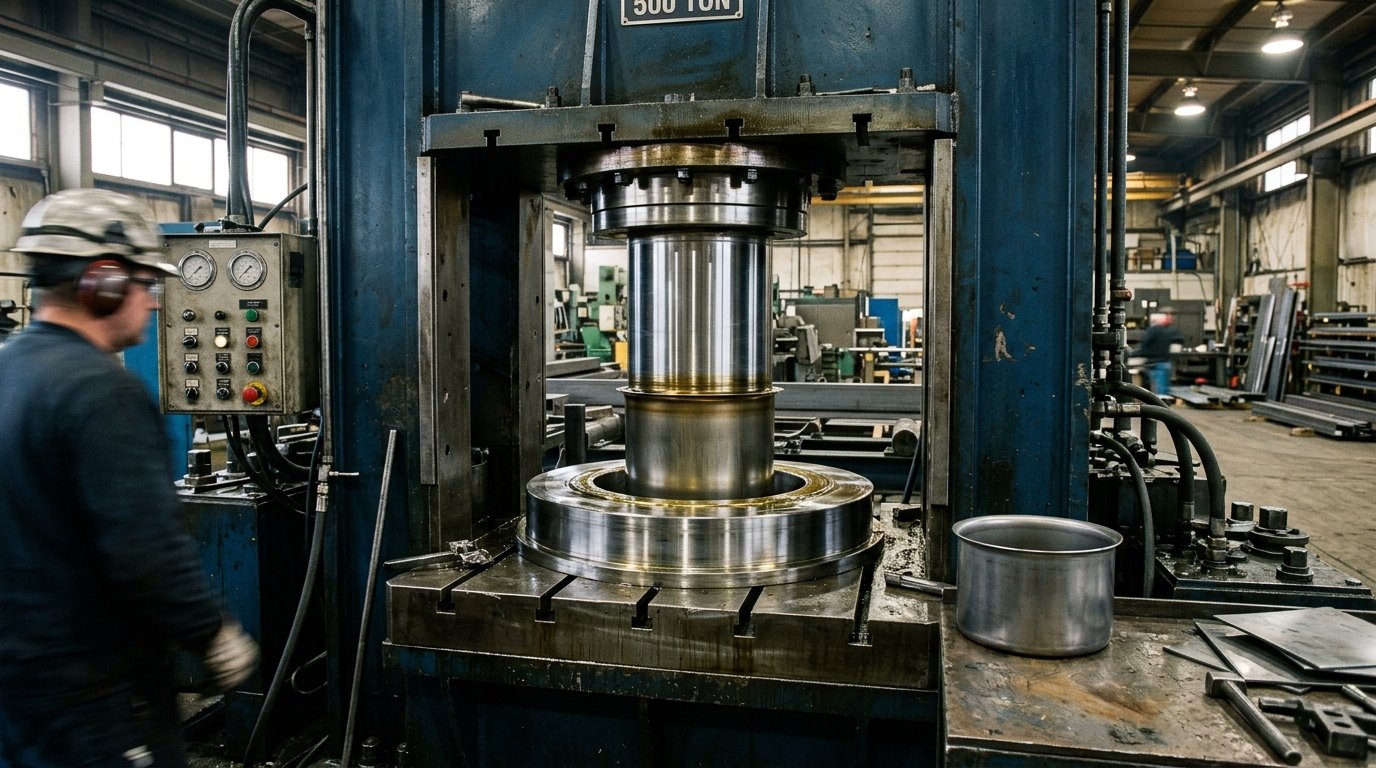
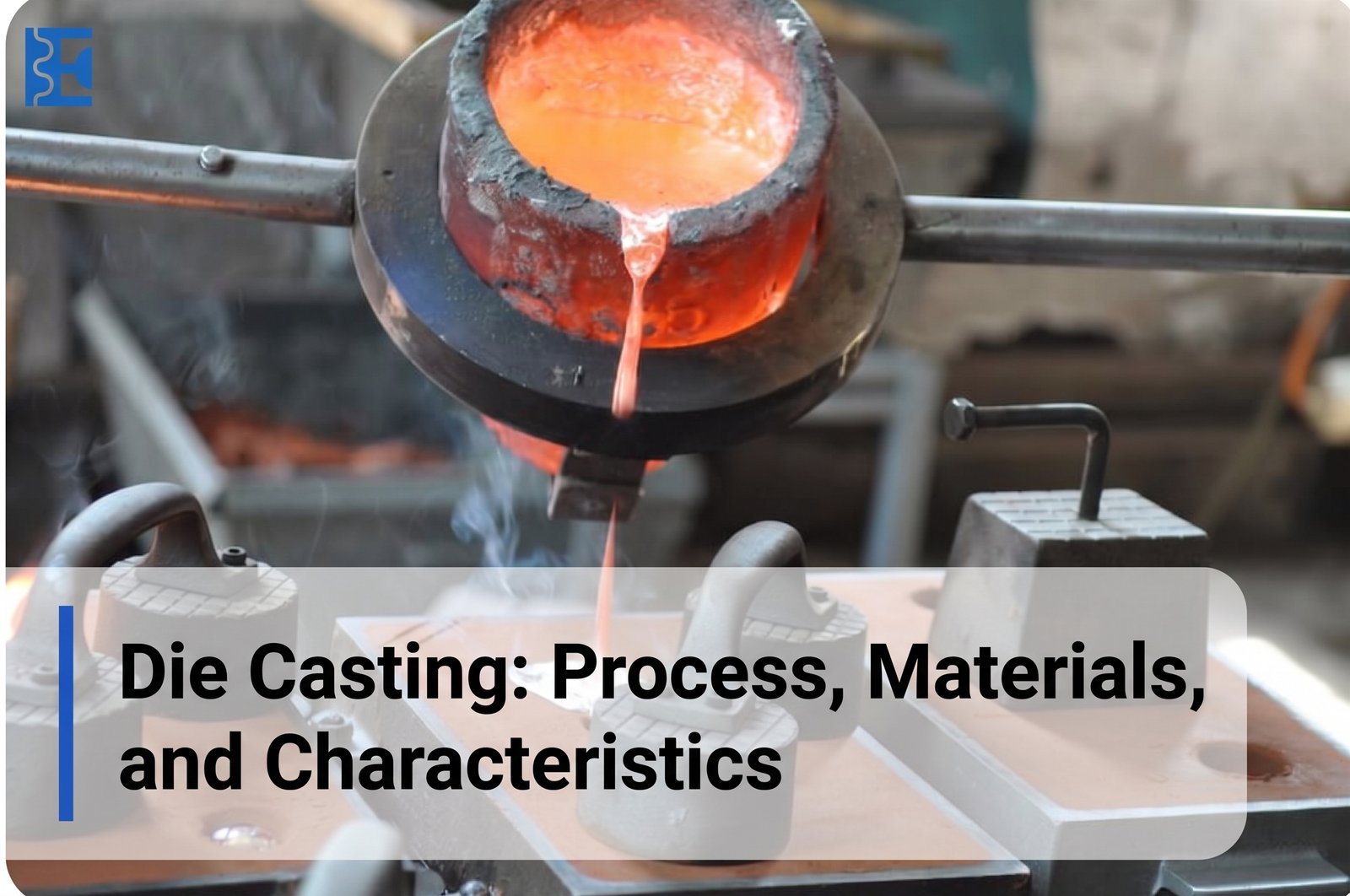
Once the die is prepared, the selected metal alloy is heated until it reaches the required molten state. The molten metal is then injected into the die under high pressure. Pressure helps the metal fill small features and complex sections before it solidifies.
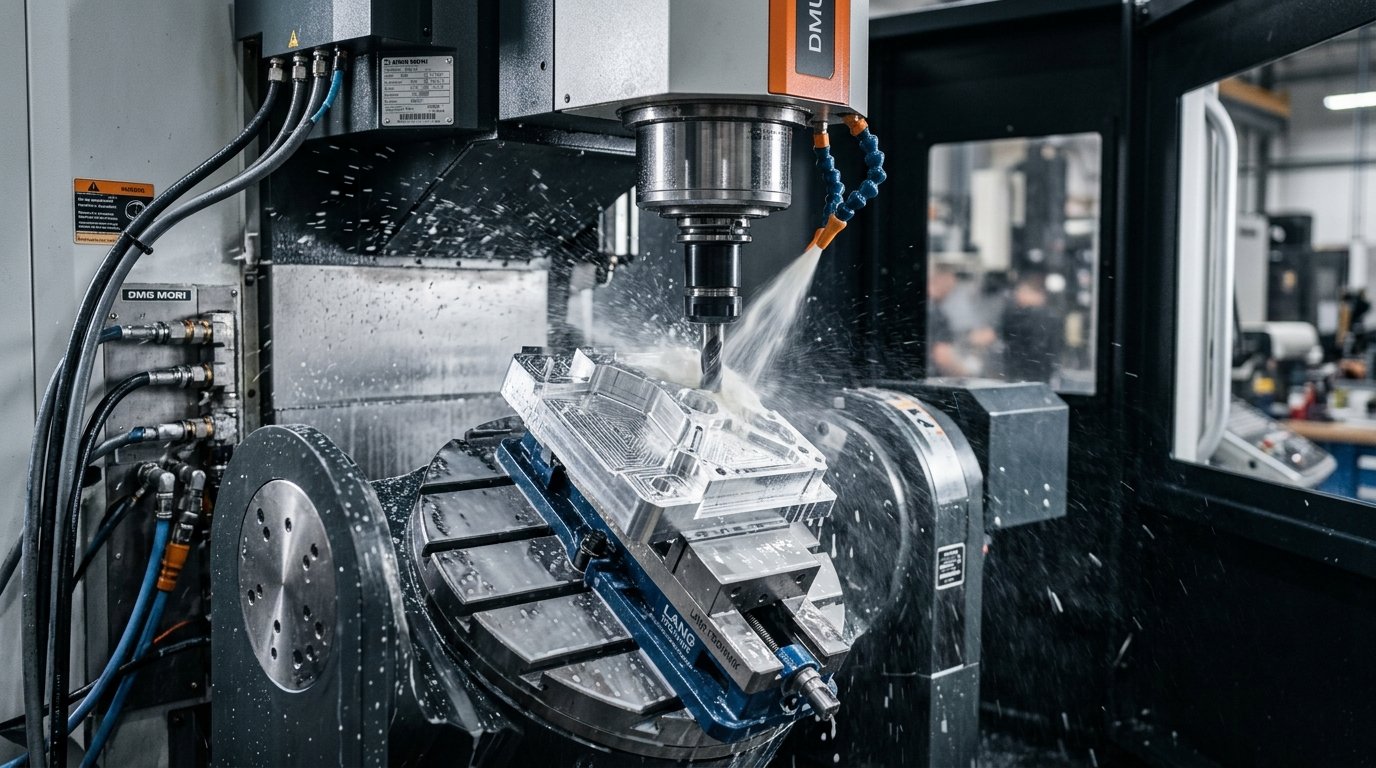
After solidification, the die opens and ejector pins remove the finished casting. Excess material such as runners, gates, and flash may then be trimmed. Depending on the application, the part can receive additional operations such as CNC machining, deburring, polishing, coating, anodizing, or plating.
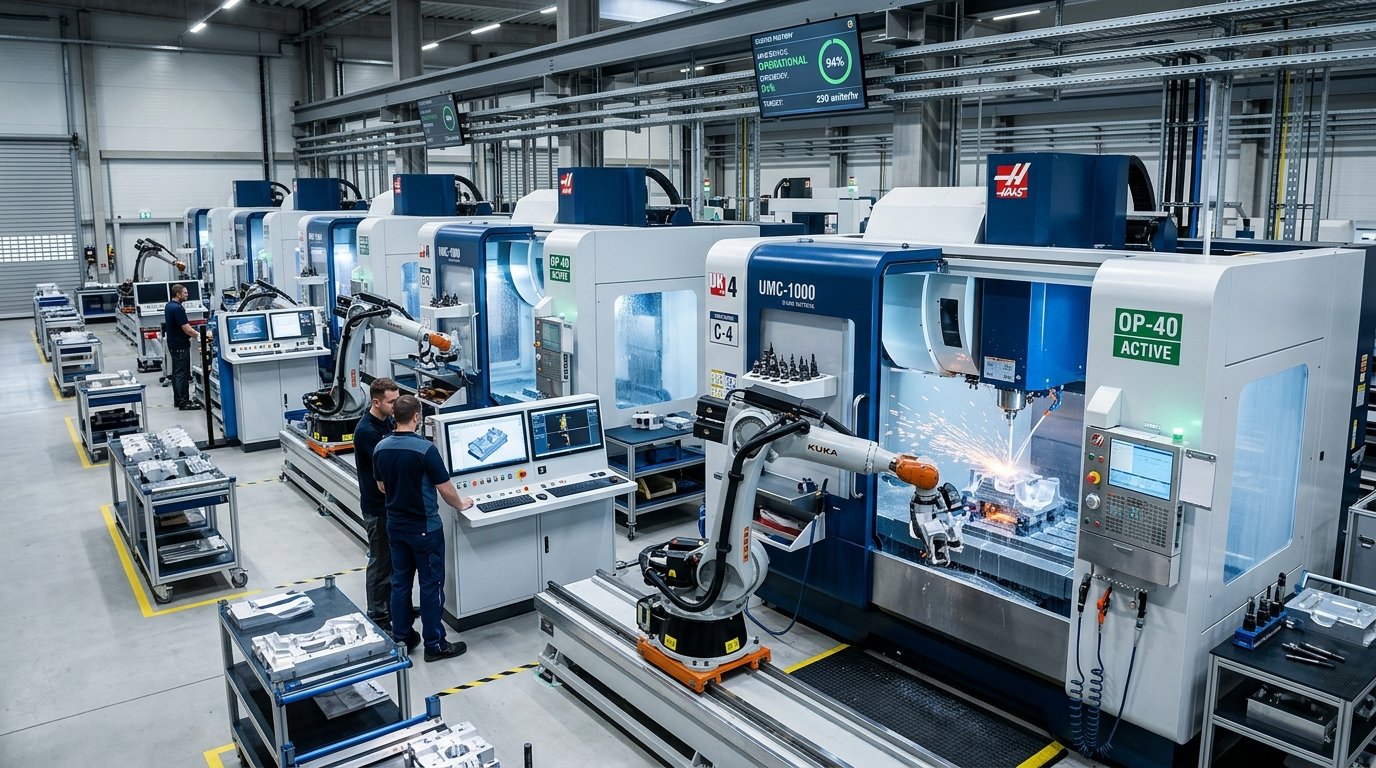
For manufacturers that need both casting and precision finishing, Services d'usinage CNC can be used for critical holes, threads, mounting surfaces, and other features that require tighter control than the casting process alone can provide.
Main Steps in Die Casting
| Die Casting Stage | Que se passe-t-il ? |
| Conception de la matrice | The mold is designed around the required part geometry and manufacturing requirements. |
| Metal preparation | The selected alloy is melted and prepared for injection. |
| Injection | Molten metal is forced into the die under high pressure. |
| Solidification | The metal cools and takes the shape of the die cavity. |
| Éjection | The die opens and ejector pins remove the casting. |
| Parage | Gates, runners, flash, and other excess material are removed. |
| Finition | Machining, polishing, coating, plating, or other secondary operations may be performed. |
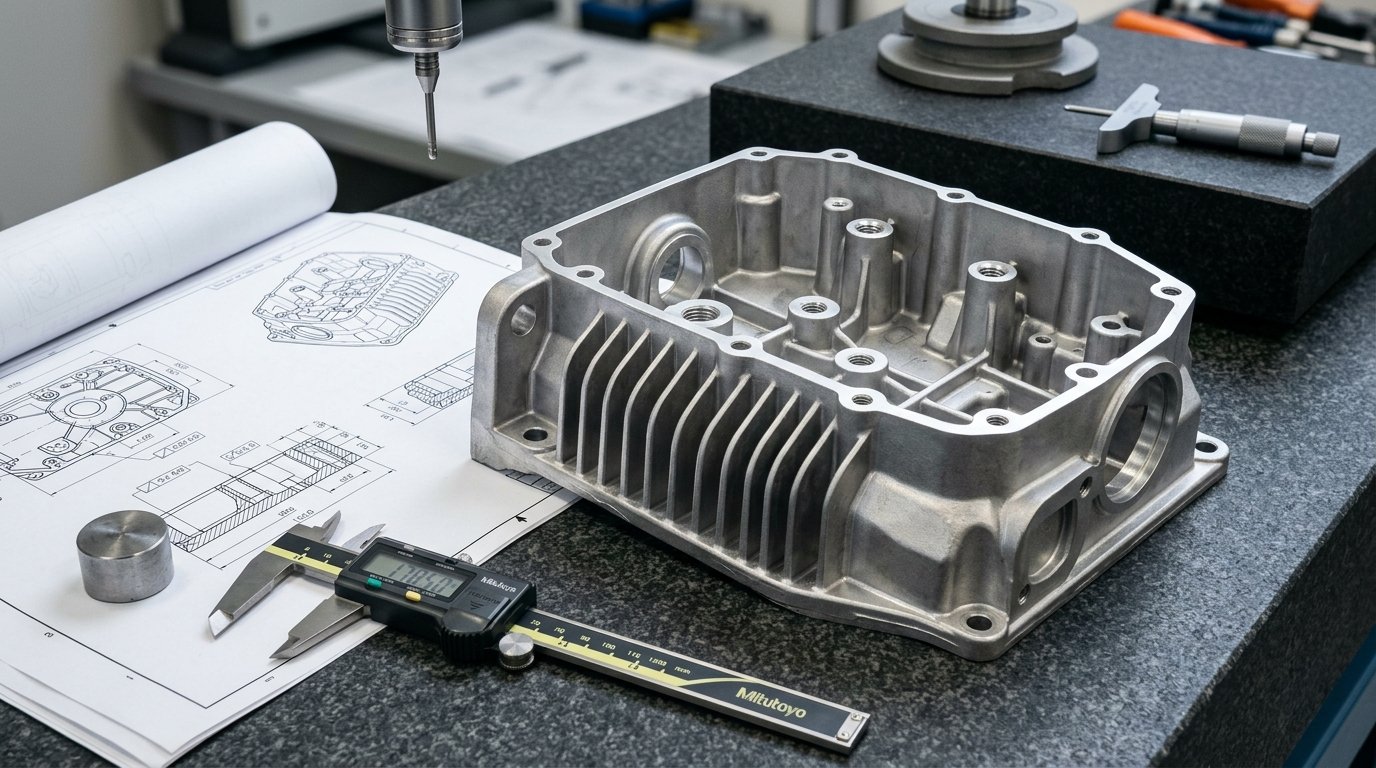
| Inspection | Finished parts are checked against dimensional and quality requirements. |
The exact process parameters depend on the alloy, part geometry, wall thickness, die design, machine capacity, and production requirements. Good die design is especially important because poor metal flow, insufficient venting, or improper cooling can lead to defects such as porosity, cold shuts, warping, or incomplete filling.
Types of Die Casting
Die casting is generally divided into hot chamber and cold chamber processes. The main difference is how the molten metal is supplied to the injection system.
Hot Chamber Die Casting
In hot chamber die casting, the injection mechanism is located within or closely connected to the molten metal bath. This arrangement supports fast cycle times and is commonly associated with metals that have relatively low melting temperatures, such as zinc alloys.
Hot chamber casting can be efficient for high-volume production because the metal can be injected quickly with limited transfer between the melting and injection systems.
Cold Chamber Die Casting
Cold chamber die casting uses a separate melting furnace. A measured amount of molten metal is transferred into the injection chamber before being forced into the die.
This method is commonly used for aluminum and magnesium alloys because their higher melting temperatures make them less suitable for conventional hot chamber equipment.
Elite Mold Tech provides die casting solutions using aluminum, zinc, and magnesium alloys and supports both hot and cold chamber techniques according to material and production requirements.
What Materials Are Used in Die Casting?
Material selection has a direct effect on the weight, strength, corrosion resistance, thermal performance, appearance, and cost of a die-cast component.
Aluminum is one of the most widely used die casting materials. It offers low density, good strength-to-weight performance, useful corrosion resistance, and good thermal conductivity. These properties make aluminum suitable for automotive components, electronic housings, heat-management components, industrial equipment, and many other applications.
Zinc is another important die casting alloy. Zinc can produce detailed components with good dimensional stability and surface quality. It is particularly useful for smaller components that require intricate features, thin sections, or a high-quality surface.
Magnesium is valued mainly for its low density. When weight reduction is important, magnesium can provide an attractive balance between lightweight construction and useful mechanical performance.
Elite Mold Tech lists aluminum alloys including A360.0, A380.0, A383.0/ADC12, and A413.0, along with zinc alloys such as Zamak 2 and Zamak 3.
Die Casting Materials Compared
| Matériau | Key Characteristics | Common Reasons for Selection |
| Aluminium | Lightweight, corrosion resistant, good thermal conductivity | Automotive, electronics, industrial components |
| Zinc | Excellent detail reproduction, good dimensional stability | Small precision parts, hardware, consumer products |
| Magnésium | Very lightweight with good strength-to-weight performance | Weight-sensitive automotive and industrial components |
The best alloy depends on the final application rather than simply choosing the material with the highest strength. Engineers should consider operating temperature, loading conditions, corrosion exposure, required surface finish, part size, production volume, and secondary machining requirements before selecting an alloy.
For example, a lightweight electronic enclosure may benefit from aluminum, while a small component with intricate geometry may be better suited to zinc. A weight-sensitive structural component may benefit from magnesium.
Key Characteristics of Die-Cast Parts
One of the most important characteristics of die casting is repeatability. Once the die and process parameters are properly established, manufacturers can produce large numbers of similar components with consistent geometry.
Die casting is also known for its ability to produce relatively complex shapes. Ribs, bosses, holes, thin walls, and other integrated features can often be incorporated directly into the casting. This can reduce the number of individual components and secondary assembly operations.
Surface quality is another important characteristic. Properly designed and controlled die casting can produce relatively smooth surfaces that are suitable for additional finishing or, in some applications, direct use.
Dimensional accuracy is also a major advantage. However, the achievable tolerance depends on factors such as alloy, part size, geometry, die condition, and process control. Elite Mold Tech states that its die casting process can routinely achieve tight tolerances, often around ±0.1 mm depending on the part.
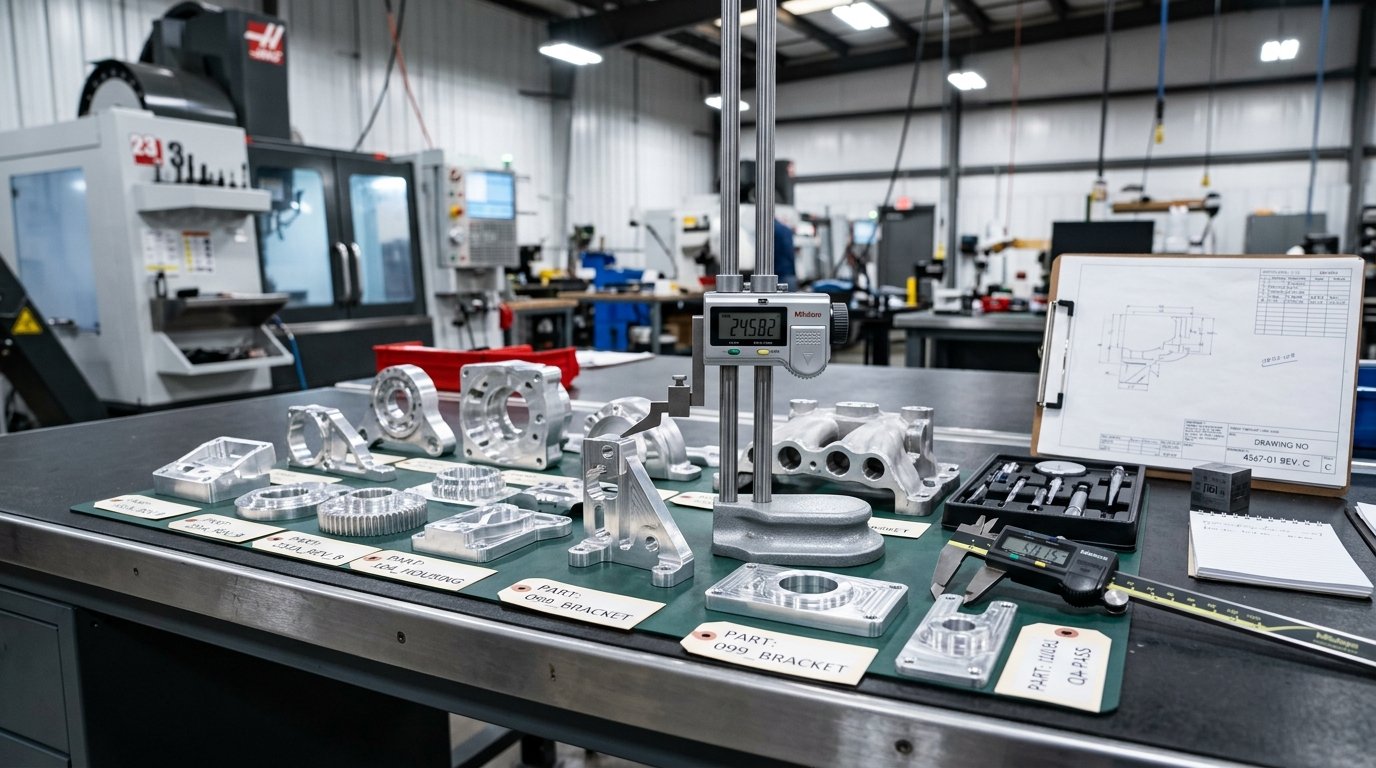
Die-cast parts can also require secondary machining when specific features need tighter tolerances. CNC machining can be used to finish critical surfaces, holes, threads, and interfaces after casting.
What Are the Advantages of Die Casting?
Die casting is particularly valuable when a project requires large quantities of consistent metal components. The reusable die allows manufacturers to repeat the same geometry over many production cycles.
The process can also reduce manufacturing complexity because several features can be incorporated into one component. Instead of producing multiple pieces and assembling them later, designers may be able to create a single die-cast part with integrated ribs, bosses, mounting points, or other functional features.
Another advantage is production speed. Once tooling is ready and the process has been optimized, individual casting cycles can be relatively short. This makes die casting suitable for high-volume programs where production efficiency and repeatability are important.
Die casting can also support different surface finishing requirements. Depending on the alloy and application, castings may be polished, blasted, plated, anodized, powder coated, or otherwise treated after production.
The process is not suitable for every project, however. Initial tooling costs can be significant, so die casting generally becomes more economical as production volume increases. Very low-volume projects may be better suited to CNC machining, 3D printing, or other manufacturing methods.
Die Casting Applications
Die casting is used across industries that need repeatable metal components with complex geometry and consistent performance.
In the automotive sector, die-cast components can include housings, brackets, covers, structural components, and other metal parts. Aluminum and magnesium are especially useful when reducing component weight is important.
Consumer electronics can use die casting for housings, frames, heat-management components, mounting structures, and other parts where dimensional consistency and appearance matter.
Industrial equipment can also benefit from die casting for components such as housings, brackets, levers, and mechanical components. The ability to integrate multiple features into one casting can simplify assembly and reduce the number of individual parts.
The process is also used in appliances, telecommunications equipment, robotics, and other manufactured products.
For projects that are still at the design stage, combining die casting with prototype manufacturing can help teams evaluate geometry, fit, function, and production requirements before committing to larger production volumes.
Die Casting Design Considerations
Good part design can have a major impact on casting quality, tooling cost, cycle time, and final part performance.
Wall thickness should be designed as consistently as practical. Large variations in wall thickness can create uneven cooling and increase the risk of shrinkage or other casting defects.
Draft angles are also important. A suitable draft allows the finished component to be removed from the die without damaging the casting or the tooling. The required draft depends on the geometry, surface texture, alloy, and die design.
Sharp internal corners should generally be avoided where possible. Proper radii can improve metal flow and reduce stress concentrations.
Designers should also consider where parting lines, gates, ejector pins, vents, and overflow areas will be located. These features are necessary for the manufacturing process but can influence the appearance and functionality of the finished component.
For demanding projects, design-for-manufacturing analysis should be performed before tooling begins. Early engineering review can identify potential problems while changes are still relatively inexpensive.
Die Casting vs. Other Manufacturing Methods
Die casting is not automatically the best manufacturing process for every metal component. The right method depends on production volume, geometry, tolerance, material, tooling budget, and delivery requirements.
CNC machining is often more suitable for low-volume production or parts that require very tight dimensional control. It does not require dedicated die casting tooling, but material removal can make large production quantities more expensive.
3D printing can be useful for prototypes and highly complex geometries, especially when design changes are frequent. However, the surface, material, production rate, and mechanical properties may differ from those achieved through die casting.
Metal injection molding can be useful for smaller complex metal components produced in high quantities. The process has different tooling, material, and design requirements compared with die casting.
Die casting becomes particularly attractive when the project requires complex metal parts, repeatability, and efficient production at medium or high volumes.
How to Choose the Right Die Casting Process
Choosing a die casting process should begin with the part requirements rather than the manufacturing method itself. Engineers should review the part’s dimensions, geometry, material requirements, production quantity, tolerances, surface finish, and operating environment.
Material selection should then be matched to the application. Aluminum is often selected for lightweight and corrosion-resistant components, zinc for detailed smaller parts, and magnesium where minimizing weight is a major priority.
The production volume is equally important. Because die casting requires dedicated tooling, the economics become more favorable as the number of parts increases.
Finally, secondary operations should be considered during the initial design stage. If the part requires precision holes, threads, tight mating surfaces, or special finishes, these requirements should be included in the manufacturing plan from the beginning.
Réflexions finales
Die casting is an efficient manufacturing process for producing complex, accurate, and repeatable metal components at production scale. Its ability to create detailed geometries with relatively fast cycles makes it valuable across automotive, electronics, industrial, consumer, and other manufacturing sectors.
The most important factors are not simply the casting process itself. Material selection, die design, wall thickness, draft, metal flow, cooling, tolerances, production volume, and secondary finishing all influence the final result.
For manufacturers planning a new component, early design and manufacturability review can prevent costly tooling changes and improve production consistency. When the project requires complex metal parts, reliable repeatability, and scalable production, professional services de moulage sous pression can provide a practical path from design to finished components.o
For additional material guidance, readers can also explore Elite Mold Tech’s related article on the zinc die casting process and its manufacturing insights on aluminum alloy elements.
Frequently Asked Questions About Die Casting
What is die casting used for?
Die casting is used to manufacture precise metal components in medium and high production volumes. It is common in automotive, electronics, industrial equipment, appliances, and consumer products.
What metals are most commonly used in die casting?
Aluminum, zinc, and magnesium are among the most commonly used die casting materials. Each provides different combinations of weight, strength, detail reproduction, corrosion resistance, and castability.
Is die casting good for mass production?
Yes. Die casting is well suited to mass production because reusable tooling and fast production cycles can provide consistent parts at high quantities. Elite Mold Tech specifically describes die casting as suitable for mass production because of its fast cycle times and reusable tooling.
Quelle est la précision du moulage sous pression ?
Accuracy depends on the material, part size, geometry, tooling, and process control. Tight tolerances can be achieved, while particularly critical features may require secondary CNC machining. Elite Mold Tech states that tolerances around ±0.1 mm can often be achieved depending on the part.
Can die-cast parts be machined after casting?
Yes. Secondary operations such as CNC machining, tapping, and trimming can be used to bring critical features to their final specifications.
What is the difference between hot chamber and cold chamber die casting?
Hot chamber die casting keeps the injection system closely associated with the molten metal, while cold chamber die casting transfers molten metal from a separate furnace into the injection chamber. Material selection is a major factor in deciding which method is appropriate.
Does die casting provide a good surface finish?
Yes. Die casting can produce relatively smooth and detailed surfaces. Additional processes such as polishing, blasting, plating, anodizing, or powder coating can be used when specific appearance or performance requirements exist.
À propos de l'auteur :
Alex Morgan est spécialisé dans la rédaction de contenus techniques liés à la fabrication de précision, notamment dans les domaines de l'usinage CNC, du moulage par injection, du moulage sous pression, de l'impression 3D, de la tôlerie et de la fabrication de moules sur mesure. Fort de plus d’une décennie d’expérience dans la rédaction de contenu B2B dédié à l’industrie manufacturière et au référencement naturel (SEO), il crée des contenus techniquement rigoureux destinés aux ingénieurs, aux développeurs de produits, aux équipes d’approvisionnement et aux décideurs du secteur manufacturier. Son travail aide les fabricants internationaux à communiquer clairement leurs capacités de production complexes, leurs options de matériaux, leurs tolérances, leurs processus d'outillage et leurs normes de qualité à leurs clients aux États-Unis, en Europe et dans la région Asie-Pacifique. Il rédige pour des entreprises manufacturières où l’expertise technique, la précision et la fiabilité sont primordiales.