By Phil Huang, Elite Mold Tech. Updated November 1, 2026.
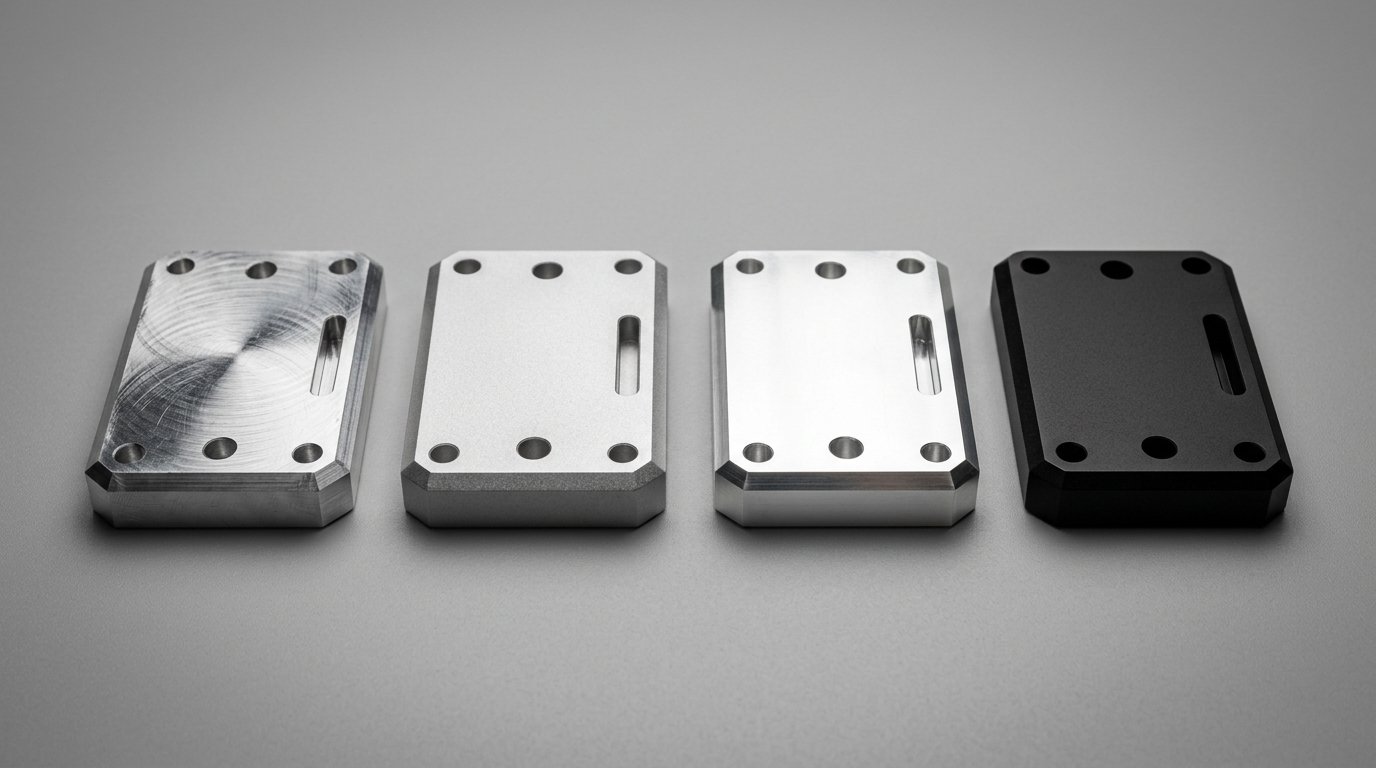
The main aluminum CNC surface finishes are as-machined, bead blasting, polishing, anodizing, chromate conversion, and powder coating. As-machined is the cheapest. Anodizing is the most popular for color and wear. Chromate conversion protects against corrosion and keeps the part conductive. Powder coating gives the widest color range. This guide compares them and shows how each one affects cost, size, and look.
Pick the finish with the function first, then the look. A finish that fails in service costs far more than the finish itself.
Key takeaways
- As-machined aluminum has a surface roughness of Ra 3.2 μm (125 μin), and it is the lowest-cost option.
- Bead blasting gives an even matte surface and hides tool marks.
- Anodizing adds a hard protective layer in clear, black, red, blue, orange, or gold.
- Chromate conversion resists corrosion, helps paint stick, and keeps the part electrically conductive.
- Most coatings add thickness, so tell us the finish before you set tight tolerances.
What surface finishes are available for CNC machined aluminum?
Elite Mold Tech offers over 30 finishing options for any aluminum CNC machining surface finish need, and the core group for aluminum includes as-machined, bead blasting, brushing, polishing, anodizing, chromate conversion, powder coating, and electroless nickel plating (Elite Mold Tech, 2026). Each one changes the look, the feel, and the way the part holds up in use.
Acabamento | O que ele faz | Melhor para |
Conforme usinado | Leaves visible tool marks. Ra 3.2 μm (125 μin) | Internal parts, prototypes, hidden faces |
Jateamento de esferas | Even matte surface, removes tool marks | Housings, cosmetic parts, pre-anodize prep |
Brushing and polishing | Directional grain or a bright shine | Visible faces, consumer products |
Anodizing (Type II) | Protective layer with color options | Wear, color, consumer and electronics parts |
Conversão com cromato | Thin corrosion barrier, conductive, paint primer | Electrical grounding, parts to be painted |
Revestimento em pó | Thick colored coat, UV and chemical resistant | Outdoor and enclosure parts |
Niquelagem sem eletrólito | Metal plating layer | Parts that need extra wear or corrosion resistance |
Source: Elite Mold Tech surface finish pages (2026). Ask us for the current spec sheet of any finish before you commit.
See the full list on our acabamento da superfície page, and read our aluminum CNC machining page for the base service.
What does an as-machined finish look like?
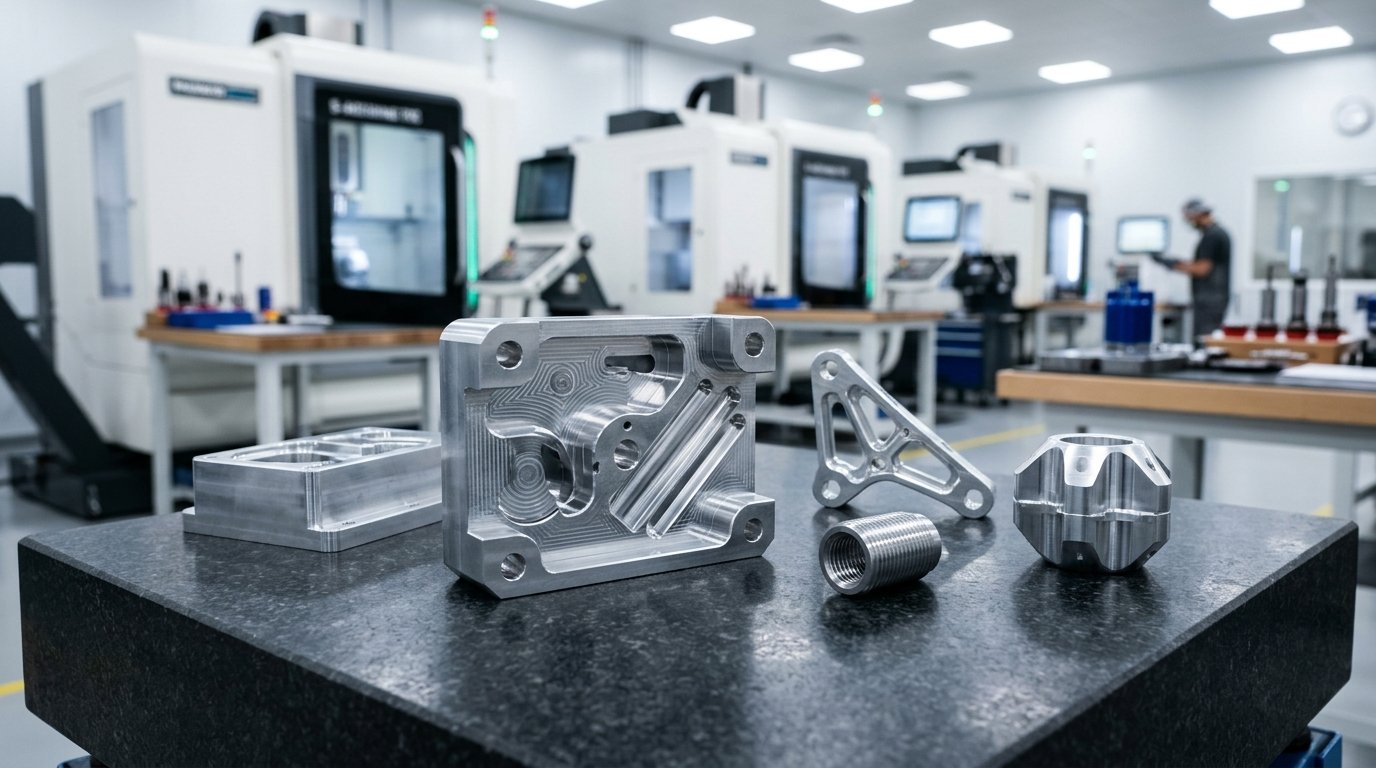
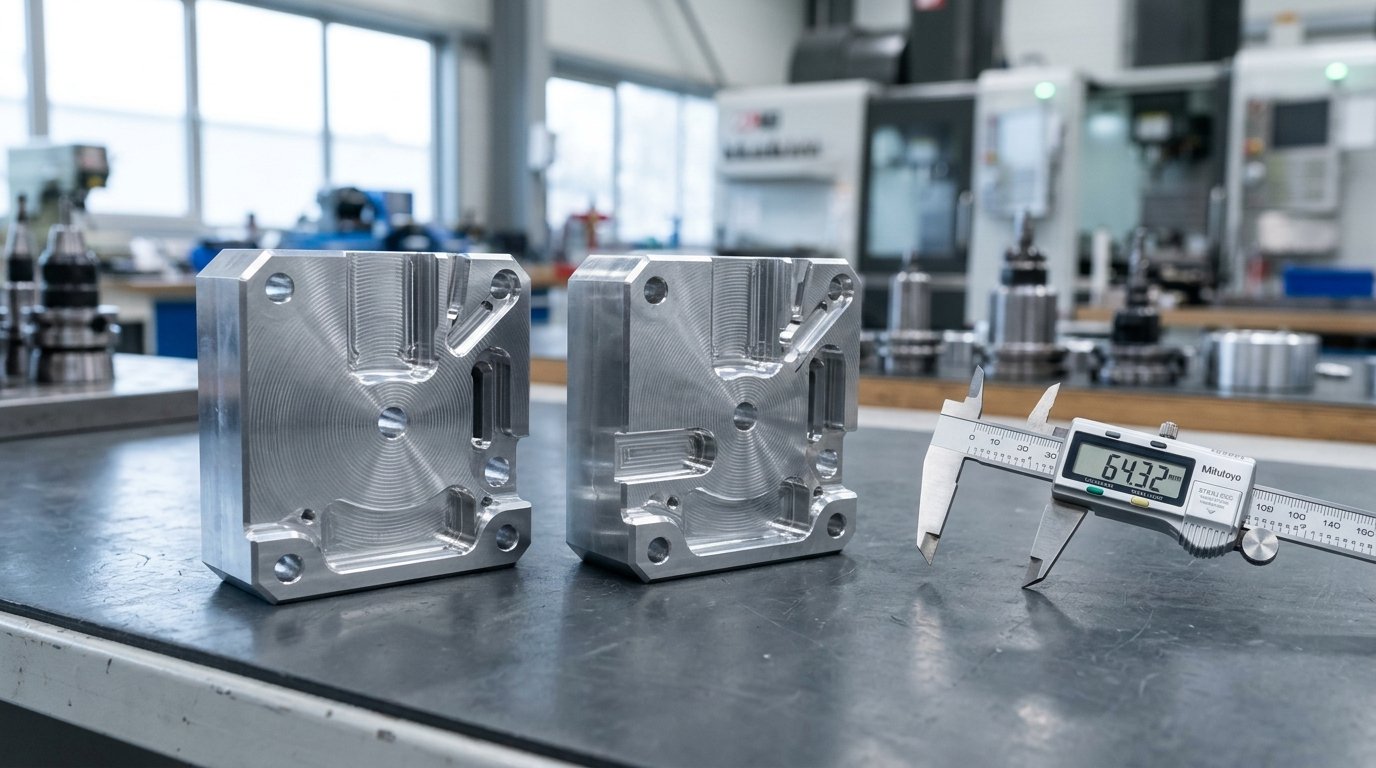
An as-machined finish shows the fine lines left by the cutter. Our standard as-machined surface is Ra 3.2 μm (125 μin), which is fine for most internal and hidden faces (Elite Mold Tech, 2026). It costs the least because it adds no extra step after cutting.
Fine and smooth machining go one step further. They use lighter final passes to improve the surface without a coating. Choose these when the part must look clean but cannot take added thickness. Learn more on our as machined finish page.
When should you choose bead blasting?
Choose bead blasting when you want an even matte surface that hides tool marks. It works with glass and ceramic media, and the result looks the same across the part (Elite Mold Tech, 2026). It is also the standard prep step before anodizing, because it gives a uniform base.
Bead blasting aluminum removes a small amount of material and softens sharp edges, so it slightly changes tight dimensions. Tell us if a feature needs to stay sharp or exact. See our jateamento de esferas page for details.
What is anodizing, and why is it popular on aluminum?
Anodizing grows a hard oxide layer on the surface of the aluminum. The layer is part of the metal, not paint, so it does not chip off like a coating. Type II is the common choice for anodized aluminum CNC machining and comes in clear, black, red, blue, orange, and gold (Elite Mold Tech, 2026).
Anodizing improves wear and corrosion resistance and gives a lasting color. It is popular for consumer products, electronics housings, and visible parts. Two points matter in design:
- It adds thickness. The coating grows into and out of the surface, so tight holes and threads lose clearance.
- Color depends on the alloy. 6061 and 6063 give the most even color, while 7075 can show small shade changes between lots.
Read about our process on the aluminum anodizing services e Type II anodizing pages. Harder, thicker coatings exist, so ask us if your part needs extra wear resistance.
What does chromate conversion coating do?
Chromate conversion coating is a very thin chemical layer that protects aluminum from corrosion. It also helps paint stick, and it keeps the part electrically conductive (Elite Mold Tech, 2026). Anodizing is an electrical insulator, so chromate conversion is the better choice when a part must ground or conduct.
It adds almost no thickness, so it suits parts with tight fits. Type I and Type II options are available, and we confirm the right one with you at quote. See our chromate conversion coating page for more.
When is powder coating the right choice?
Powder coating is the right choice when you need a thick, durable color coat. It offers white, black, RAL, and Pantone colors, and the finish is described as wear-resistant, UV-resistant, and chemical-proof (Elite Mold Tech, 2026). It fits outdoor parts, enclosures, and equipment that takes abuse.
Powder coating is thicker than anodizing, so it hides small marks but changes dimensions more. Mask threads and mating faces that must stay exact. See the powder coating page for color options.
How do finishes change dimensions and tolerance?
Most coatings add thickness, and blasting or polishing removes a little material. Both change the final size. The fix is simple: tell us the finish with your drawing and state whether each tolerance applies before or after coating.
- Choose the finish first. Do this before you set tight limits.
- Mark critical bores and threads. We mask them or machine them to compensate.
- State before or after coating. It removes any guesswork.
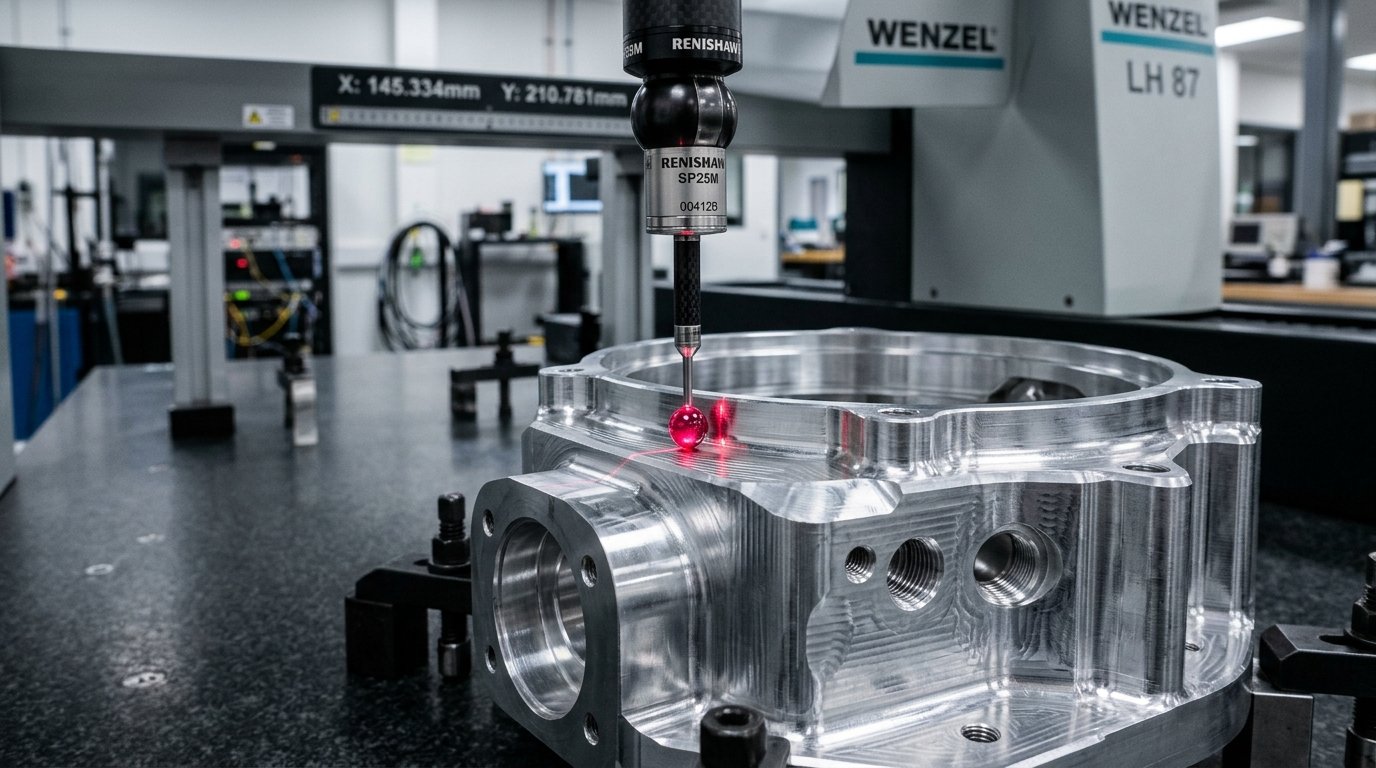
Our standard tolerance is ±0.005 in (±0.127 mm), and we hold ±0.001 in (±0.025 mm) on critical features (Elite Mold Tech, 2026). See our guide to aluminum CNC machining tolerances for the full picture.
How do you choose the right finish in five steps?
- Define the job. Is it cosmetic, protective, conductive, or all three?
- Check the environment. Outdoor use points to anodizing or powder coating.
- Check the electrical need. Grounding or EMI parts need chromate conversion, not anodizing.
- Check the fit. Tight holes and threads need masking or allowance.
- Check the budget. Start with as-machined or bead blasting and add coatings only where needed.
Match the finish to the alloy too. Our guide to aluminum alloys for CNC machining shows which grades anodize best.
How do aluminum finishes compare on cost?
Cost rises with the number of steps after machining. As-machined has no extra step. Bead blasting aluminum adds one quick step. Anodizing, chromate conversion, and powder coating add chemical or coating steps with handling and, for some, outside processing. We do not publish a price list, because cost depends on part size, color, and quantity.
- Lowest cost: as-machined and fine machining.
- Low to medium: bead blasting, brushing, and polishing.
- Medium: chromate conversion and Type II anodizing.
- Higher: powder coating with custom colors, plating, and multi-step finishes.
This ranking is a guide only. Our guide to aluminum CNC machining cost explains what else moves the price, and the quickest way to get a number is to send your drawing.
Which finish fits which application?
Match the finish to what the part does. The choices below are guidance, and your own spec comes first.
- Consumer electronics and visible housings: bead blasting followed by anodized aluminum CNC machining finishes in black or clear.
- Robotics and automation parts: as-machined or anodized, depending on wear and looks.
- Electrical grounding parts and enclosures: chromate conversion, to keep the part conductive.
- Outdoor equipment: powder coating or anodizing for weather resistance.
- Prototypes: as-machined, to save cost and time.
An aluminum CNC machining surface finish also affects how the part feels in the hand. Brushing gives a fine grain, polishing gives a mirror look, and blasting gives a soft matte touch.
What mistakes do buyers make with finishes?
Most finish problems come from missing information on the drawing. They are easy to avoid.
- Not stating the finish, so coating thickness is ignored in tolerances.
- Choosing anodizing for a part that must conduct electricity.
- Expecting exact color matching across different alloys or lots.
- Finishing hidden faces that do not need it.
- Forgetting to mask threads and tight bores.
A short note on the drawing fixes each one. Our engineers also review the finish at quote and flag anything risky before cutting starts.
Get a quote with the right finish
Send your 3D file and 2D drawing, and tell us the finish. Our engineers will confirm the finish, flag fit issues, and quote the part. We guarantee a response within 12 hours, and most orders take under 10 days.
Pronto para começar? Solicite um orçamento or visit the Elite Mold Tech home page to see our other services.
Perguntas frequentes
Q: What is the most common finish for CNC machined aluminum?
A: As-machined is the lowest-cost option, and anodizing is the most popular coated finish. Choose as-machined for hidden faces and anodizing when you need color, wear resistance, or a clean look on visible parts.
Q: Does anodizing change part dimensions?
A: Yes. The oxide layer grows into and out of the surface, so holes get smaller and shafts get larger. Tell us the finish and whether your tolerances apply before or after coating, so we plan the machined size.
Q: Is anodized aluminum electrically conductive?
A: No. The anodized layer insulates. If a part must ground or conduct, use chromate conversion coating, or mask the contact areas before anodizing.
Q: Which finish hides tool marks best?
A: Bead blasting. It removes tool marks and gives an even matte surface. It is also the usual prep before anodizing, so the color looks uniform.
Q: Which colors are available for anodized aluminum?
A: Type II anodizing comes in clear, black, red, blue, orange, and gold. For exact color matching on a large batch, tell us early so we can plan the alloy and lot.
Q: Can I mix finishes on one part?
A: Yes. You can leave hidden faces as machined and finish only the visible faces. This saves cost. Mark each face on the drawing so the shop applies the right finish in the right place.
Sources
- Elite Mold Tech, Surface Finish pages (2026): elitemoldtech.com/surface-finish
- Elite Mold Tech, Aluminum CNC Machining capability tables (2026): elitemoldtech.com/aluminum-cnc-machining